
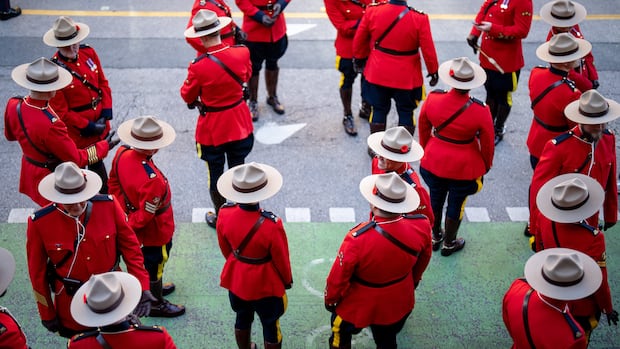
The RCMP has not recruited enough new officers or effectively assigned its members to meet its operational needs, according to a new report from the auditor general — raising concerns about public safety across the country.
“As a result of chronic shortages of front-line police officers, the RCMP faces a higher risk of police officer absences and burnout, which could make it more challenging for the force to prevent and investigate crime, maintain peace and order and contribute to national security,” Auditor General Karen Hogan wrote in a report tabled Monday.
Recruitment lags and staffing crunches have been some of the most pressing issues facing the RCMP, which is responsible for what’s known as contract policing — the boots-on-the-ground work in most provinces, the three territories and more than 150 municipalities across the country.
The Mounties are also responsible for federal policing, the increasingly in-demand core function of the organization which investigates cases including foreign interference, organized crime and counterterrorism.
Despite flagging recruitment as a top priority since 2018, the auditor general’s analysis of RCMP’s data shows that the shortage of police officers has actually worsened in the last two years, with at least 3,400 additional front-line officers needed as of September 2025.
The report, which covered the period from April 1, 2023, to Sept. 30, 2025, found the RCMP did not accurately identify the total number of police officers it needed to fully staff the force.
WATCH | AG says RCMP’s slow application processing is biggest recruitment bottleneck:
RCMP’s slow processing of applications is its biggest recruitment bottleneck: auditor general
A report released Monday by Auditor General Karen Hogan indicated that the RCMP’s recruitment efforts have fallen short of meeting operational needs. ‘When you’re [processing applications] on average in 330 days, that’s a long time,’ she said.
The RCMP set a target to recruit 1,280 police officers based on what they believed they could fund and train, Hogan told a parliamentary committee on Monday morning.
“That number is well short of what they need. And so you’re not even aiming to recruit to meet your needs,” she said.
As of September 2025, vacancy rates were above the force’s critical threshold of seven per cent in nine of the 11 provinces and territories served by the Mounties.
“These high vacancy rates pose a clear risk to the RCMP’s ability to maintain operational capacity and deliver policing services,” the audit said.
330 days on average to process an application: audit
One of the known irritants in the RCMP’s recruitment process has been the length of time it takes for an application to be vetted. According to the audit, it takes an average of 330 days to process an application — above the RCMP’s own 224-day service standard.
“It isn’t a shortage of interest in the RCMP,” said Hogan.
Of the applications that the RCMP processed during the audit period, only six per cent resulted in an offer to be trained as a police officer because the remaining applicants dropped out of the process (about 15 per cent), stopped communicating with the RCMP (24 per cent), were deemed unsuitable (37 per cent) or their application was still being processed (18 per cent).
The auditor general’s office ran a survey to dig into those numbers. Of the applicants who responded, the most frequently cited reasons for withdrawing from the process were timing and personal reasons, eligibility requirements such as those related to fitness, or to pursue other opportunities.
Hogan said part of the problem is a lack of recruiting analysts — the individuals who shepherd applications through the process. More than half of those positions are sitting vacant.
Boosting recruitment has been one of RCMP Commissioner Mike Duheme’s main priorities since taking the job in 2023.
But even initiatives to counter anemic recruitment figures haven’t always worked, according to the audit.
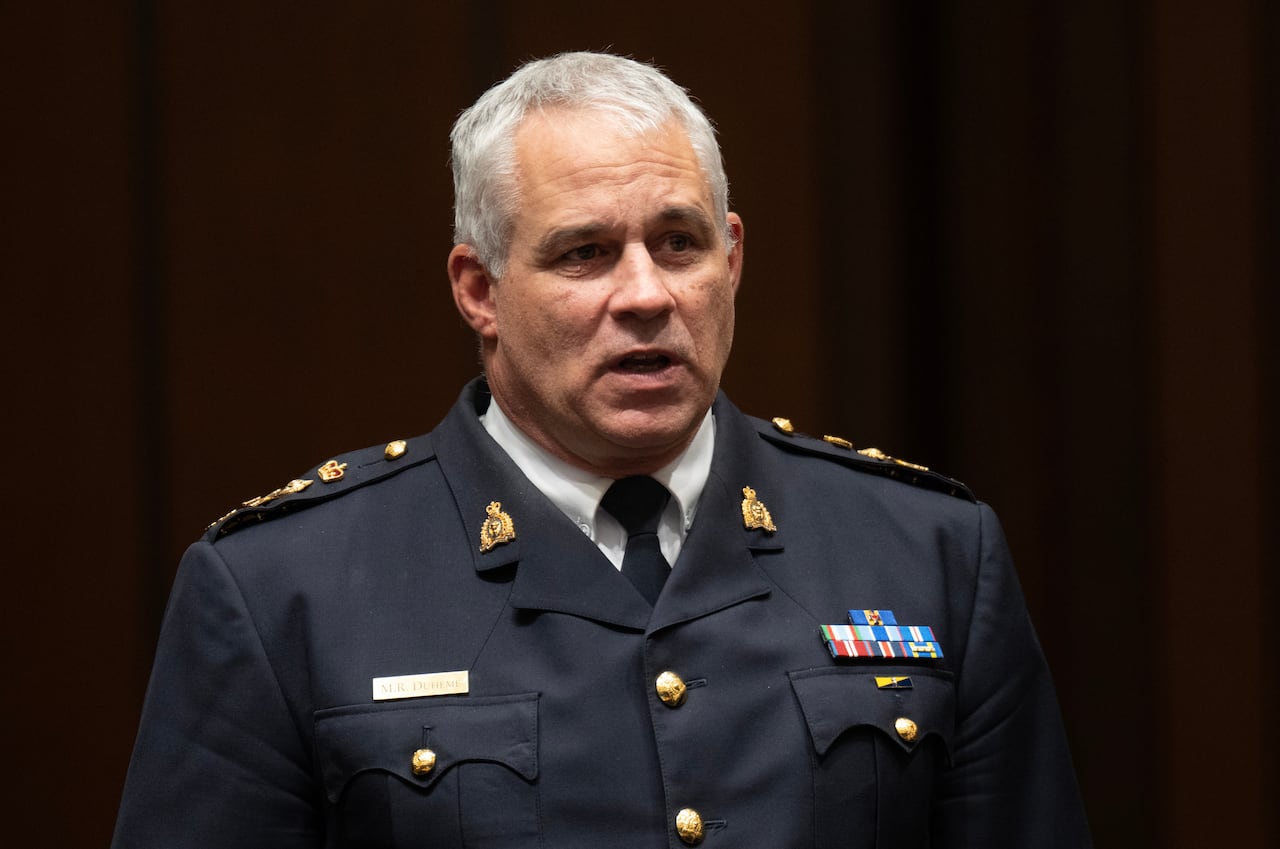 RCMP Commissioner Mike Duheme has said recruitment is a major priority. (Adrian Wyld/The Canadian Press)
The RCMP introduced the flexible posting plan in 2023, which allowed new police officers to choose the province or territory of their first assignment. The idea was to let new Mounties stay close to family if that was their goal.
Hogan’s audit said the plan has succeeded in attracting thousands more applicants than anticipated and surpassed its planned application number.
“However, the change also led to an unintended outcome — chronic vacancies in some divisions increased,” she wrote.
Last summer the RCMP began phasing out the posting plan and resumed assigning new police officers to divisions according to operational needs.
“Given the high number of vacancies, it will take many years to fully reverse the impacts of the temporary approach,” said the audit.
Minister says he’s confident RCMP can make changes
The report makes six recommendations, including addressing bottlenecks in its application process to address delays and better identifying current and future staffing needs. The RCMP agreed with all six.
“Strengthening recruitment is essential to our ability to meet our mandate, support our policing partners and keep communities safe,” said Duheme in a statement.
WATCH | RCMP application process being shortened to 6 months, says minister:
RCMP application process being shortened to 6 months after report finds dire shortage: minister
Public Safety Minister Gary Anandasangaree was asked Monday if the auditor general’s report on the RCMP — which indicated the Mounties took an average of 330 days to process recruitment applications — suggests that more reform is needed. ‘We are condensing the recruitment process down to six months,’ Anandasangaree said.
Public Safety Minister Gary Anandasangaree, whose portfolio includes the RCMP, said there is now a plan in place to shorten the recruitment application process down to six months.
“The work ahead is significant. However, I am confident in the RCMP’s planning to accelerate this transformation,” he said.
Anandasangaree will soon head into negotiations with the provinces and territories serviced by the RCMP about reviewing their contracts. The current agreements — which see the provinces and territories pay for 70 per cent of the contract and the federal government covering the rest — are set to expire in 2032.
Some premiers have grown increasingly concerned by high vacancy rates. Some municipalities have already opted to replace the RCMP for their own law enforcement agencies. The Alberta government is also exploring a transition to an Alberta Police Service.
In January, RCMP assistant commissioner Adam Palmer, the new head of national recruitment transformation, suggested the police force is starting to turn recruitment efforts around. At the time he said the goal was to see 1,600 people graduate every year and be deployed into the regions — or in RCMP terms 50 full troops, made up of 32 cadets, annually.
The audit follows a campaign promise from Prime Minister Mark Carney to hire 1,000 more RCMP personnel.