

Listen to this article
Estimated 2 minutes
The audio version of this article is generated by AI-based technology. Mispronunciations can occur. We are working with our partners to continually review and improve the results.
The company working to build high-speed rail between Toronto and Quebec City says it’s moving to the next stage of environmental study, which could include requests to assess private land.
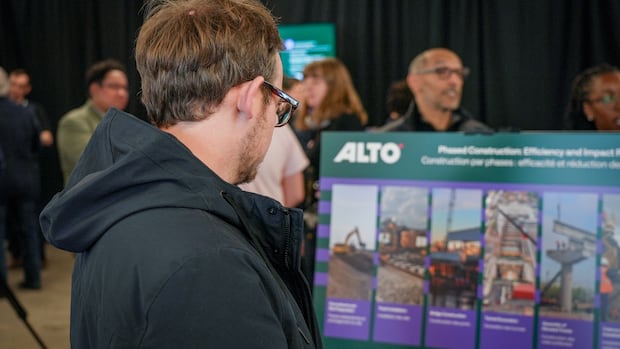
Alto and its partner Cadence have been consulting with the public and surveying potential routes to determine where the $60 billion to $90 billion project will run.
On Monday, Alto said it will soon begin asking private landowners for access to assess soil conditions, waterways, noise, flora and fauna, but cautioned that doesn’t necessarily mean that’s where the rails will go.
“[A] request does not necessarily mean that a property will need to be acquired for the project or that the future train will run near it,” Alto said.
Landowners can refuse such a request, Alto said. Those who agree will receive financial compensation and “comprehensive” information, including possible access to a dedicated Alto representative.
Consultations wrapping up
Besides Toronto and Quebec City, the current list of planned stops also includes Ottawa and Peterborough in Ontario, along with Montreal, Laval and Trois-Rivières in Quebec. There is also some appetite for a stop in Kingston, Ont., and Premier Doug Ford supported that option last week.
There’s also been opposition, especially from people who fear the project will bring plenty of disruption but no direct benefit.
The electric trains, which will travel as fast as 300 km/h, would first run between Ottawa and Montreal under current plans.
This is the final week for in-person consultations, with public sessions planned in Gatineau, Que., and Stirling, Ont., northwest of Belleville. Online consultation continues for another month.
Alto promises to consult on a narrower corridor between Ottawa and Montreal later this year. It hopes to start construction in 2029.