
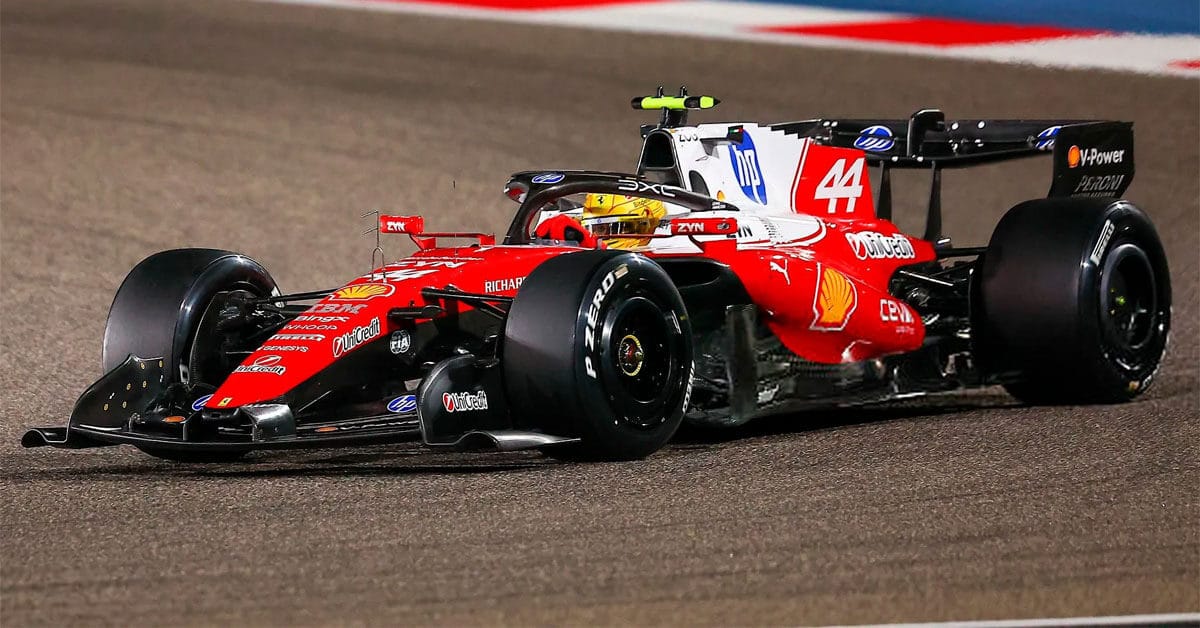
The demanding and iconic Suzuka circuit is ready to welcome the new Formula 1 cars, but under an unexpectedly strict regulatory approach. The FIA has adopted a cautious stance on the use of revolutionary active aerodynamics, drastically limiting the activation zones on the Japanese track to prevent potential high-speed dangers.
Closed wings at Suzuka: FIA clamps down on straights
The directives to teams are clear: movable aero devices will be allowed only sparingly. Drivers can “open” the wings exclusively along the main straight and the very first portion of the third sector’s straight. The strictest restriction requires deactivating the system well before braking for the legendary 130R. Essentially, for nearly the entire track—from the entry of Turn 1 to the exit of Turn 14, including crucial sections such as the hairpin and Spoon Curve double bend—cars must run in a fully closed configuration, maintaining the maximum possible downforce.
Safety concerns: instability heading into 130R
The reason behind this severe limitation is pilot safety. FIA engineers fear that tackling the fastest corners with reduced downforce could cause a sudden and dangerous loss of stability. Their attention is particularly focused on Turn 12, a section where absolute grip is essential for drivers to trust the car completely before accelerating toward the next braking point.
Setup chaos: floor wear, tires, and the 2-millimeter lifeline
This rule brings major technical challenges for engineers. Running 80% of the track at maximum downforce literally pushes the cars into the asphalt in fast corners, subjecting the flat floor to extreme friction. The 2026 regulation update, which raised the wear tolerance from 1 to 2 millimeters, provides a critical safety net to prevent teams from facing disqualifications due to excessive plank wear. Nevertheless, attention to detail will be paramount.
The biggest burden of this choice will fall on the tires. With consistently high downforce through the esses and long Suzuka corners, the tires will endure enormous lateral and thermal stress. Managing tire degradation will be even more crucial than usual, becoming the key factor for survival and success on Japanese Grand Prix Sunday.
Tthe FIA’s conservative stance on active aerodynamics has therefore transformed the Japanese Grand Prix into a grueling test of mechanical endurance and tire preservation. By restricting the “Straight Mode” primarily to the main straight, the regulators have prioritized safety over top-end speed, forcing engineers to gamble on floor stiffness and ride heights. Based on the content of these new technical directives, the 2026 race at Suzuka will likely be won by the team that best manages the increased 2mm wear limit without destroying their tires in the process.

Mar 24, 2026Maria Lombardi
Let other Scuderia Fans know about us


