
The group behind a project expected to bring high-speed rail to the country is starting field investigations as part of its data collection soon.
Alto will be sending experts out along the proposed routes of the rail project that is promised to connect Montreal, Ottawa and Toronto with trains that run 300 km/h. The proposed network would host 72 trains a day running along a 1,000-kilometre track.
It would make for a three-hour trip between the country’s two largest cities and less than an hour between Montreal and Ottawa.
Marcia Wallace, General Manager, Planning, Development and Building Services with the city, told councillors in a memo that as a landowner, the City of Ottawa is expected to hear from Alto and be asked to allow access to specific sites.
Alto should reach out to the landowners with a “permission to enter” process to study the land.
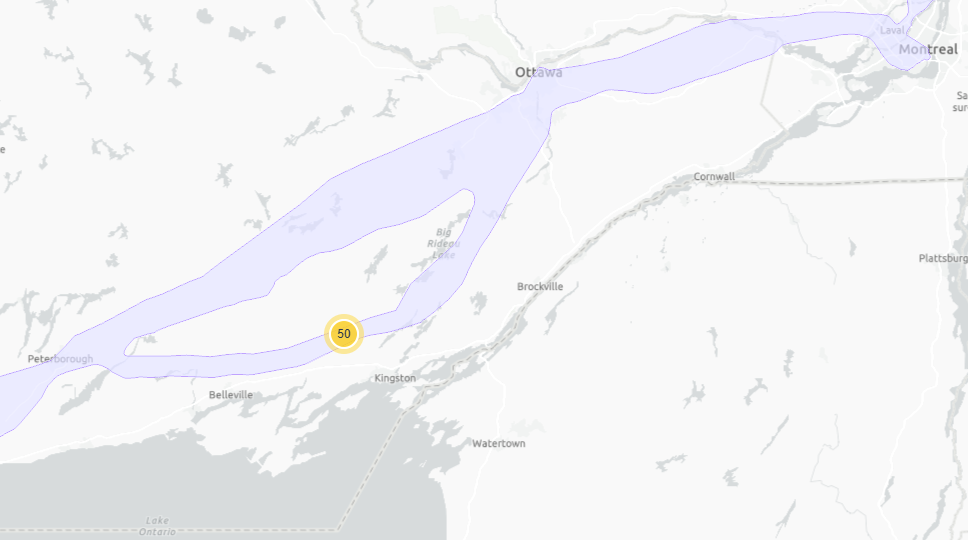
The company is weighing two possible corridors between Ottawa and Peterborough, Ont. One is a more direct line between the two cities, and the other curves south, closer to Lake Ontario.
The first consultation is expected to begin in mid-April, with the agency having the results of the public comments on the corridor by the summer. The goal, according to the city memo, is for Alto to have a preferred route chosen by the end of the year.
Wallace specifies in her note to councillors that the municipality does not have a list of landowners who will be approached or a list of locations for the investigations.
People who have questions about the field studies can call the Alto Liaison Office at 1-855-888-4421, or email permissions@altotrain.ca.
“City staff continue to wait for more details about the preferred route between Montreal and Ottawa, and any information that will be used to inform their decision,” Wallace wrote.
Groups opposed to rail project
Grassroot coalitions of farmers, small-town residents and municipal councillors say the rail corridor would cleave their communities, prompt hundreds of land expropriations and offer locals few benefits while costing taxpayers billions of dollars.
In eastern Ontario, at least five townships and municipalities have passed resolutions opposing a would-be southern route to the line. At least one has come out against the other, more northerly option.
The Ontario Federation of Agriculture and Quebec’s Union des producteurs agricoles have called for the suspension of the project. Several Facebook groups opposing it or giving voice to residents’ concerns have cropped up, with three of them garnering more than 14,000 members in total.
Alto CEO Martin Imbleau has acknowledged that some expropriations will be necessary, though he declined to give an estimate.
“Hopefully it’s not going to be a tool that is the predominant one,” he told reporters in January.
Construction of the first phase of the 1,000-kilometre rail line is set to kick off in 2029 or 2030.
The seven stops mandated by the federal government are: Toronto, Peterborough, Ottawa, Laval, Que., Montreal, Trois-Rivières, Que., and Quebec City.