
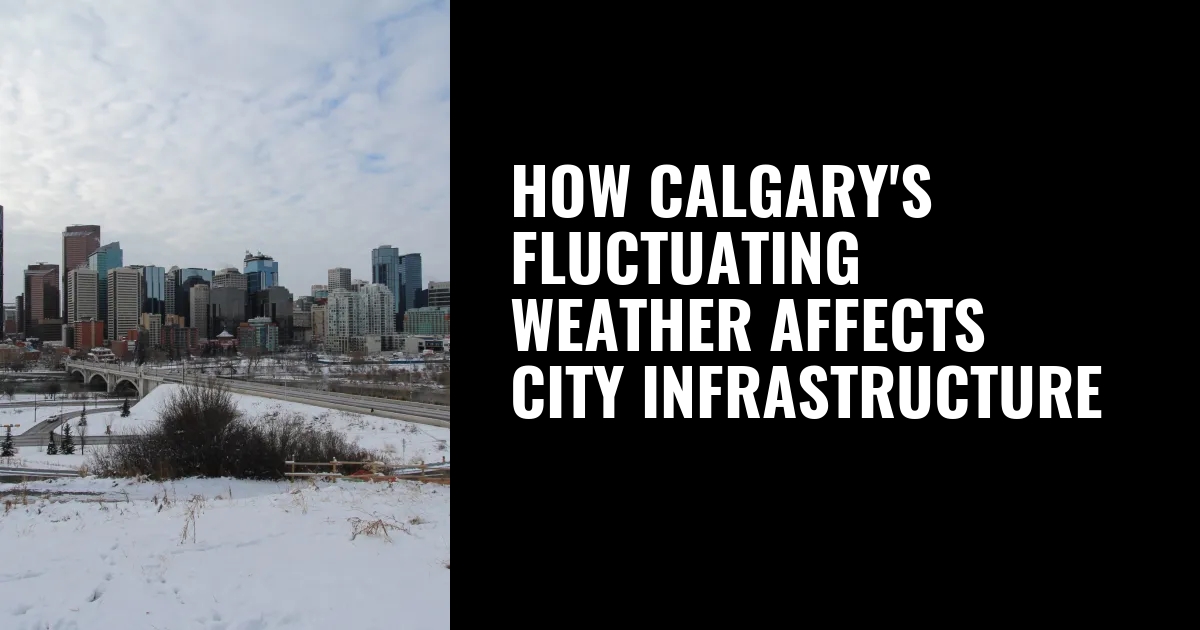
Alberta’s winters are known for their drastic unpredictability.
From weeks of bitterly cold temperatures to sudden Chinooks that make it seem as if winter is over, residents have become accustomed to expecting the unexpected.
These weather fluctuations also affect the city’s infrastructure, including water services, pipes, roads, and transportation. Climate change may also increase unpredictability as extreme weather events become more frequent.
Lynn Moorman, an earth and environmental sciences professor at Mount Royal University (MRU), explains that these conditions affect roads and sidewalks.
“When you have temperatures that move above and below 0 C, water gets into cracks when it is warm, and then that water freezes and expands, causing increased pressure forcing the cracks open further,” said Moorman in an email interview with the Calgary Journal.
Cold weather also affects other areas of infrastructure, including homes and buildings. According to a 2021 City of Calgary report, large snow and rain events can cause damage to properties and buildings.
How extreme weather damages infastucture
Given the unpredictable weather, the city tries to prepare for temperature changes in advance. During warmer spells, maintenance crews monitor freezing and thawing conditions and respond to service requests.
“Cold temperatures and changing weather conditions can influence Calgary’s water infrastructure, but our system is designed and built to manage the typical freeze-thaw cycles we experience throughout the season,” the city said in an email statement.
Weather extremes also affect aging infrastructure. Though not the main cause, a 2026 report by the City of Calgary says long-term deterioration of the Bearspaw South Feeder main was a factor in its break.
Shweta Chugh, a senior lecturer of earth and environmental sciences at MRU, explains that breaks in feeder main pipes are occurring more frequently due to age and a lack of prioritization of other community resources.
“Whatever infrastructure they have had, it was built for the climate of yesterday. It is not built for the climate of today,” said Chugh.
With this in mind, Chugh said that newer buildings are being designed to better withstand the city’s climate.
“They’re not as impacted by the environmental change as the old ones have been,” added Chugh.
11 per cent of Calgary infastructure in very poor state
Lori Rissling Wynn, the director of Grants and Initiatives at Alberta Ecotrust Foundation, says city officials are planning and strategizing different ways to maintain buildings and systems.
“I would say, you know, the city of Calgary’s doing a lot to try and address changes to their infrastructure related to climate, and also ensure that they’re addressing adaptation and creating resilience within the city,” said Rissling Wynn.
With winter weather highs and lows, the city reports that it is very important to understand and mitigate potential infrastructure risks.
A 2025 report by the city said that about 11 per cent of Calgary’s infrastructure is in a very poor state.
Conditions such as these increase the risk to city services and buildings during freeze-thaw cycles. With winter conditions affecting so many in Calgary, it is important to take precautions and mitigate potential problems sooner rather than later.
Related