
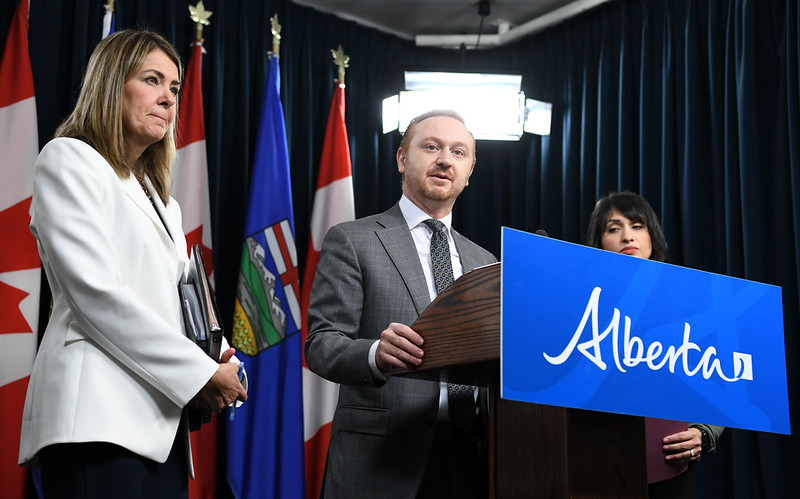
Alberta Premier Danielle Smith and three other provincial leaders are calling on the federal government to give provinces a formal role in appointing judges to Canada’s superior trial courts, appeal courts and the Supreme Court of Canada.
Smith, along with Ontario Premier Doug Ford, Quebec Premier François Legault and Saskatchewan Premier Scott Moe, has written to Prime Minister Mark Carney requesting a “formal, meaningful role” for provinces in judicial appointments and calling for federal appointments to be made from candidates “recommended and approved by the relevant province.”
Related Stories:
The joint request builds on Alberta’s earlier push for judicial appointment reform. In a Jan. 23 letter to the prime minister, Smith wrote that Alberta “will not agree to provide the necessary funding to support any new judicial positions in the province until such engagement and collaboration are provided.”
Currently, judicial appointments are made through advisory committees that assess applicants and provide non-binding recommendations to the federal government.
“The current process does not give provincial governments an equal voice in appointing justices,” Alberta Justice Minister Mickey Amery said.
In the joint release, Smith said provincial involvement would better reflect local needs.
“Provinces are responsible for keeping communities safe and upholding the rule of law. When provinces are at the table, decisions better reflect the needs of the people they serve,” she said.
The premiers are also seeking access to the same information on judicial candidates as the federal government as part of what they describe as a more transparent and consistent process.
The multi-province push follows earlier calls from Alberta. In a Feb. 3 statement, Smith said she had written to Carney about vacancies on the Alberta Court of King’s Bench, the Alberta Court of Appeal and the Supreme Court of Canada, and called for “meaningful reform” to the appointment process.
Smith also said Alberta wants the federal government to relax bilingualism requirements for federal judicial appointments, saying they “do not reflect Canada’s broader linguistic diversity in Western Canada and alienates Albertans and western Canadians alike.”
“We are simply asking for a formal and meaningful role in the judicial appointment process that would boost public confidence in the administration of justice, support national unity within Alberta, and ensure judicial decision-making reflects the values and expectations of Albertans,” Smith said.
Amery said Alberta has proposed a Special Advisory Committee “consisting of four non-partisan experts from Alberta and the federal government.”
Smith said Alberta currently has three vacancies on the Court of King’s Bench and that the planned retirement of Supreme Court of Canada Justice Sheilah Martin “will give rise to a vacancy” open to candidates from Alberta.
She proposed a four-member advisory committee, with two members appointed by Alberta and two by the federal government. The committee would “assess candidates on a non-partisan basis” and ensure potential candidates “have the necessary expertise to serve in these important roles.”
The letter also asks the federal government to “make practical and reasonable changes to relax bilingualism requirements for federal judicial appointments,” stating that the current approach “does not reflect Canada’s broader linguistic diversity” and raises concerns about “access to justice and equitable regional representation in judicial appointments.”
Ford said the change is needed because “it is past time that provinces have a say in the appointment of the judges making decisions that directly impact the people we represent.”
Legault said the proposal would strengthen “provincial autonomy and promote an open and cooperative federalism.”
Moe said Saskatchewan should have “a meaningful role in selecting the judges who serve” the province.