
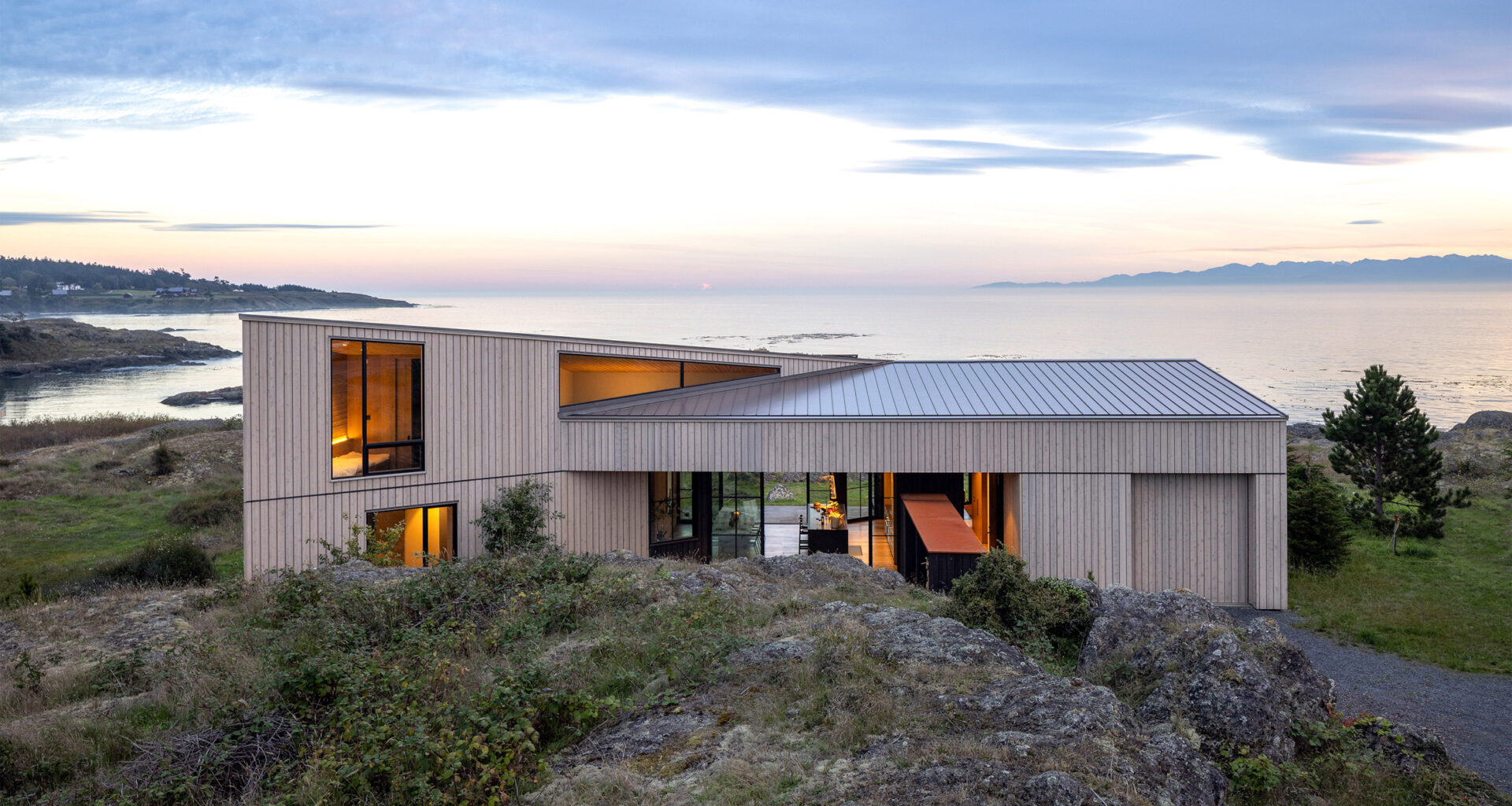
Architectural studio Heliotrope took a “site-sensitive approach” while designing a vacation house in the Pacific Northwest, resulting in a bow tie-shaped plan and knotty cedar cladding.
The house is located on San Juan Island in the Salish Sea, situated about 90 miles (145 kilometers) from Seattle. Part of Washington State, the island is reached by boat or seaplane.
The clients are from Seattle and have friends with homes on the island. They wanted a family vacation home that would be suitable for entertaining guests and could shift to more frequent use as the clients age.
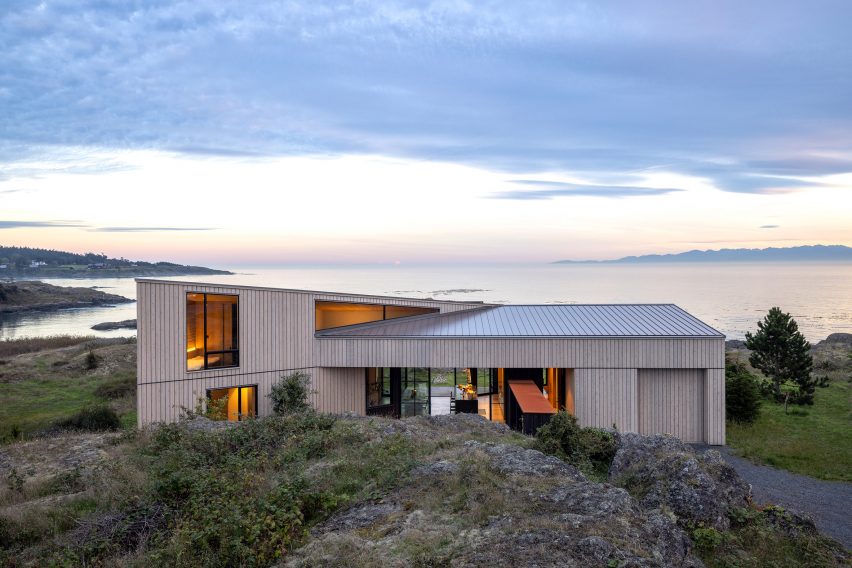 False Bay is a cedar-clad vacation home on an island in Washington
Respecting the context and minimising energy consumption were key concerns for the clients.
“They shared the firm’s interest in a site-sensitive approach to the design, as well as a commitment to net-zero energy,” said Seattle-based studio Heliotrope.
The site posed challenges, as the house is located on a rocky shoreline exposed to rain and wind that travels down the Strait of Juan de Fuca from the Pacific Ocean.
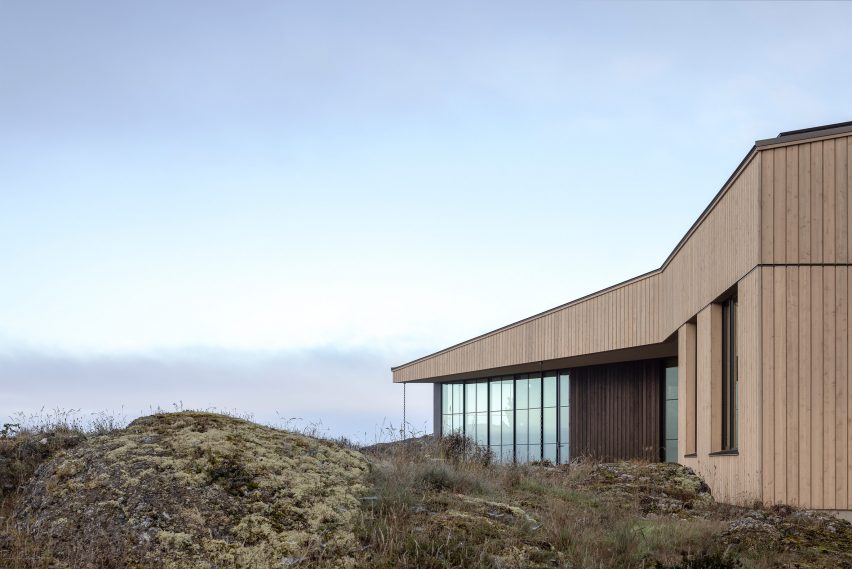 It was nestled into the rocky landscape
Moreover, the property has rocky outcrops that made “siting the home a bit of a puzzle”, the team said.
The studio conceived a sculptural house with a bow-tie-shaped footprint, allowing the building to be tucked into the rocky site, informed by the famed Sea Ranch development in northern California, known for its “windswept building forms and weathered materials”.
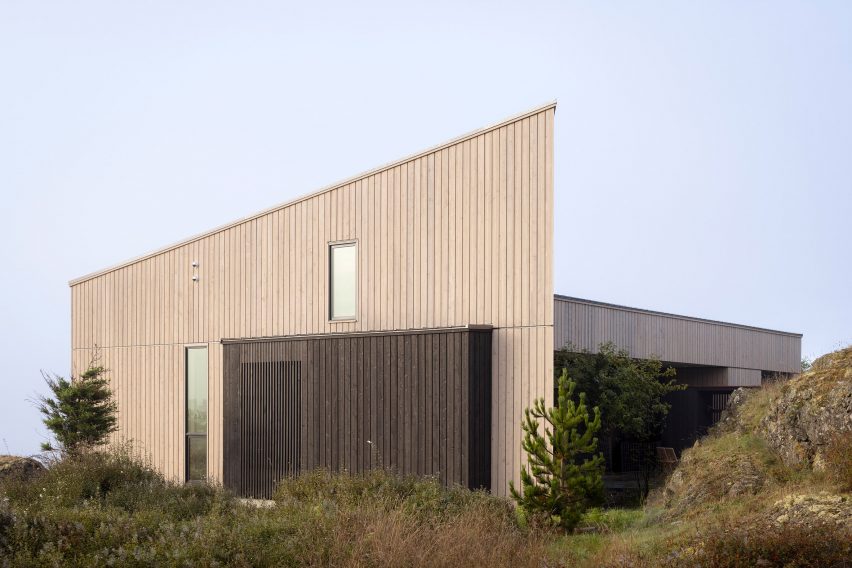 The home has a bow tie-shaped footprint
Facades are clad in cedar with a semi-transparent stain, giving the wood a bleached appearance. Cedar is known for being highly resistant to insects and rot.
The team used tight-knot cedar, which has small- to medium-sized knots that give the wood a more rustic appearance than “clear” cedar.
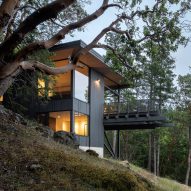
Heliotrope perches Buck Mountain Cabin over forested site in Washington State
Within the 2,474-square-foot (230-square-metre) house, there is a clear separation between public and private areas.
One side of the plan holds the social zone – a kitchen, dining area and living room. The other contains a primary suite and guest suites on the ground level, and a loft and reading nook on the upper level.
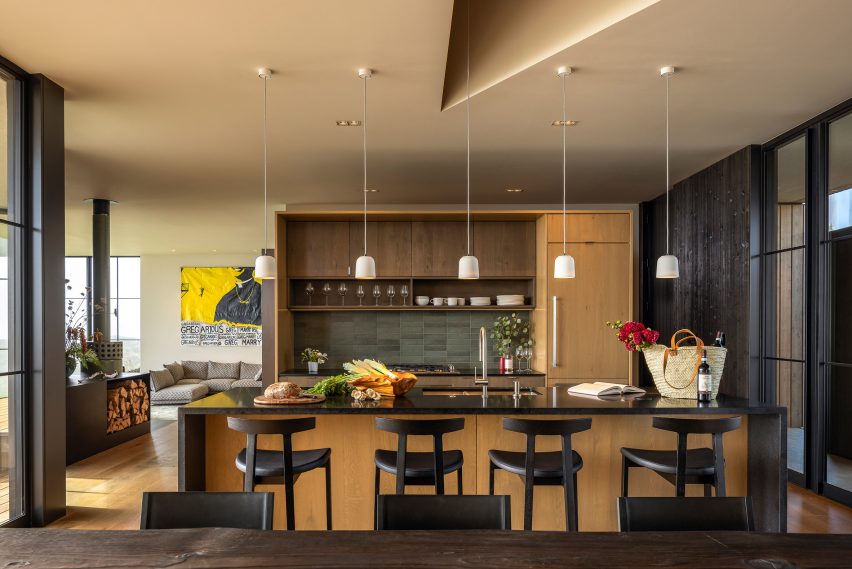 Warm-toned wood was used throughout the interior
Interior finishes include an abundance of warm-toned wood, which helps create a cosy atmosphere.
Pre-finished engineered oak was used for the flooring, and cedar was used for certain walls and ceilings. Glazed-brick tile is found behind a wood stove in the living area.
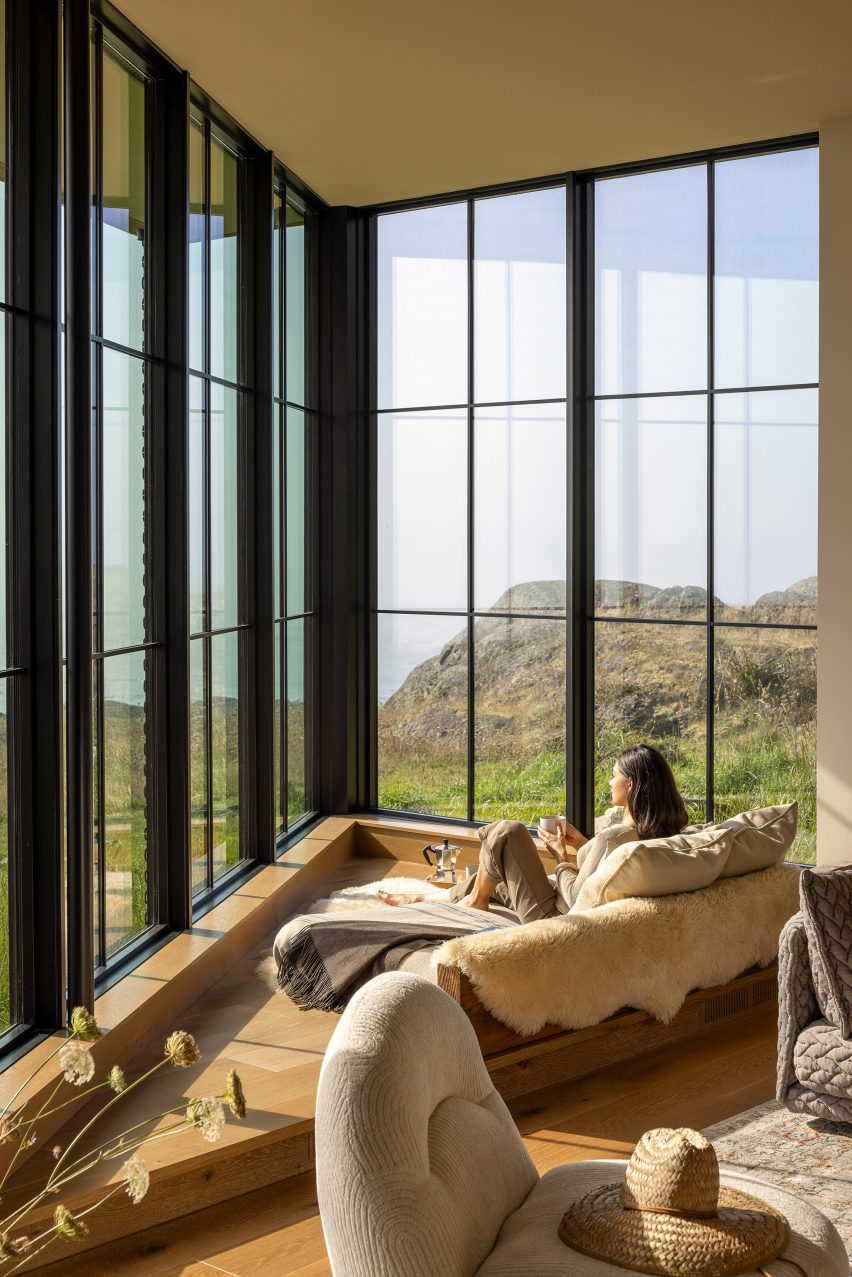 A reading nook overlooks the surroundings
Large windows offer immersive views of the landscape.
The architects focused on providing views of the water to the south and a rocky outcrop to the north. The house was kept mostly opaque on the east and western sides, which face neighbouring homes.
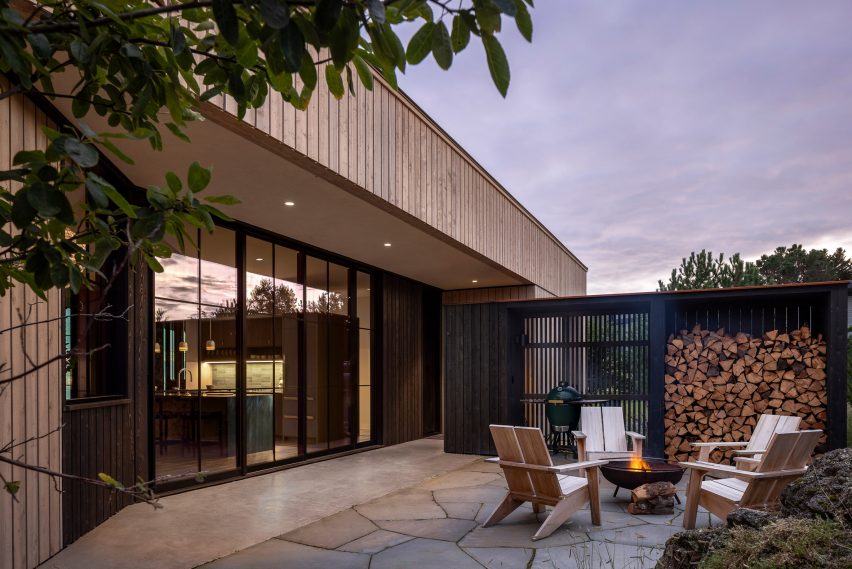 The kitchen opens onto an outdoor terrace
Along the front elevation, a terrace sits within a gap formed between the house and rocky mound. The outdoor space is protected from the wind, which is “an important feature on such an exposed site”.
Elements that help reduce energy consumption include an airtight building envelope, and a high-efficiency heating system with heat-recovery ventilation. An 8kW solar array helps generate power for the home, which is also tied into the island’s electric grid.
Other projects by Heliotrope include a sensitive extension to a 1930s home that was originally built by a Norwegian ship captain and a house for art collectors clad in dark metal and white stucco.
The photography is by Sean Airhart.
Project credits:
Architect: Heliotrope
Heliotrope design team: Joe Herrin (principal in charge), Chris Wong (project manager), Rachel Belcher (designer)
Interiors: Heliotrope with owners
Contractor: DME Construction
Landscape: Garden Artisan Landscapes
Structural engineer: Swenson Say Faget
Mechanical engineer: Beyond Efficiency
Geotechnical engineer: Stratum Group