
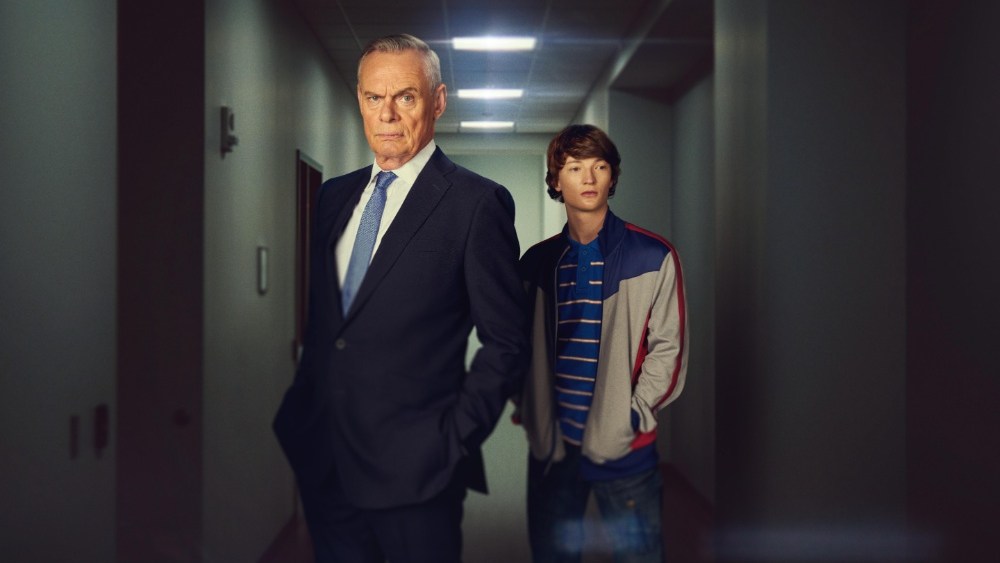
Two years ago, when news anchor Huw Edwards – one of the BBC’s highest paid and best known journalists – was convicted of making indecent images of children, some believed to be as young as 7, almost the entirety of the U.K. was stunned.
Edwards, who’d spent his entire career of almost 40 years at the broadcaster by the time of his arrest, had been one of the most reliable faces on television: the man who was trusted to tell the world Queen Elizabeth II had died in September 2022.
But his arrest and conviction in 2024 had been preceded a year earlier by a strange story that appeared in the press and then disappeared almost as quickly. In July 2023 British tabloid The Sun published a scoop that an unnamed senior BBC presenter had been paying a teenager for sexual images. The rumor mill went into overdrive with numerous household names accused on social media before eventually Edwards’ wife made a statement on his behalf in which he admitted to being the perpetrator and saying he had checked into an inpatient facility on mental health grounds. The public quickly turned on The Sun for effectively outing Edwards.
Now a new drama from Paramount-owned U.K. network Channel 5, “Power: The Downfall of Huw Edwards” shows that in fact the story of the teenager and the conviction for making indecent images are linked by a convicted pedophile whom Edwards knew. It was the pedophile who sent Edwards the images of children being sexually abused in exchange for monetary gifts (Edwards denied he was paying for the images) and it was the pedophile who introduced him to 17-year-old “Ryan” (Ryan’s real identity has never been revealed).
The 90-minute film is produced by Wonderhood Studios, written by Mark Burt (“The Trial”) and directed by Michael Samuels (“The Windermere Children”). “Wuthering Heights” star Martin Clunes plays Edwards.
Ahead of the show airing on Channel 5 on March 24 (it will also be available on Paramount+), Variety sat down with the network’s commissioners Guy Davies and Paul Testar to find out how – and why – they decided to bring the downfall of Huw Edwards to the small screen.
Where did the idea for the film come from?
Guy Davies: Wonderhood came to us with the idea of doing the Huw Edwards story. And then that developed into a conversation about how you do it, bearing in mind that one of the key sources can’t be identified. And I think we came around to the idea that a dramatic treatment of the story was the way to progress.
Did you approach it almost like a piece of factual content?
Davies: Well, I think in the sense that there was clearly somebody at the heart of this, the Ryan character, who was vulnerable, who was traumatized. And I think one of the great things that Wonderhood had managed to do is to keep that relationship and the duty of care to Ryan and that is the thing you do in a factual show.
Paul Testar: Mark Burt took the same approach and shared the same mentality as Wonderhood, of putting Ryan and his and his story and his perspective and his wellbeing right at the center of this story… This is such an emotional story, and one of the most important things about telling it as a drama was to convey the emotion of what this grooming experience was like for this poor boy, and Mark took that incredibly seriously.
The debacle was hugely embarrassing for the BBC, particularly the fact they continued to pay Edwards after his arrest while he was awaiting trial. Was there any consideration internally about doing this story given that the U.K.’s broadcasting scene isn’t very big?
Davies: I don’t think there was, to be honest. The story was always the story for us, about power, about grooming, about how that process happens. The BBC investigation is a confidential inquiry, we didn’t have access to that. And we didn’t want to make a drama about the BBC. We wanted to make a drama about a powerful person and how they came to be involved with a young man in this way and who abused their power. And also the other story, of Edwards’ conviction, was again not a BBC story.
Testar: I think it was quite an early editorial decision as well that this story reaches a broader audience when its focus isn’t on the BBC. Because I think as much as would interest us who work in television, it’s less likely to be of interest to the broader public. The story of how a vulnerable person is groomed by a powerful person, and what it’s like for the family of that boy as well, is something that gives the story a broader reach.
Because the story is told in that way, there might be some criticism that you’ve gone too soft on the BBC, particularly given what they knew about Edwards’ arrest months before the public became aware. What would your response be to that?
Testar: Editorially, I think it would have stuck out quite awkwardly at the point at which the arrest takes place in the drama, I think to then start, at that point, to interrogate what the BBC may or may not have known and when, I think just wouldn’t have worked in the story.
Davies: I think it’s how you create the part of the story which is about not being heard. And I think that Mark was very perceptive in using what we knew about the frustration that the family felt, particularly in Wales, when they tried to complain and found the BBC putting up all sorts of conditions as to wanting to get information about it and [so] they just went to the papers.
Testar: It’s the frustration of an ordinary person trying to navigate a complex bureaucracy.
Let’s talk about some of the legalities of making the show. First the disclaimer credit, which reads: “This drama is based on extensive interviews with the victim, his family and the journalists who revealed his story. Some scenes, characters and text messages have been dramatized.” In a post “Baby Reindeer” era, do you have to be more careful of exactly how you’re phrasing that?
Testar: I think you do have to be careful how you phrase it. And I think there isn’t a one size fits all disclaimer for every show. I think each one is dependent on the story and the and the source material. Personally, I think it’s something people were very careful about before the “Baby Reindeer” scandal.
At the end there is also a credit noting Edwards was offered the opportunity to comment and declined. Were you expecting him to make a statement?
Davies: Well, we didn’t make it as a collaboration with him, had never intended to.
Did you see the statement he put out on Monday in which he condemned the dramatization? Is there anything you’d want to add to the statement Channel 5 already put out in response?
Davies: I don’t think so. Because I think that statement is about our position, really, that [the film] was based on the research, and that ourselves as the channel, our legal team Wonderhood’s legal team, were all happy that this has been made in accordance with Ofcom and the Broadcasting Code, which I know Huw has mentioned in his statement, and that we were very clear to give all of the allegations that would be looked at in the film in ample time, when it came to the Ofcom rules, which is what we did. So I think that’s it.
He has said he is also planning to “produce his own account.” Is that something that Channel Five might be interested in?
Davies: No.
Did making the film give you any insight into why he did what he did?
Davies: I don’t think I can comment on that, you’d have to ask him. … I mean, the insight from the psychiatric reports is his explanation to a degree. But I wouldn’t want to try and interpret his psychology.
Did you pay Ryan for his life rights?
Davies: I don’t think we should talk about that to be honest. I think that any relationship we have with him, or Wonderhood has with him, to be accurate is a matter that is between them. I don’t want to get into that. I don’t think we need to expand on that. I know Huw has asked about it.
The film opens with Edwards reporting Queen Elizabeth’s death and ends with him announcing his own conviction, which was obviously a dramatic license. Why did you choose to start and end there?
Testar: It was one of the very first things that Mark reacted to in this story, which was that there is no more trusted emblem of the establishment in our society than the person who’s given the responsibility of telling the public that the Queen had died. … And also somebody who is responsible for not just the Queen’s death, but had reported many other stories and scandals and convictions.
Davies: [He was] incredibly trusted by the public, and in a way, that trust became a bit of a metaphor in the film, because that’s also about power and the abuse of power.
And that’s why I think it’s such an interesting story, hopefully for viewers, because I think they will be taken aback by some of the texts, for example. The other side to that figure of trust, that’s why it’s such an interesting story to explore that idea of power and trust. Because you’ve got it there in the actual research.
Did you always know the film was going to end with him reading out his own conviction as a news reader?
Testar: It was pretty early on, but it wasn’t in the very first draft… it felt like a very important thing to end the story on, to remind the audience what the scale and detail of Edward’s crimes were.
Davies: And being, you know, finally accountable to the public in the medium which he worked in.
I remember from covering the conviction and the court case that it was such a strange thing that this guy who for so long had been the face of the news had become the news.
Testar: I think that this story and this scandal was quite a significant moment in the public’s general view of its institutional and establishment figures. I think it has contributed to a questioning of establishment figures, simply because of what the role that Edwards had and all of that. So I think that was another part of why that device was important.
This interview has been edited and condensed.