
Back to Article List
NASA’s SLS rocket and Orion spacecraft are back at Launch Pad 39B, and the crew is in quarantine — the final steps before the first crewed lunar mission in more than 50 years.

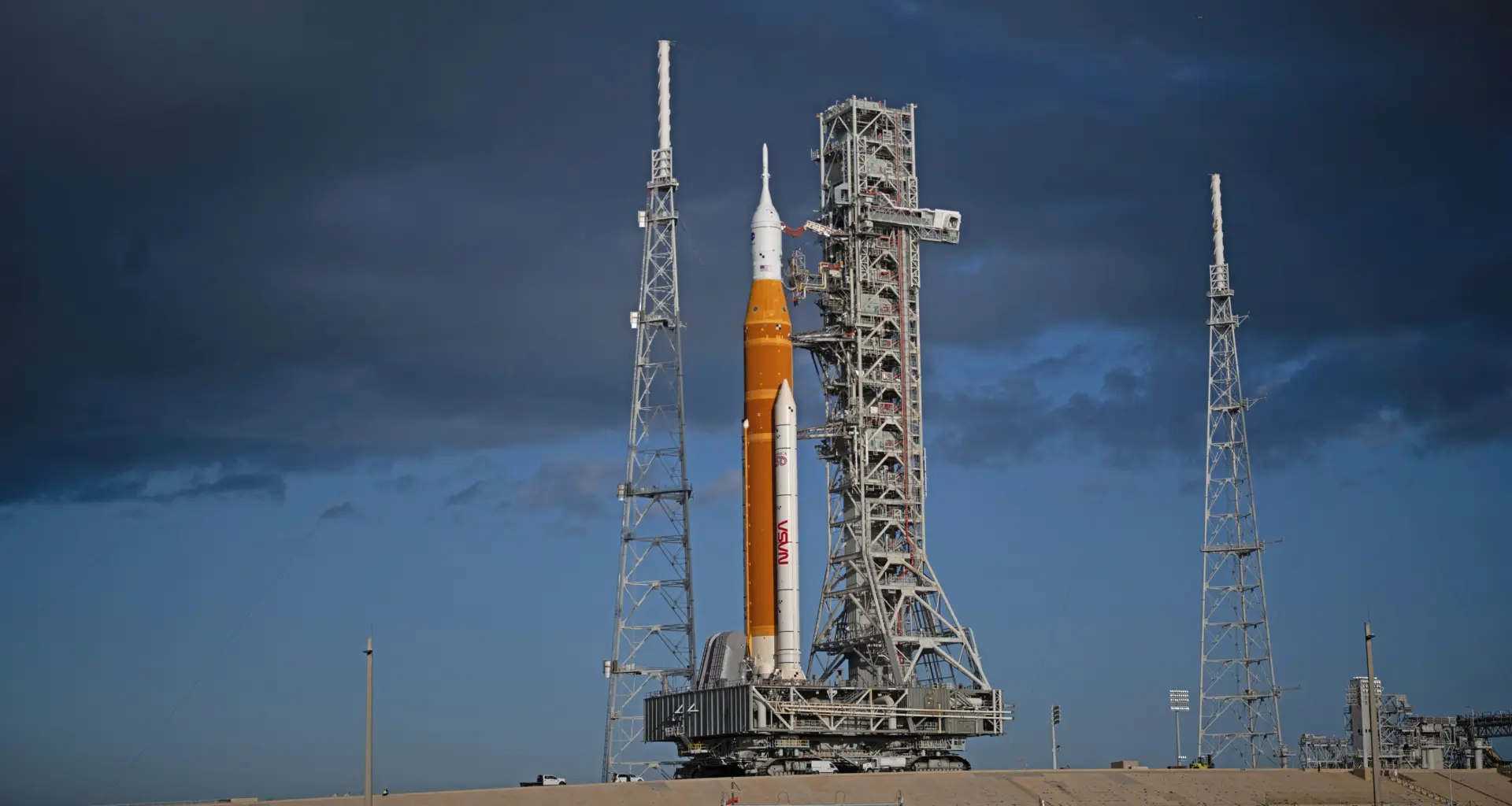
NASA’s SLS rocket and Orion spacecraft arrive at Launch Pad 39B at Kennedy Space Center on March 20, ahead of an April 1 launch attempt. Credit: NASA/Joel Kowsky
NASA is targeting April 1 for the launch of Artemis 2, with additional opportunities through April 6. The agency’s Space Launch System (SLS) rocket and Orion spacecraft completed their second rollout of the year to Launch Pad 39B at NASA’s Kennedy Space Center in Florida on March 20, and the four-person crew entered quarantine two days earlier.
“As of this moment right now, there are no major issues that we’re working,” said Lori Glaze, acting associate administrator for NASA’s Exploration Systems Development Mission Directorate, speaking at NASA’s Ignition event on March 24. “We are doing everything according to plan.”
RELATED: When will Artemis 2 launch and what will the mission do?
The launch date was confirmed after NASA completed the mission’s Flight Readiness Review (FRR) on March 12 — the agency’s final major assessment before launch, in which every team responsible for a piece of the mission reports on its readiness and votes “go” or “no go.” All teams voted go, and when leaders asked for dissenting opinions, there were none. During a March 12 press conference, John Honeycutt, manager of NASA’s SLS Program, described the FRR as “telling the risk story” — making sure every group had done its work to assess any and all risk before committing to fly.
Repaired and refreshed
In late February, NASA rolled the vehicle back to the Vehicle Assembly Building (VAB) to address a helium flow issue discovered after the second wet dress rehearsal. Engineers redesigned a quick disconnect on the upper stage’s helium line, removing a problematic seal that had restricted the flow and reinforcing the replacement. While the vehicle was in the VAB, engineers also refreshed and recharged several of the vehicle’s batteries — including those for the flight termination system, the upper stage, the core stage, the solid rocket boosters, and Orion’s launch abort system — and replaced seals on the core stage’s liquid oxygen feed line, which carries cryogenic propellant into the rocket.
NASA initially targeted the evening of March 19 for rollout, but high winds delayed the start by a few hours. Crawler-transporter 2 began hauling the 11-million-pound (5 million kilograms) rocket, spacecraft, and mobile launcher out of the VAB just after midnight on March 20. The four-mile (6.4 kilometers) crawl to the pad, at roughly 1 mph (1.6 km/h), took 12 hours.
The Artemis 2 crew — commander Reid Wiseman, pilot Victor Glover, mission specialist Christina Koch, and Canadian Space Agency astronaut Jeremy Hansen — began prelaunch quarantine on March 18 in Houston, where they’ll spend about a week before flying to Kennedy Space Center to finish out their isolation in the astronaut crew quarters ahead of launch.
Artemis 2 will send its crew on a roughly 10-day trip around the Moon. At the Ignition event, NASA administrator Jared Isaacman called the mission the “first crewed step of the Artemis program to pick up where Gene, Harrison, and Ronald left off on Apollo 17.”