

Listen to this article
Estimated 5 minutes
The audio version of this article is generated by AI-based technology. Mispronunciations can occur. We are working with our partners to continually review and improve the results.
After being on hiatus for almost four years, BTS has finally reunited to release new music.
The seven members of the K-pop boy band went on hiatus in 2022 in order to complete their mandatory military service in South Korea. Now, they’re back with their 10th studio album, Arirang.
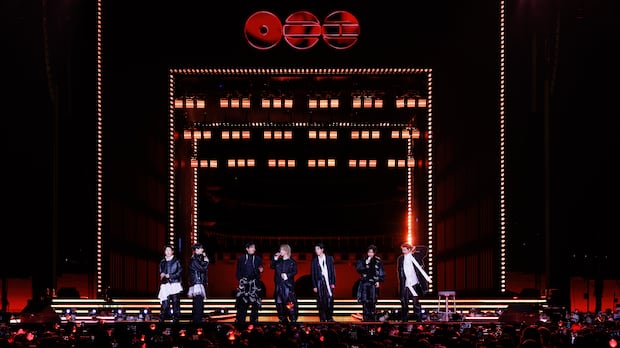
To celebrate the album’s release, BTS performed live on Netflix from Gwanghwamun square, a cultural landmark in the heart of Seoul. The significant setting of their first performance back as a group, combined with the cultural meaning behind their album title, has fans wondering: after reaching the heights of K-pop superstardom, does this album mark a return to their roots?
Today on Commotion, BTS fan Ann Pornel and professor Michelle Cho join host Elamin Abdelmahmoud to unpack the highly-anticipated comeback album, whether their first performance in years lived up to the hype, and what it all might signal about their future as a group.
We’ve included some highlights below, edited for length and clarity. For the full discussion, listen and follow Commotion with Elamin Abdelmahmoud on your favourite podcast player.
WATCH | Today’s episode on YouTube:
Elamin: Michelle, do you want to explain the concept behind the album’s title, Arirang, and also how it’s been interpreted through this album?
Michelle: OK, so here’s the primer. Arirang is the most famous Korean folk song on both sides of the DMZ. It’s sometimes actually referred to as a kind of alternative national anthem…. And for a lot of Koreans in the diaspora and in the two Koreas, it gives you chills when you hear it because it’s such a potent symbol of endurance, national endurance. Korea is often talked about as “the shrimp between whales.” How has it managed over the millennia to maintain its own cultural identity, given that it’s overshadowed and overpowered so often?
So, that recording [of Arirang on BTS’ song Body to Body] actually featured musicians from the national centre for Korean traditional music. That was a collaboration between the premier institution for training people in maintaining the practice of Korean traditional music, so it has a real symbolic resonance. The other thing, though, is that the song is kind of the collective property of people all over the world. It belongs to no one, and therefore it belongs to everyone, right? And I kind of feel like that idea of collectivity, and the feeling that can be evoked by music in particular, is core to the album as a whole. So, you know, Body to Body sounds just like what goes on in the club. But I think in that song in particular, it’s also like when you get together as a collective, as a mass, and you experience something together. So, it has that kind of dual meaning.
Elamin: That’s the journey that I went on with that song … going, “Oh, OK, it’s a song about a dance club.” And then you sort of wade into the song — it’s actually just a song about experiencing live music together. And then, you sort of add in that layer that you’re talking about.
I guess some of the stuff that you’re talking about, Michelle, tells me that for you, the title is a signal, right? The title is a signal of the intentions and the ambitions of BTS with this record. Is this the comeback album you were expecting from BTS, would you say?
Michelle: Yes and no. I mean, to be honest with you, when I heard that the album was going to be called Arirang, I was like, “Oh, no, they’ve bitten off more than they can chew,” just because it could come off as this boldly nationalistic gesture, and then also might anger people. Like, you are claiming this … incredibly important thing for many, many Koreans, and you’re going to claim to represent it to the world? So, I was nervous. But I actually feel like taking it as a theme, as a concept of togetherness — as opposed to like, “No, we now represent all of Korean culture to everyone now, and how we do it is The Way” — I think that actually works.
You can listen to the full discussion from today’s show on CBC Listen or on our podcast, Commotion with Elamin Abdelmahmoud, available wherever you get your podcasts.
Panel produced by Amelia Eqbal.