
The Pitt’s biggest martyr is also currently its biggest jerk. Is it working?
Photo: Warrick Page/HBO Max
Spoilers follow for the second season of The Pitt through the 11th episode, “5:00 P.M.”
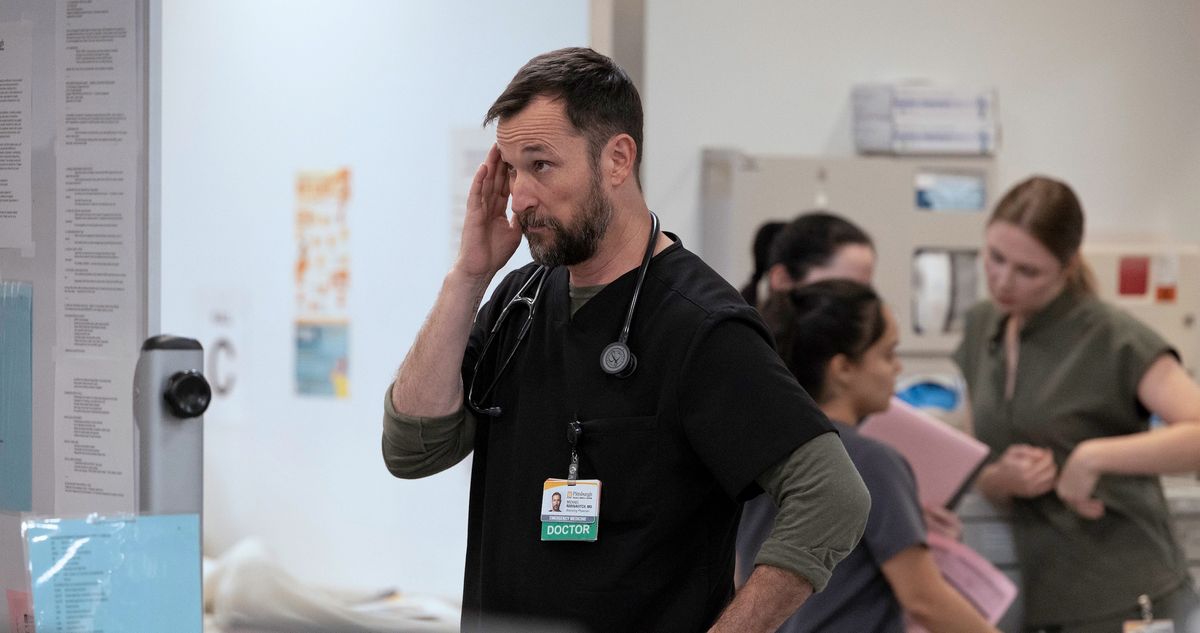
Dr. Michael “Robby” Rabinovich in season one of The Pitt: A COVID-traumatized leader who was hard-nosed but fair to his colleagues. An emotionally overwhelmed guy trying to be there for his sort-of stepson after the kid’s girlfriend was killed. A regretful romantic partner who understands too late that he was so emotionally distant he had no idea his former lover got an abortion. A flawed man, but one you wanted to have around when things get hard. Dr. Robby in season two of The Pitt: A hothead who casually insults his colleagues and says within earshot of patients that he can’t wait to get out of the ER. A man who has yelled at basically every brown woman he works with, lied about his self-destructive tendencies (wearing a motorcycle helmet, my ass), and failed to protect his patients and colleagues against ICE’s incursion into the ER. Eleven hours into this 15-hour shift, most of the attending’s best qualities — his pragmatic approach to medicine, his encouragement of young colleagues, his ability to roll with unexpected challenges — have curdled into huffy dismissiveness and defensive blind spots. Those slutty little glasses aren’t cutting it anymore. This is Robby’s asshole season, and it’s tougher to watch than all the de-glovings and severed limbs The Pitt can throw at us.
Robby was introduced as a lightly flawed but ultimately principled guy, willing to bend the rules and try unexpected methods if he felt that it would benefit a patient, and considering other doctors’ and nurses’ suggestions with a baseline respect for their education and experience. He was always a little overly certain in his superiority and subtly deferred to his favorites — white guys like Abbot, Langdon, and Whitaker — but the ER needed someone to guide its hand, and Robby was there. Paging Dr. Daddy, you know? But from the moment Robby appears this season, headed to his last shift before a sabbatical that is really, definitely, absolutely going to happen, he’s got a chip on his shoulder and a patronizing attitude toward anyone attempting to disagree with him in even the slightest way.
Robby’s descent into douchery is the linchpin of this season’s storytelling; he personifies the accumulating professional fatigue weighing on everyone in the ER post-PittFest. (If he’s the season’s devil, Dana is its angel; being punched in the face by a patient in season one has made her fiercely protective of new nurse Emma.) Robby’s transformation serves a narrative purpose — how much more foreshadowing could a trip to a place called “Head-Smashed-In Buffalo Jump” provide? — but in emphasizing his PTSD and burnout, The Pitt is neglecting the colleagues most affected by it. The character interactions are no longer reciprocal: Robby yells; the person he’s yelling at looks upset but doesn’t get to defend themself or engage in a way that illuminates the character; Robby finds someone new to yell at. Robby’s heel turn is purposeful, but in order to pull it off, The Pitt is undercutting the rest of its ensemble.
While the past ten months have grown other characters’ confidence — Whitaker and Javadi both seem more comfortable in the ER on this Fourth of July weekend — Robby is now paranoid and standoffish, especially in the face of his replacement. No matter that it was his decision to finally take some time off. Dr. Baran Al-Hashimi (Sepideh Moafi), the attending who is going to fill in for three months, is his enemy now, and The Pitt positions her the same way it once positioned Santos, aligning us with a man’s perspective on a “pushy” female co-worker instead of with that newcomer woman’s perspective on a gatekeeping man. Al-Hashimi is up-to-date on cutting-edge methodologies; she’s done humanitarian work in combat zones (and has her own workplace trauma as a result, which Abbot, not Robby, is curious enough to ask about); she’s trying to improve PTMC’s systems and standard of care. Sure, she’s idealistic, even a little corny — I cannot defend her “patient passport” idea — but on her first day, does she deserve Robby undermining her with an explanation of “how we do things,” or trailing her through the ER to second-guess her work, or trying to divide up the residents so he doesn’t have to liaise with her? This woman brought in bagels! Cut her some slack!
Al-Hashimi’s AI app isn’t great, nor is it her only approach to medicine. That’s how Robby sees her, though, so it’s how The Pitt has positioned her, relying on Robby’s tendency toward bursts of told-you-so dialogue to inform how we should feel. Noah Wyle’s exasperated delivery of “Sure, AI will make doctors more efficient, but hospitals will expect us to treat more patients without any extra pay, of course, all the while eliminating staff positions for attendings and residents” is a classic bit of Robby tough love that’s meant to open our eyes to the problems of frontline medicine. But Robby’s big speeches are less rousing this season because the character is so out of sorts, making these moments come off more scold-y than principled. His stance as the ER’s conscience is crumbling. More than once, he has been completely out of pocket: brushing off Santos’s concern about Family Services splitting up a sister and brother because “a lot of what happens to people around here isn’t right”; tearing into Mohan after her panic attack with “Is this … because of your mommy issues?” When Al-Hashimi says he’s beginning to lose some of his “basic human empathy,” she’s right. And when Robby laughs at her concern and says he thinks the ER will “fall to shit when I’m gone,” he’s pretty irredeemably wrong.
In layering on Robby’s aggression without the checks and balances of other characters’ responses to it, The Pitt is in danger of making his point of view its point of view. The Pitt is set up to work as an ensemble show — a strong group of actors, varied characters with distinct experiences, a steady stream of patients and cases that allow new dynamics to emerge — but spending so much time on Robby this season has kept it from becoming one. More people than just Dana could be standing up to Robby and showcasing performances beyond the show’s two Emmy winners. More story lines could build out other characters’ opinions on how the hospital runs and how Robby works, so characters like Al-Hashimi aren’t reduced to How does Robby feel about me? The Pitt can be didactic, and as the series’ primary protagonist, Robby is its foremost mouthpiece, as if the show worries we won’t pick up on its lessons if they come from a different source. Even in its visuals, the series aligns itself primarily with Robby’s movement throughout the department, implicitly suggesting that how he assesses and reacts to things is the best way for us to understand what’s going on inside this space. That worked well enough in the first season when Robby was our entry point into the show’s worldview, but The Pitt continuing to keep the focus so tightly on him in season two is narrowing the show’s perspective when it could be expanding it.
The tension between The Pitt’s continued reliance on Robby as its primary protagonist and the deterioration of his presumed righteousness culminates in “5:00 P.M.,” when two ICE agents show up at PTMC with an undocumented woman who was injured during one of their raids. Executive producer John Wells has said HBO asked that this story be “balanced, and we’re not just treating the situation as if it doesn’t have other points of view,” and that approach seems embodied in Robby, who tells his staff, “I do not want these guys here any longer than they need to be … We treat her injury, and that’s it.” He doesn’t share any of his own opinions on what ICE is doing, offering only a brusque hope that people leaving the waiting room in fear would instead “stay for the treatment that they need.” Perhaps this arm’s-length response is an expression of the “force field” tactic he lectures Mohan and Ogilvie about needing to develop in order to be good doctors, suggesting that one’s familial baggage, relationship drama, personal and political opinions, and whatever else need to stay outside of the hospital. That advice rings hollow, though, when Robby himself is letting so much of his built-up anguish, and his anxiety that the ED can’t go on without him (probably because he can’t go on without it), affect how he’s treating everyone else.
This is why his “You’ve been nothing but a distraction and a disruption” outburst against the ICE agents feels so lacking in the moral clarity that once drove Robby’s irritation with those keeping him from doing his job. When he ripped into the anti-vaxx parents of a son with measles in season one, Abbot’s “What is up with Robby?” reaction was a sign of how rare it was for him to lose his cool like that, but it also felt like Robby was justified in pulling out all the stops to save a kid from these misinformed and ultimately abusive parents. In season two, Robby’s ICE speech comes off perfunctory, like he can’t work up the energy to deal with this situation because he’s so lost in his own head. Trying to appeal to the ICE agents’ better angels so Robby doesn’t “lose any more patients or staff” is not only lacking in ethical fervor, it doesn’t stop them from violently arresting Jesse when he tries to defend the woman they injured. This time, the combination of Robby’s short fuse and delusional idealism has diminished returns.
Robby’s pivot is, of course, intentional, a way for The Pitt to highlight how burnout flattens committed frontline workers into people who simply can’t do it anymore. Making Robby pricklier and more unsympathetic shows how that damage can turn a leader who once exemplified collaboration and practiced encouragement into someone whose ideals are overshadowed by his trauma. But The Pitt could have developed this idea with more nuance and variation by exploring other characters’ responses to Robby’s self-loathing and how it reflects their own experience. Robby’s self-contempt and his fears of what the PTMC could become without him are overwhelming his character — and the show too. We know Robby’s pain so well; we can tell he’s doing that breakup thing where a person pushes you away so hard that you won’t miss them when they ghost you. But just like Robby, The Pitt isn’t paying enough attention to how the people getting pushed feel.
Sign up for the Vulture Daily
An entertainment newsletter for the pop-culture obsessed.
Vox Media, LLC Terms and Privacy Notice
Related