

Listen to this article
Estimated 4 minutes
The audio version of this article is generated by AI-based technology. Mispronunciations can occur. We are working with our partners to continually review and improve the results.
Vancouver Island marmots are expected to start emerging from hibernation in a few weeks, and a local charity working to save the critically endangered species is rooting for one particular resident who will be heading into the wild.
Marmot Recovery Foundation executive director Adam Taylor said Gob the marmot, named after a character from the television series Arrested Development, returned to their breeding facility on Mount Washington about two months after they released him into the wild last summer.
Gob was born within the Toronto Zoo’s breeding program in 2024 and was flown to the foundation’s breeding facility on Mount Washington, where he spent the winter with the group he’d be released into the wild with, Taylor said.
“The idea was that he would establish himself on Mount Washington,” Taylor said. “Hopefully in a couple of years … [he would become] an adult male that would, you know, provide pups, with some of the females that were there.”
But Gob had different plans.
Taylor said after he was released last June, Gob wandered around the mountain for a bit, before hiking nearly two kilometres back to the breeding facility in late August.
“He probably liked hanging out with the other younger marmots,” Taylor said. “He’s a social marmot.”
Taylor said it’s not unusual for wild and bred marmots to pop by the facility temporarily. But Gob went beyond that when he set up a den underneath the facility.
By the middle of September, the charity decided to bring him back into the facility for winter.
He wasn’t hard to catch, Taylor said.
“He was all about the peanut butter … [and] quite willing to go into the trap.”
“I want to be clear, he’s in really good health,” Taylor said. “There were no issues with his body condition, but he still wanted that peanut butter.”
This year, when they take the now two-year-old marmot out to be released, Taylor said they’ll take him further away from Mount Washington.
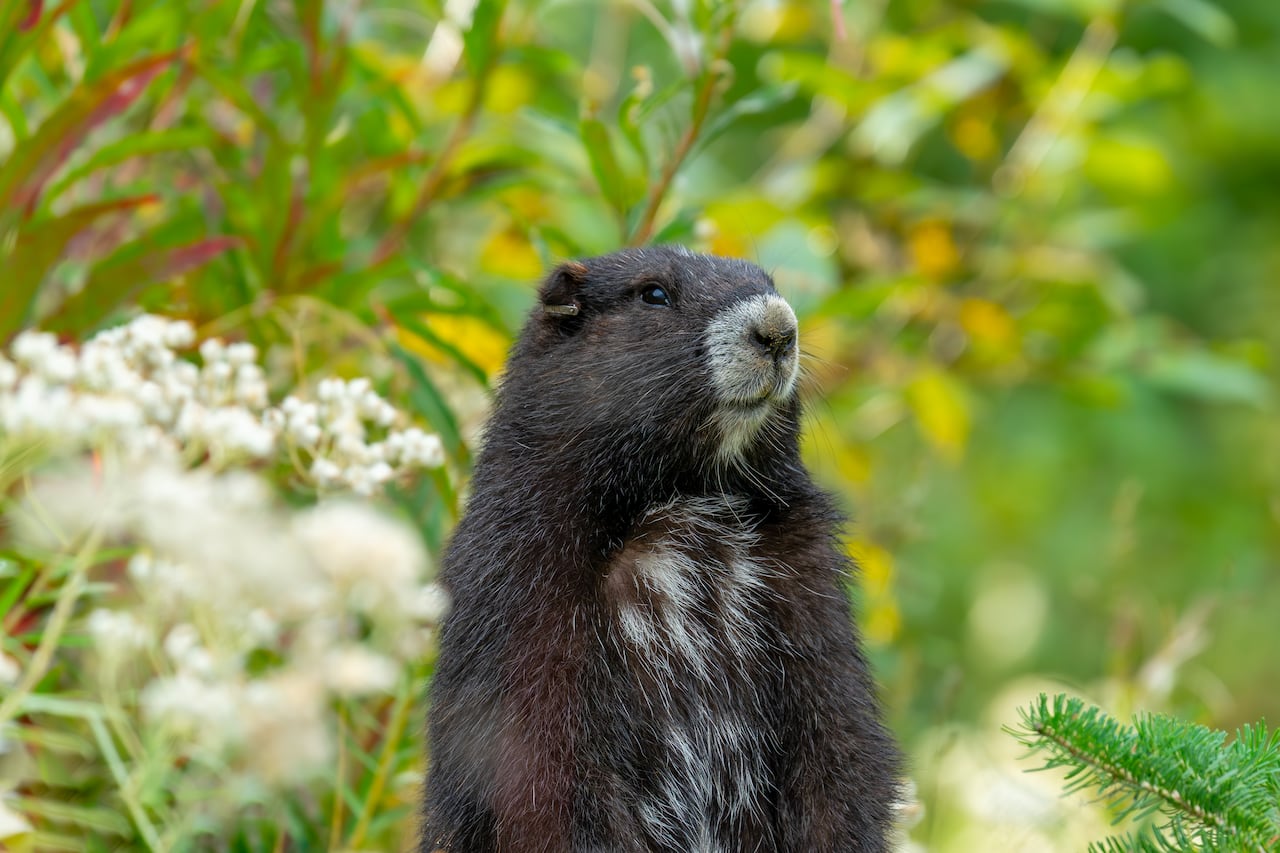 Gob the Vancouver Island marmot returned to the breeding facility on Mount Washington after being released into the wild. (Adam Taylor/ Marmot Recovery Foundation)Rebounding numbers
Associate professor of ecosystem science Jamie Gorrell at the University of Northern British Columbia said he wasn’t surprised to hear about Gob’s return.
“They like to be in groups. And that’s the same in the wild.”
Gorrell, who has worked with the organization in the past, said when marmots are released into the wild from captivity, they are released in groups of two to four to support that social nature.
“Natural social structure of marmots is to have a breeding pair and then to have their offspring stay with them over the years,” Gorrell said. “So they will build up multiple generations in a family unit.”
WATCH | Endangered marmots released into wild: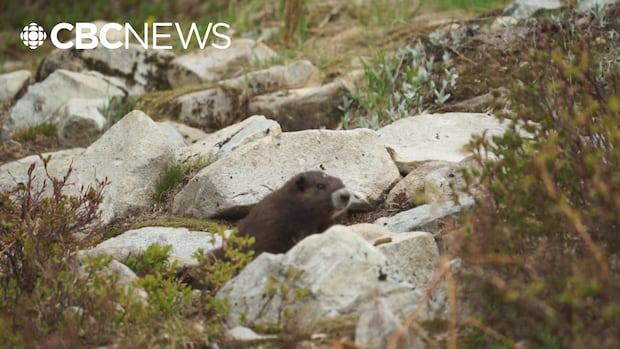
Conservationists on Vancouver Island set to release milestone batch of endangered marmots
A project aimed at restoring marmot populations on Vancouver Island is set to release 40 of the endangered mammals into the wild in the coming weeks, Claire Palmer reports. Vancouver Island marmots are one of five endemic mammals in Canada. And conservationists say their numbers have grown to almost 400 in the wild today, up from 22 in 2005.
In 2003, Gorrell said there were fewer than 30 of the animals left, and since captive breeding started more than 20 years ago, there are now more than 400 Vancouver Island marmots.
Gorrell said two of the major threats they face are predation and choosing the wrong habitat.
“We know that they like Alpine valleys and meadows where you can see a long way,” he said. “Sometimes they will move into cut blocks where the forestry industry has come through and ruined all the trees.”
Marmots play a special role in the environment, Gorrell said.
“They dig, they eat, they fertilize the soil, they turn over the soil, they provide some resident services in those environments that help with plant growth and carbon capture,” Gorrell said.
“They definitely have a role that we want to protect.”