

Listen to this article
Estimated 4 minutes
The audio version of this article is generated by AI-based technology. Mispronunciations can occur. We are working with our partners to continually review and improve the results.
An Edmonton architectural firm says it is in talks with the provincial government to potentially redevelop the former Royal Alberta Museum.
Last week, Vivian Manasc, founding principal of Reimagine Architects, told a webinar for the National Trust for Canada charity about her firm’s plans to revitalize the space. The webinar was posted online this week.
The National Trust for Canada’s website says the charity is an organization that “empowers communities to save and renew heritage places,” and describes the Edmonton building as a “stunning example of midcentury modern architecture.”
The former RAM building closed its doors to the public in December 2015 and has remained vacant ever since. In 2018, the museum opened the doors to its new location in downtown Edmonton.
“As a result of a great deal of advocacy on the part of many of us, we actually managed to get [the government] to come back to the table,” Manasc said during the webinar.
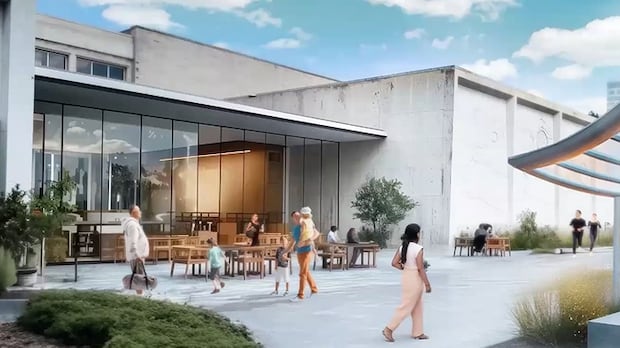
Manasc said the firm’s vision for the former RAM includes spaces like pickleball and other sports courts, space for various arts partners in the city, markets, a small theatre and a café.
The provincial government told CBC News it could not confirm or deny if it is speaking with Reimagine Architects about the building, but the press secretary for the Ministry of Infrastructure said the government is “still in active, good-faith negotiations with the highest-ranked proponent to redevelop the old RAM.”
“If an agreement cannot be reached, we are prepared to move to the next highest ranked proponent and then the subsequent,” Alex Cattran said in an email.
“Our goal is to find a solution that respects community interest and the site’s historic value, while also being cost-effective and responsible with public dollars.”
A line item in the provincial government’s 2026 budget earmarked money for the demolition of the former museum. Cattran told CBC News that the money will only be used if an agreement with any proponents cannot be reached.
The RAM first opened to the public in 1967 under its original name, The Provincial Museum and Archives of Alberta. It was renamed the Royal Alberta Museum in 2005 by Queen Elizabeth II during her visit to mark Alberta’s centennial.
We are still in active, good-faith negotiations with the highest-ranked proponent […]- Infrastructure ministry press secretary
In an interview with CBC News on Tuesday, Vedran Škopac, another principal at Reimagine Architects, also said the firm is on a shortlist of organizations in talks with the province to potentially redevelop the former museum.
Škopac said he believes heartily in the plan his firm has built.
“I honestly think that this building has the potential to be something better than it ever was,” he said.
How did we get here?
A long and storied timeline predates the former RAM’s present predicament.
The provincial government reports that the empty building continues to cost taxpayers more than $700,000 annually in operating and maintenance fees.
In August 2024, the province announced the building would be torn down and replaced with a green space. Also at that time, the province estimated that the cost to demolish the building would be between $22 million and $48 million.
In November 2024, the news of the planned demolition prompted Reimagine Architects and Beljan Development to pitch a joint proposal to keep the building standing by repurposing it into a new community hub.
WATCH | Reimagine and Beljan Development make their pitch: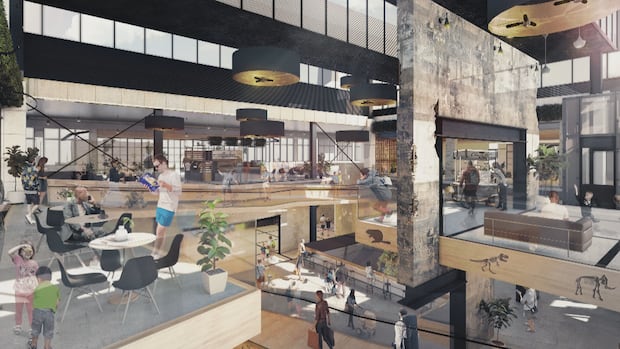
Edmonton developer and architect hope to save the Royal Alberta Museum
The Royal Alberta Museum, once a community hub after it opened in Edmonton almost 60 years ago, has sat vacant since 2015. In August, the provincial government announced the building would be demolished and turned into a green space, sparking strong opposition from the community. The news pushed an architectural firm and development company in Edmonton to team up to save the landmark from the landfill.
In July 2025, after sustained community efforts to advocate for the building, the province announced it was offering a final opportunity for proposals to either maintain or repurpose the vacant building in the Glenora neighbourhood.