
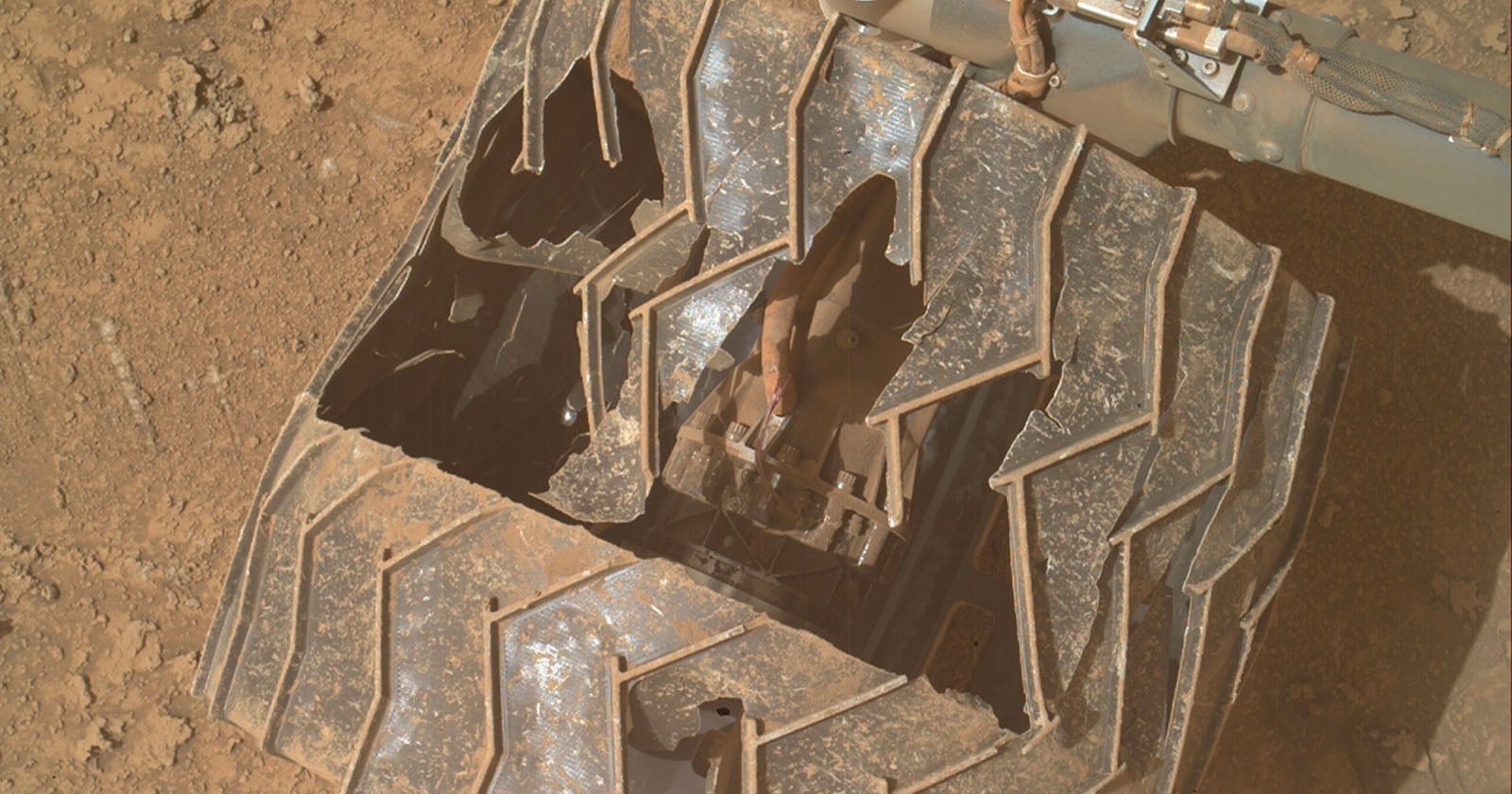
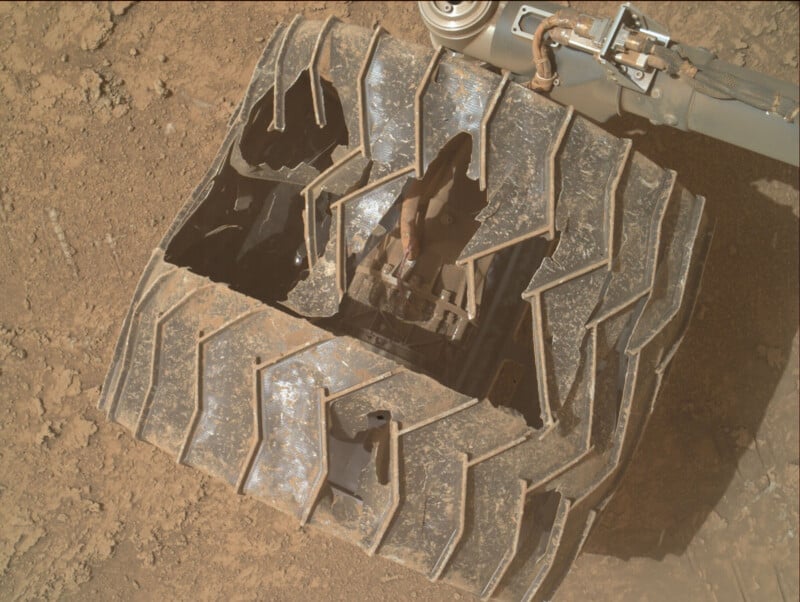
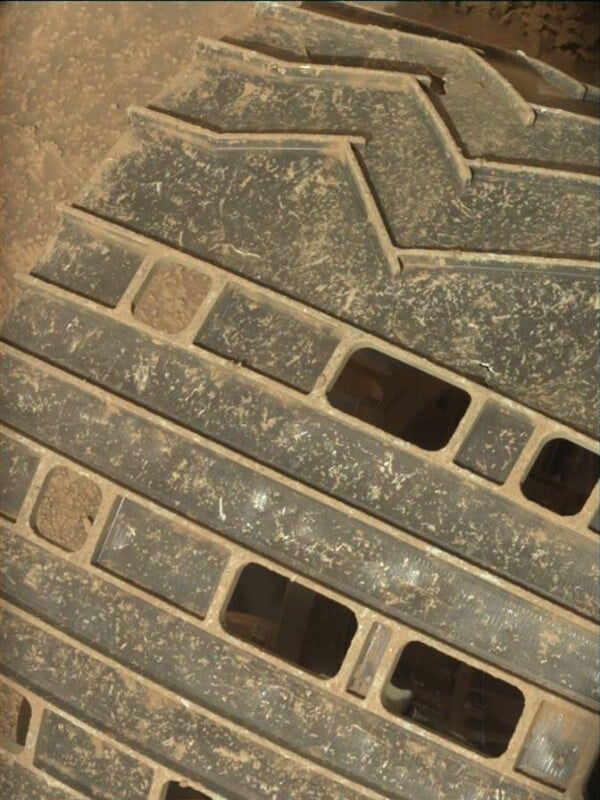
 The Mars Hand Lens Imager, a camera at the end of a robotic arm, took this photo on Monday of one of Curiosity’s severely damaged wheels.
The wheels are quite literally falling off NASA’s Mars Curiosity Rover, which is still trundling over the Red Planet some 13 years after it was dropped off there.
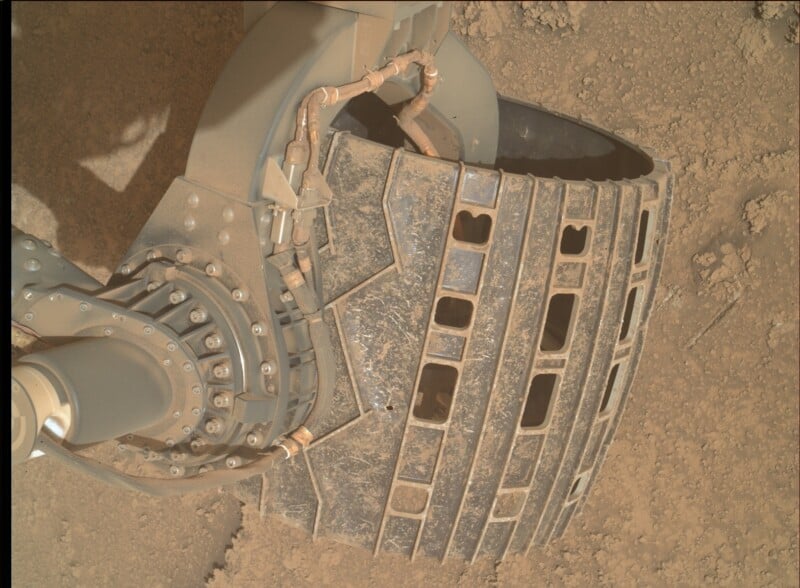
Photos taken on Monday, March 23, also known as Sol 4844, show just how much damage the surface of Mars has inflicted on the explorer’s wheels. But despite this, the plucky rover is soldiering on.
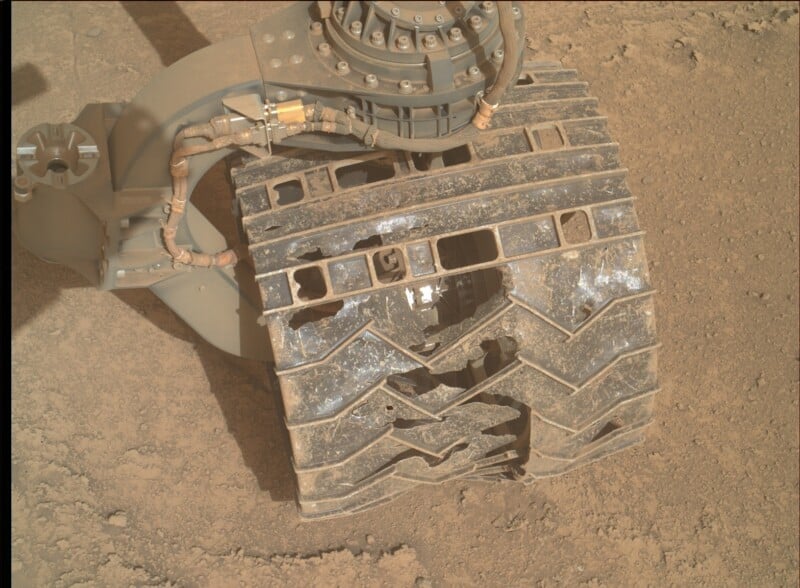
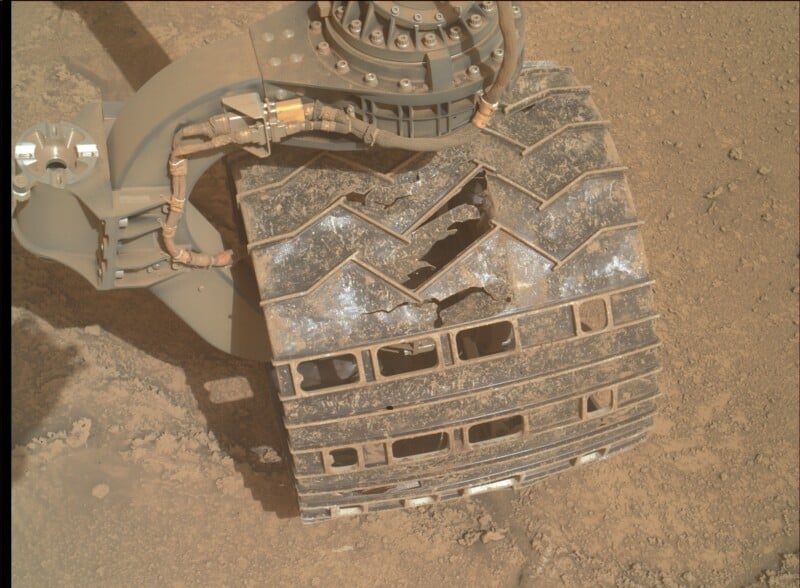
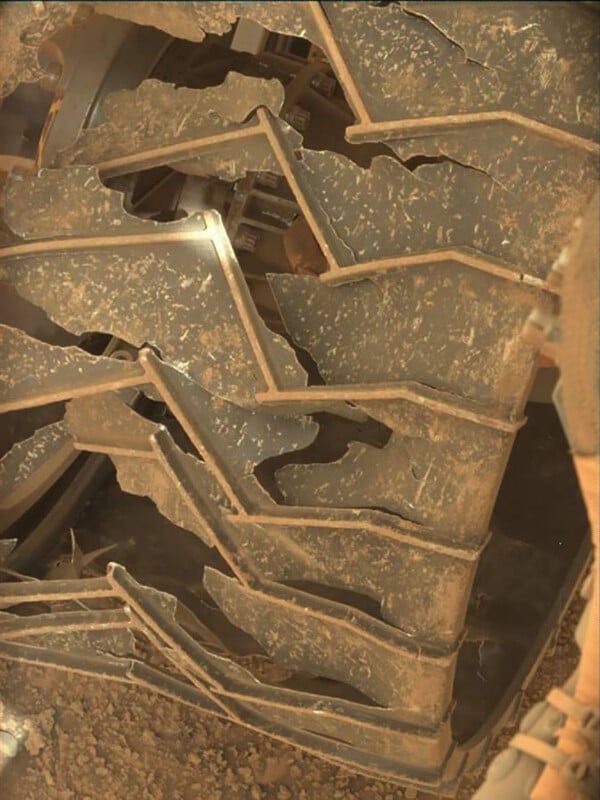
Every 3,330 feet (1,000 meters), the Curiosity Rover uses its cameras to inspect its wheels, and each time it gets slightly worse. PetaPixel reported on the state of the wheels in 2024, and it was bad then.
But as a series of RAW photos uploaded to the Mars Science Laboratory website show, the wheels are in far worse shape now — sections of the tire sidewall have completely collapsed.
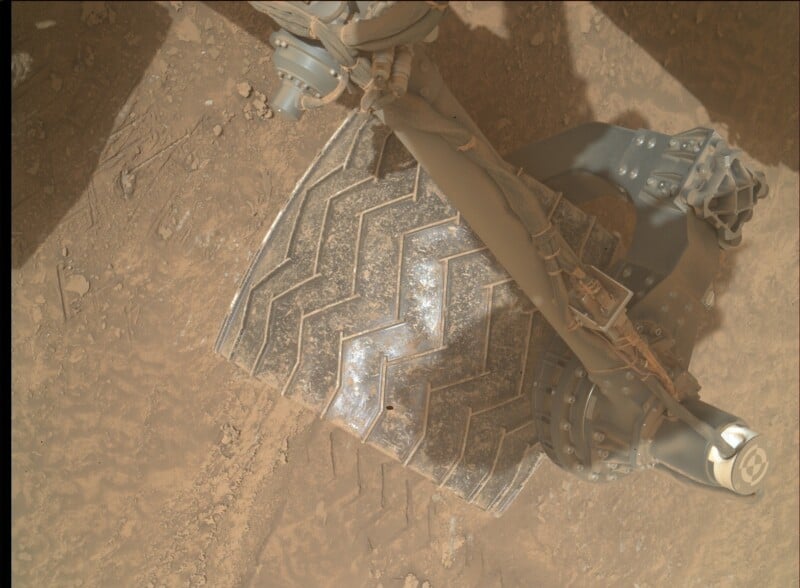 Some of the wheels aren’t as damaged.
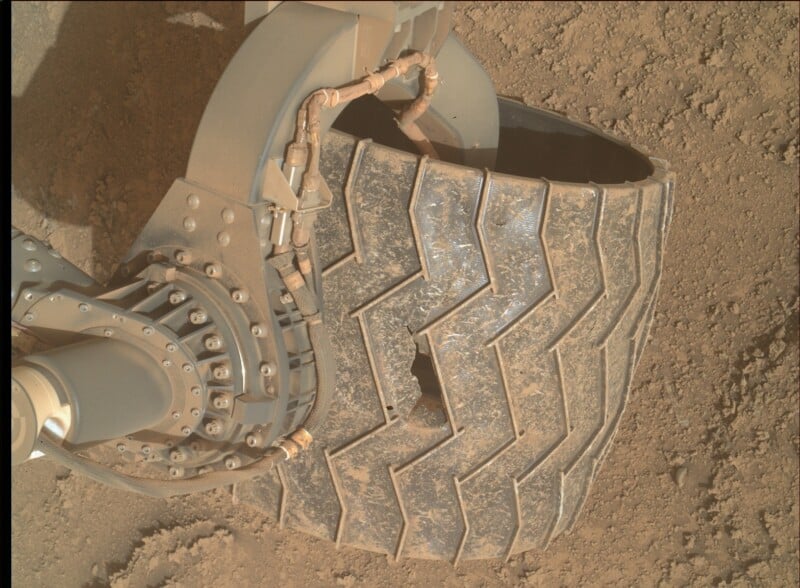
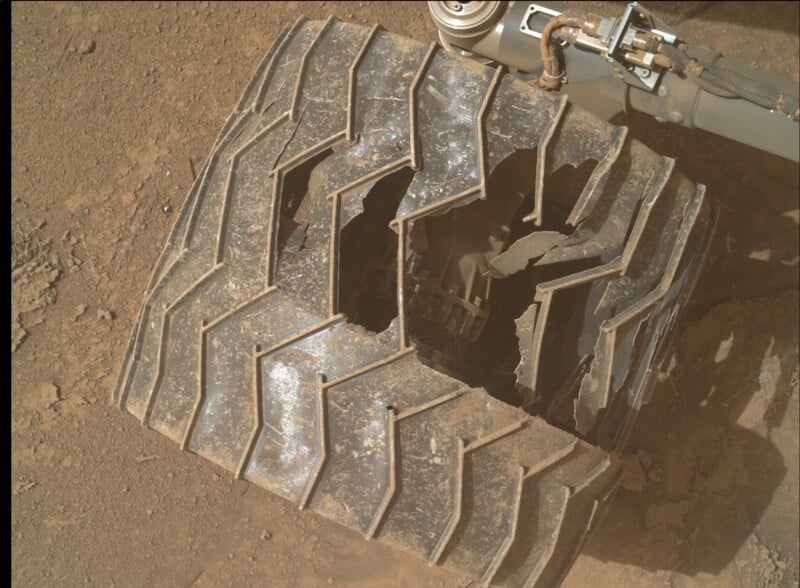
On X, Anish Moonka explains that the wheels are only 0.75mm thick and crafted from aluminum. The wheels began showing signs of wear 14 months after landing on Mars because of the sharp rocks punching holes through the tread of the tires.
“NASA assembled a Wheel Wear Tiger Team (a crisis problem-solving tradition that goes back to Apollo 13) and got to work,” explains Moonka. “In 2017, they uploaded a traction control algorithm from Earth that adjusts each wheel’s speed in real time based on the terrain, reducing force on the front wheels by 20%. They rerouted the rover to softer ground and started driving backward when possible, because pulling wheels over rocks produces less force than pushing them into rocks.”
Moonka says that after a certain amount of tread comes off, NASA has a plan to find a sharp rock on Mars and use it to rip out the damaged inner section of Curiosity’s wheel, per IEEE Spectrum.
Curiosity has six wheels and it’s thought that the most damaged one is its middle-right wheel; some of the photos shows wheels that are in much better shape.
The Curiosity rover’s main objective is to determine whether Mars has ever been able to support small life forms such as microbes while also gaining a better understanding of Mars’ climate and geology.
Image credits: NASA