
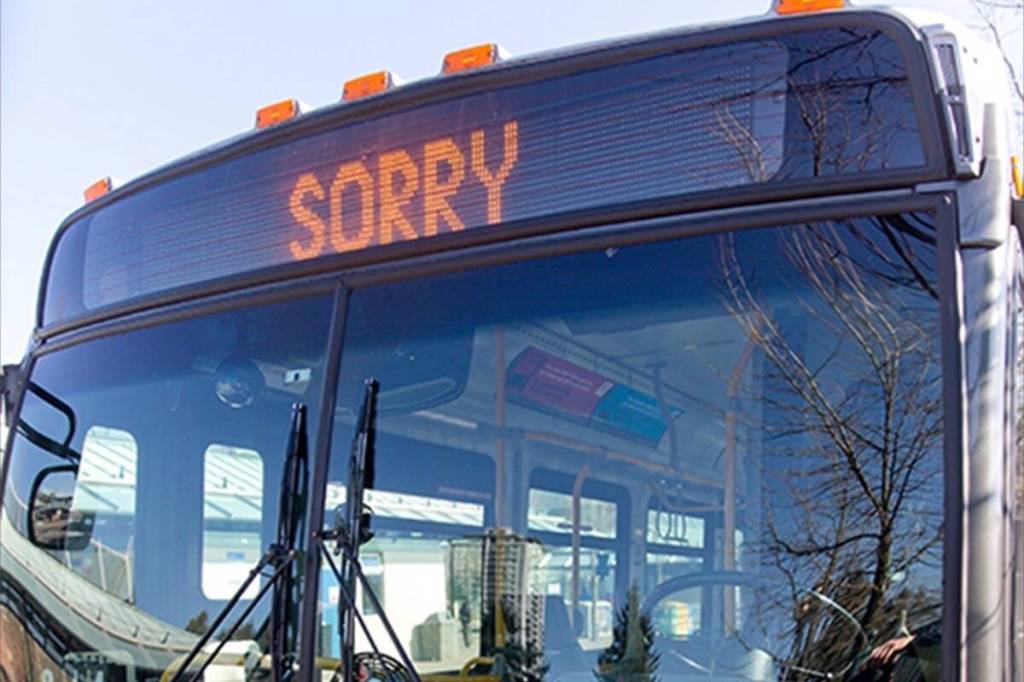
TransLink board takes blowback for 5% fares hike
Published 12:45 pm Wednesday, March 25, 2026
The TransLink Board heard blowback from public delegates before approving a five per cent general fare increase, effective July 1, during its quarterly meeting on Wednesday, March 25.
Kathy Griffin, a retired Burnaby resident, voiced concern about the fare hike’s impact on students as well as people age 55 and older. It’s “unjust to do this to the kids,” she said, being “held hostage” to ever-rising costs.
“I do not believe that children should be penalized or held accountable for systems that do not work for them,” she said, “but they in turn must use. Many people who are older, retired, have medical issues and can’t drive should also not be penalized yet the cost of transit keeps going up without any rationale other than there’s a gap in the funding to keep the system going.”
The board considered a report from chief financial officer Patrice Impey and Mark Langmead, director of revenue and compass operations concerning the transit tariff amendment. Impey and Langmead noted that in September 2020 annual fare hikes were limited to 2.3 per cent on average over 2021-2024 but in 2025 TransLink raised that to four per cent.
“To continue providing transit services to the region and maintaining the services people rely on, fare products will increase by an average of 5 per cent in 2026, as approved in the 2025-2034 Investment Plan,” they reported.
TransLink CEO Kevin Quinn said fare increases are a “very important part” of keeping public transit moving in this region.
Impey also reported during her presentation that “in summary, 2025 was a solid financial year for the organization.” She noted that as household expenses have increased with inflation, so have TransLink’s expenses. The four per cent fare hike last year, she said, “did not fully recover the cumulative inflation from the previous years.
“This year’s fare increase will help our revenues to catch up.”
Meantime, during the public delegations portion of the meeting before the vote Sam Wiese, president of the B.C. Federation of Retired Union Members – BC Forum – said in many instances for seniors public transit is the only means of getting place to place, be it to buy groceries or go to a doctor appointment, or escape isolation.
“The fact that TransLink charges seniors to use bus service is already an affront. Now it’s going to be faced with a proposed five per cent increase – it’s not only an assault on the pocket book, for many of us it will mean yet another dire decision of what critical thing to cut to be able to access the purveyors of those critical things. So do I stop taking my medication so I can get to the doctor so that the doctor can give me that medication because I have to pay for transit? It’s a little bit off.”
Aman Chandi, of Movement: Metro Vancouver Riders, asked how many people living in poverty are held back from job interviews or training because they can’t afford “the cheapest way of getting around.”
“TransLink staff reported in 2024 that a low-income discount program would cost about $70 million and at that time the council asked the provincial candidates to include a low-income discount in their platform and now on the eve of another fare increase we believe it is time to reiterate that message to the Province,” Chandi told the board, adding that $70 million “is a drop in the provincial budget that is measuring in billions. The solution is not complicated.”
Suzie Mah, Vancouver school board trustee, told the board increasing bus fares “hit hardest on those who are already trying to pay their monthly rent, put food on the table and pay for other essentials for day to day living. Single parents and those families living in poverty are hugely impacted by all increases to their monthly budget.
She said the inequity between those who can afford to drive to work and those who rely on transit “is alarming.”
“Instead of increasing fares for our young people it (TransLink) should be budgeting for free transit for youth 13 to 18 years to add to the already free transit for children five to 12,” Mah said.
Impey told the board the five per cent fare increase will work out to about 14 cents more for the average trip while the YVR Airport AddFare will increase by $1.50 to $6.50 – its first fare hike since 2010.
Broken down, adult cash rates will increase by 10 to 25 cents and concession by five to 10 cents; stored value rates for adults will increase by 15 to 30 cents for adults and between a nickel and a dime for concession while the cost of an adult monthly pass will increase by $5.60 to $10.10 and the rate hike for a concession monthly pass is $3.15.
“Any reduction to the increase would be a reduction to our revenues which would increase a gap,” Impey explained.