
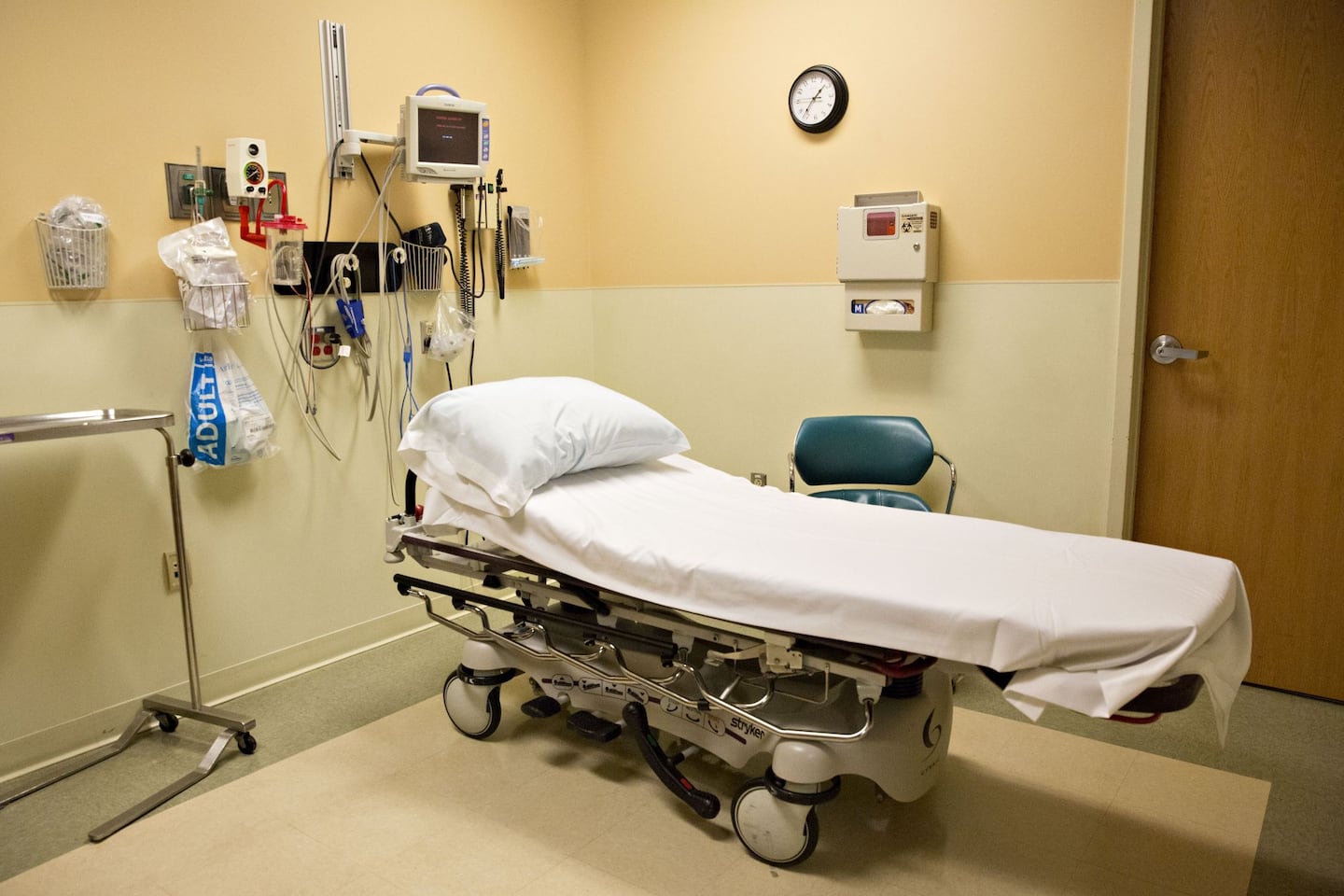
Those numbers have improved slightly in recent years — wait times over 12 hours for mental health patients accounted for 37.5 percent of emergency department visits in 2024, down from nearly 40 percent in 2022. Still, bottlenecks at every step of a patient’s journey through the mental health system are slowing down their access to care, the report said.
The causes of boarding “are both from patients coming to the emergency department in the first place, as well as challenges with discharging patients once they’re ready, either for a community-based care or to be placed into inpatient care,” said Laura Nasuti, the commission’s director for research and analytics. “And those who are in inpatient care, it’s trying to get them the right community supports before they’re discharged.”
For the latest analysis, the commission looked at wait times for patients seeking care for mental health concerns, substance use disorder, and certain neurodevelopmental disorders, such as ADHD. The commission defined boarding as wait times over 12 hours after being assessed in the emergency department, although the definition of boarding differs between professional groups. The Massachusetts College of Emergency Physicians, for instance, defines boarding as any visit lasting over four hours.
Mental health boarding has been a major focus for Massachusetts policy makers in recent years as wait times ticked ever higher for patients who stand to suffer acutely from extra hours in the loud, bright chaos of an emergency room. A 2017 study of 10 Massachusetts hospitals found patients with mental illness were routinely stuck waiting in the emergency department for 16 to 21 hours.
The state implemented a handful of policy changes in recent years that have shown promise, said Leigh Simons, vice president for policy and regulatory affairs at the Massachusetts Health & Hospital Association. These include increased mental health funding, a requirement for emergency departments to provide their own mental health evaluations, and new protocols to expedite psychiatric admissions for patients waiting more than 24 hours.
The proportion of adult patients waiting for admission to psychiatric beds for more than 24 hours decreased from 53 percent in 2022 to 40 percent in 2024. For children, those proportions dropped from 46 percent to 30 percent in the same time period. Still, even waits shorter than 24 hours can exacerbate symptoms and emotional dysregulation for patients experiencing a mental health crisis, the report said.
Placements for medically complex patients, such as patients with diabetes or autism or patients exhibiting aggression, are especially hard to come by, Simons said.
“Kids who are insulin-dependent, they often get stuck because of lack of capacity in group homes to administer that insulin,” Simons said.
One of the more surprising finds, Nasuti said, was the large proportion of patients who boarded at the emergency department only to be discharged home. Nearly 26 percent of people who waited for more than 12 hours were discharged, while another 23 percent were admitted for observation, but ultimately went home to their regular mental health providers.
“People are spending a long time in the emergency department but not needing an inpatient level of care,” Nasuti said. “That highlights that maybe those patients would have been better served in a community-based setting, even something like behavioral urgent care or a community-based behavioral health center.”
Community behavioral health centers, which provide mental health urgent-care services around the clock, are supposed to relieve overcrowded emergency rooms. But the centers have been struggling financially in recent years, a reality that is made worse by federal cost cutting under the Trump administration.
Available inpatient beds for cases that can’t be treated in the community are in short supply, and not all of the licensed beds are available. A 2022 report by the Massachusetts Health & Hospital Association and the Massachusetts Association of Behavioral Health Systems found that 20 percent of inpatient psychiatric beds were offline because of staffing problems.
Alan Sager, a health policy expert at the Boston University School of Public Health, said the latest HPC report is useful in thoroughly quantifying the problem, but that more analysis needs to be done to understand why Massachusetts fares so poorly in mental health boarding compared to other states.
“It’s hard to fix a problem without understanding its causes as deeply as possible,” Sager said. “If there’s a shortage of inpatient psych beds, why? One obvious answer is that in-patient psych can be a money-losing service.”
Another reason the problem might be so significant in Massachusetts is that hospitals admit people from the emergency room at higher rates than in other states, Nasuti said.
The boarding problem is more significant for certain populations. People with lower incomes and those who are unhoused are more likely to seek mental health care in the emergency department and are more likely to wait longer compared to people with higher incomes. Black residents are also disproportionately more likely to seek emergency mental health care and to experience longer wait times.
Marin Wolf can be reached at marin.wolf@globe.com.