
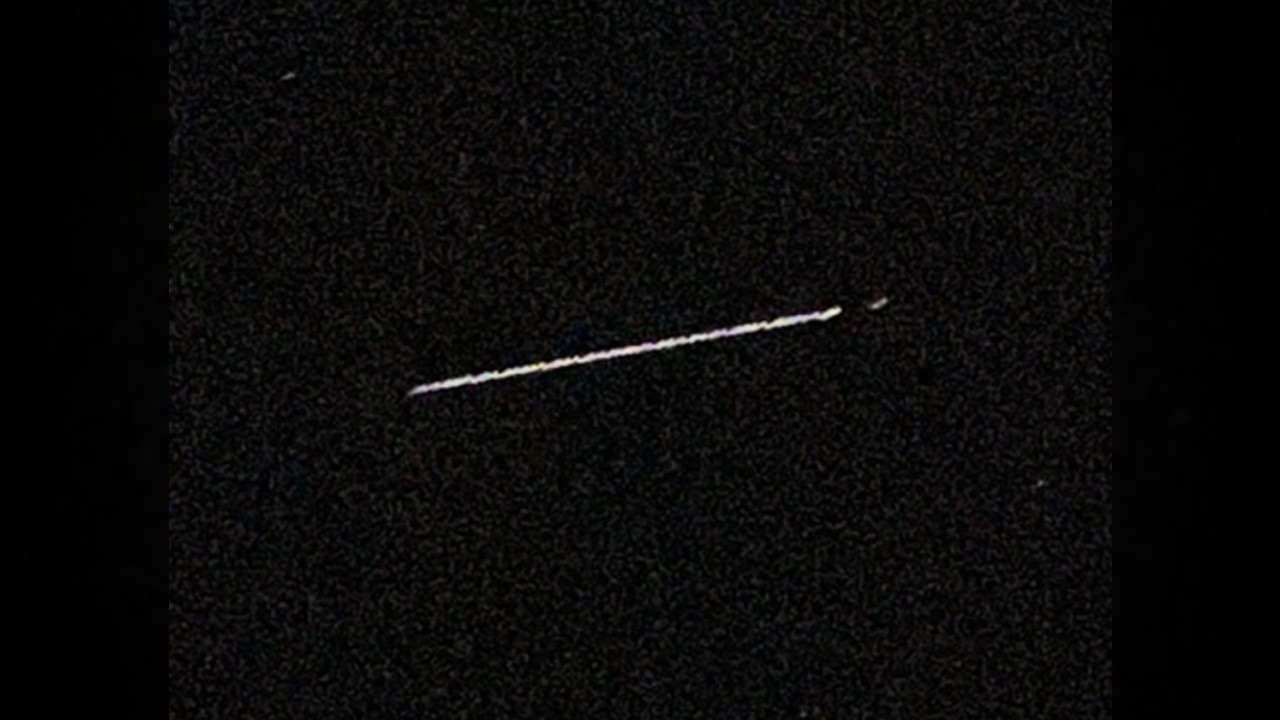
A proposal to launch up to one million satellites into orbit is raising serious concerns among scientists, who warn the night sky could soon look dramatically different, and potentially be filled with more satellites than stars.
A research team from the University of British Columbia (UBC) is sounding the alarm over a plan linked to SpaceX that would place a massive network of AI data centre satellites into low Earth orbit.
Watch below:
Astronomers say the scale of the proposal is unprecedented, and troubling.
“This is dangerous, this is bad planning and we cannot have that many satellites in orbit,” said Samantha Lawler, an associate professor of astronomy at the University of Regina and co-author of the report.
Experts warn the significant number of satellites could brighten the night sky, with thousands potentially visible at once.
“The effects on the night sky are stunning,” Lawler said. “It’s really horrifying.”
The proposal is currently under review in the United States. While details remain limited, critics note it does not clearly outline how such a vast number of satellites would be coordinated, an issue typically overseen by the country’s Federal Communications Commission.
Some experts are also questioning whether such a system is necessary.
“There are several ways to access AI,” said Chris Gainor, a former president of the Royal Astronomical Society of Canada. “Do we really need to send up a large number of satellites to access it?”
Beyond visibility, scientists say the environmental impact could be significant. UBC astronomer Aaron Boley, also a co-author of the report, warns the plan could require millions of tonnes of fuel to launch and maintain the satellites.
“This is non-trivial,” Boley said. “We’re talking about potentially 10 to 20 million tons of fuel just to put these satellites into orbit.”
Scientists say the impacts could extend beyond astronomy. Increased brightness in the night sky may disrupt ecosystems, affecting animals and plants that rely on natural darkness for migration, feeding, and reproduction. Researchers also warn it could interfere with human biological cycles.
While the proposal is still under review, researchers say they will continue to push for stricter limits.
SEE ALSO: Bright lights over Vancouver Island were Starlink satellites: Astronomer