
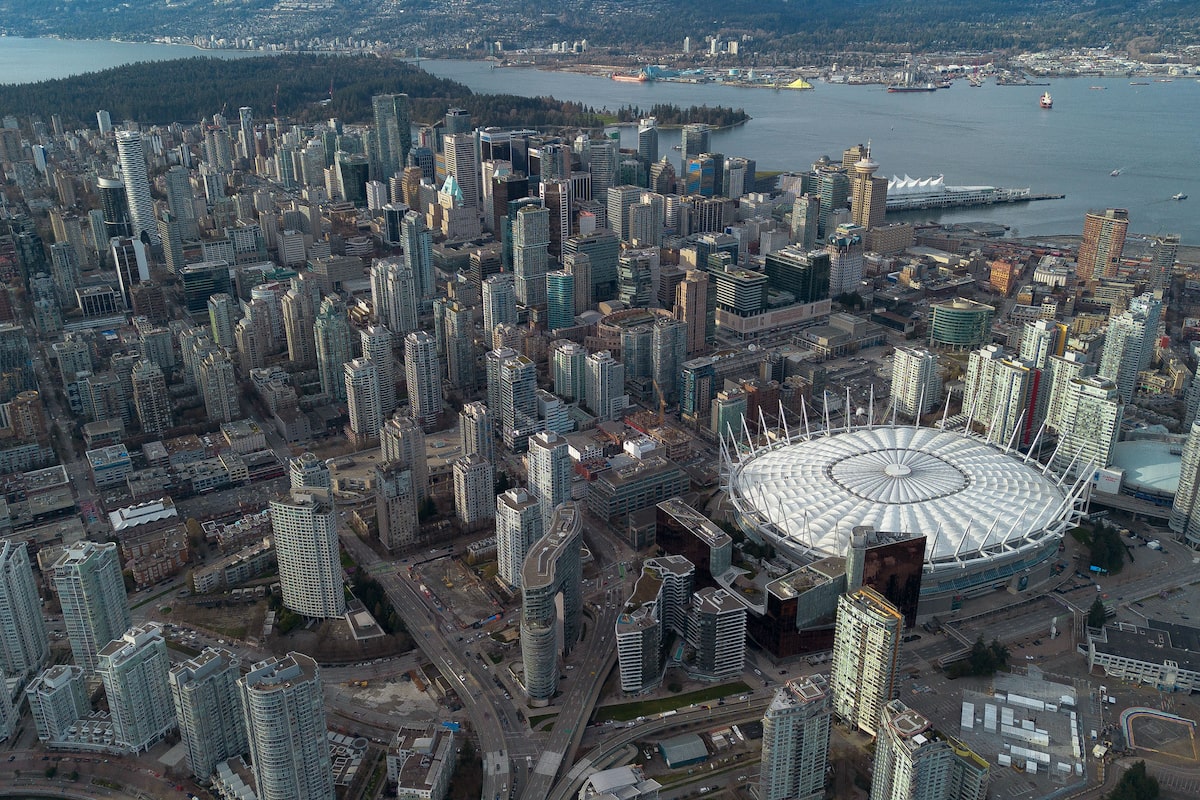
An aerial view of the retractable roof the BC Place Stadium in Vancouver on Friday. FIFA organizers have cancelled between 70 per cent and 80 per cent of their booked hotel rooms in the city, the British Columbia Hotel Association says.Elizabeth Ruiz Ruiz/Getty Images
Organizers of the coming FIFA World Cup have begun cancelling thousands of their hotel-room bookings in Toronto, Vancouver and other host cities across North America, a move industry observers say is not uncommon during large events.
The British Columbia Hotel Association said FIFA organizers have cancelled between 70 per cent and 80 per cent of their booked hotel rooms in Vancouver, accounting for roughly 15,000 hotel-room nights during the tournament period between June 11 and July 19. Those freed-up rooms can now be booked by regular travellers, the association said.
Such cancellations are standard practice for large-scale events, as organizers adjust their allocations closer to the event, association president Paul Hawes said in a statement to The Globe and Mail.
“In this case, however, the volume released is higher than typically expected. It appears consistent with what is being seen in other host cities across North America,” Mr. Hawes said.
Hotels in Toronto are also seeing blocks of rooms cancelled, according to Greater Toronto Hotel Association president Sara Anghel.
She said she didn’t yet have specific estimates on the numbers, but had heard about block cancellations from some of the association’s membership.
“No one is happy with the decision to drop the blocks [of rooms], and as we see, it’s becoming a pattern across North American cities. So, you know, let that be a lesson … for future host countries or cities,” Ms. Anghel said.
Soccer fans launch complaint over World Cup ticket prices to European Commission
According to ABC News, FIFA also cancelled around 2,000 of its original reservation of 10,000 hotel rooms in Philadelphia. Mexican newspaper El Financiero reported that FIFA had also cancelled blocks of rooms in Mexico City.
FIFA organizers did not immediately respond to The Globe’s requests for comment.
The Globe also reached out to the ministries of tourism in both British Columbia and Ontario. In a statement, the B.C. Tourism Ministry said it was “thrilled to be welcoming visitors to Vancouver and B.C.” for the World Cup, and that the host committee and Hotel Association of Vancouver are “working directly with FIFA” on accommodations. Ontario’s Tourism Ministry did not respond.
June and July are the height of tourist season in Toronto and Vancouver. Both Ms. Anghel and Mr. Hawes said demand for hotel rooms in their respective cities remains high, and there is no concern the newly available rooms won’t get filled.
In 2025, Airbnb commissioned a report from professional-services company Deloitte, which estimated that Vancouver would be short 70,000 hotel-room nights during the games. In response, the city began encouraging homeowners to become registered short-term rental hosts and consider making their spaces available for tourists and fans during the games.
In Toronto, booking demand is about 30 per cent higher than usual for the month of June, Ms. Anghel said.
BMO Field grows into FIFA World Cup venue
Toronto’s hotel capacity is around 20,000 rooms, with an additional 4,000 rooms available in neighbouring municipalities, Ms. Anghel said. According to a 2024 Destination Vancouver report, the Metro Vancouver area has about 23,000 hotel rooms available.
Along with the cancelled room bookings, Ms. Anghel said Toronto and Vancouver hosting the World Cup has also meant some potential profit losses for hotels in both cities, because conference and convention planners have been choosing other destinations during their busiest summer period.
Vancouver has also seen business events, corporate travel and tours displaced by FIFA, Mr. Hawes said in his statement. “However, with an estimated 350,000 incremental visitors expected across the seven matches, the World Cup remains one part of a broader mix of business during an already busy period.”