
After the Chinese Grand Prix, all Formula 1 teams gathered as planned to discuss the initial picture under the new technical regulations. The consensus was that the races are entertaining for now and do not require a ‘knee-jerk reaction’, as the FIA puts it.
Qualifying, however, still needs to be looked at, the main stakeholders acknowledged. Many in the paddock agree that qualifying laps should be flat-out and not primarily revolve around lift and coast or super clipping.
Faster in every corner, yet two tenths slower overall
That latter point is currently the case to some extent, as Oliver Bearman explained. The Haas analysed his own qualifying session in Shanghai, which led to a remarkable conclusion: the lap on which he was actually fastest in every corner did not produce his best lap time of the day.
“For example in China, we went through the whole of qualifying and actually on my final lap I did all of my best corners, but I actually went slower by like two tenths because sometimes actually going faster in the corners and picking up throttle earlier, it confuses the car and you end up losing outright lap time, which is really strange.”
It feels unnatural and, on top of that, there are still some strange quirks under the new ruleset. Charles Leclerc experienced this firsthand in Shanghai, where during sprint qualifying he lifted by just three percent on the exit of Turn 9 and immediately paid a huge price for it.
“That very small lift, which was I think out of Turn 9, kind of changed all the deployment and then I lost half a second on one straight. These are the kinds of changes that I think we’re all little by little pinpointing to the FIA, and I’m sure that there will be some changes in the future to try and address those issues because it’s a little bit silly to lose half a second just because of a very small lift at some point”, the Ferrari driver said.
“I was very, very, very frustrated, because the lift was, I think, two or three percent of throttle, which is kind of nothing. It’s in the vibration of the foot. So yes, it’s not something that I expected at all.”
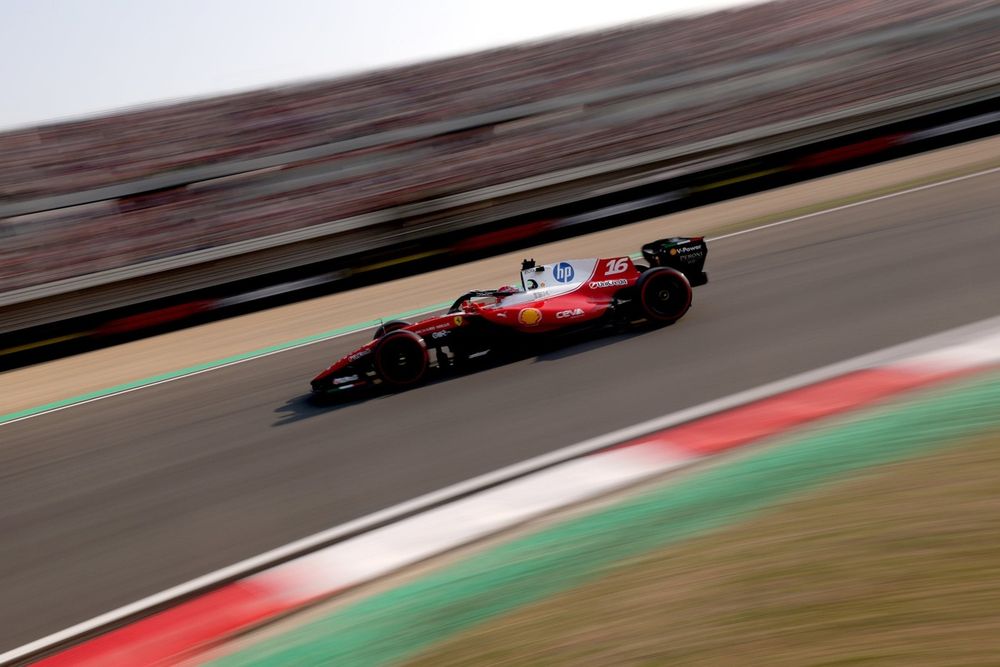
Charles Leclerc, Ferrari
Photo by: Lars Baron / LAT Images via Getty Images
These are exactly the aspects most teams and drivers agree on: such elements do not belong in an F1 qualifying session. A flying lap should be about drivers pushing the limits, ideally with corners that are grip-limited rather than power unit-limited.
Ten seconds of super clipping per lap at Suzuka?
The main question is how to achieve that without being able to change the fundamentals of the new rules. In the meeting after China, the initial outcome was that nothing would change ahead of the Japanese Grand Prix and that the break until Miami would be used for further analysis. Since then, however, the picture has changed somewhat.
The FIA has looked at the most recent simulations again, and they turned out to be more concerning for Suzuka than initially thought. More specifically, drivers would have to do around ten seconds of super clipping per lap at the iconic venue. It was exactly this super clipping that led to painful onboard footage in Melbourne, heading into Turns 9 and 10, where drivers – despite staying flat out – were already losing significant speed before reaching the braking zone. This took away much of the challenge of that corner sequence.
To prevent a repeat at Suzuka, especially with all its demanding corners, the permitted amount of energy drivers can recharge has been reduced from 9 megajoules to 8 megajoules.
Read Also:
According to the FIA, this reduces super clipping by four seconds per lap – from ten to six seconds.
There is, logically, a price to pay in the form of slower lap times, but according to the FIA this remains manageable. The FIA estimates that lap times will go up by around half a second, but that trade-off – four seconds less super clipping for half a second slower lap times – is considered worthwhile.
Normally, the FIA must inform teams four weeks in advance if it wants to introduce such a change, but this situation is different. Because the issue became apparent after new analysis of the simulations, the FIA only communicated it on Tuesday. The governing body added that it would only implement the change if all teams and manufacturers agreed – which has now happened.
Will this intervention have the desired effect?
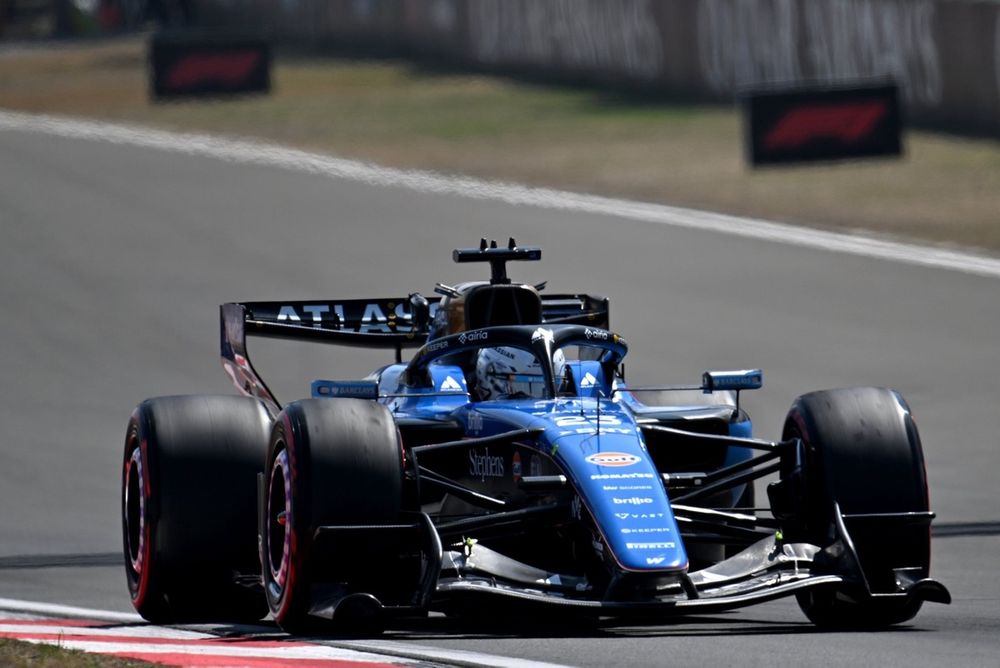
Alex Albon, Williams
Photo by: Sam Bagnall / Sutton Images via Getty Images
This suggests that it is not a point of contention between teams, although drivers say it does affect their preparation – mainly because it changes the entire energy management around the lap.
“We don’t know, if I’m being totally honest, how it’s going to fall out. I was on the sim yesterday and it’s all gone to the toilet because of these changes, so I’ll let you know later,” Alex Albon explained.
More important than simulator work becoming partly outdated is the question of whether this intervention will actually have the desired effect – in other words, whether it will make a qualifying lap at Suzuka more about pushing the limit again.
“We don’t know, if I’m being totally honest, how it’s going to fall out. I was on the sim yesterday and it’s all gone to the toilet because of these changes”
Alex Albon
“I don’t think it will be a game-changer,” Leclerc remained sceptical. “I think it will be pretty similar, apart from for the driver, where maybe there’s a little bit less lift and coast, which is a good thing. I think for qualifying there are still some changes that need to be done to make sure that we can push at the maximum, whatever the limit of the car is. But at the moment, so far for the first two races, it was more about managing everything properly in qualifying rather than the actual flat-out push that we were used to in Q3 in the past years.”
The most shared view is that it may not be a game-changer and will not restore qualifying to what it used to be, but that this intervention could at least make the situation less extreme.
“I’ve not practiced this on the simulator, so I cannot give you a clear answer. But before it was a little bit, well, not flat out, basically”, Max Verstappen commented. “I hope that this can be closer to being flat out.”
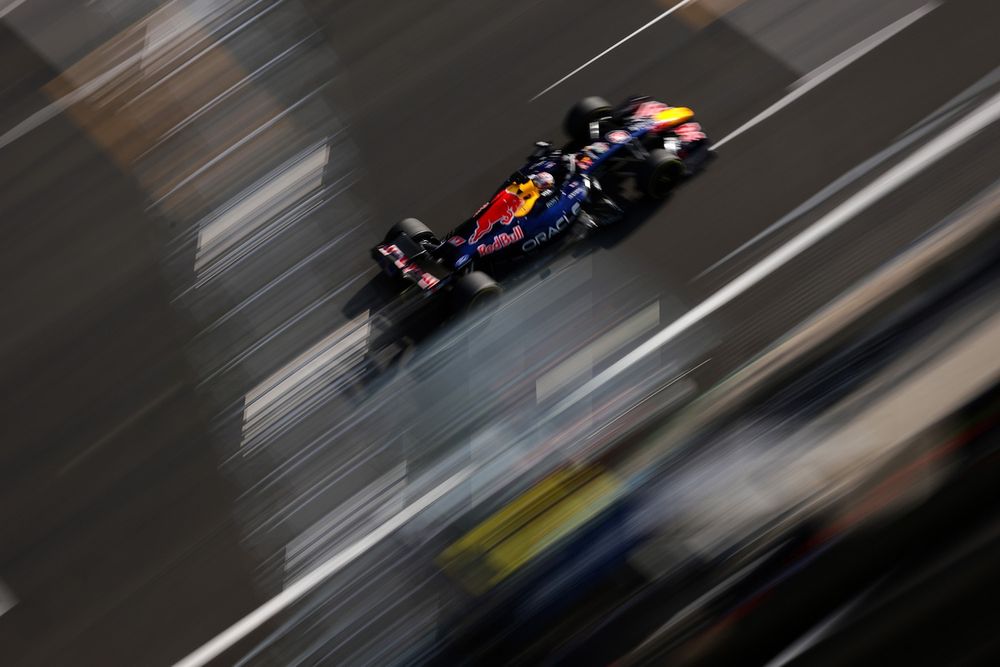
Max Verstappen, Red Bull Racing
Photo by: Mark Thompson / Getty Images
It should lead to fewer unnatural elements in qualifying, but it does not mean that the ultimate sensation of a qualifying lap that drivers are used to from the ground effect era will return – as Albon noted.
“I think what I’m feeling so far this year is that there isn’t really any high speed anymore. Because you’re arriving so slowly, basically everything is a medium speed corner now.”
For the FIA, it remains a difficult task to strike the right balance between cars that appeal to drivers and cars that can produce a good show on Sundays, as Bearman analysed.
“I think it’s tough because for F1, FIA, it’s not as easy as it looks for them. We go from having these amazing cars to drive, qualifying was one of the biggest spectacles, but it was also quite tough to follow and tough to stay close, so we complained a little bit about not being able to overtake. Then we get to this new car where the overtakes have tripled and now we complain that there are too many overtakes. There’s an element of drivers always finding something to complain about.”
The verdict after media day is that qualifying will be better than feared with the initial numbers, but that the ultimate driver’s challenge of Suzuka has diminished compared to previous years.
“I think in a lot of places that [real challenge] is already gone with how this engine works,” Sergio Perez agreed. “I don’t know how much we can do with the rules, but it’s nice to see the FIA and F1 trying to improve that area for the drivers and to make sure that this is still the pinnacle of motorsport.”
Suzuka remains a challenge within that pinnacle of motorsport, but even after the FIA intervention, that challenge is very different from a year ago. Norris already said in China that in corners like Pouhon you can no longer see who has “the biggest balls”, and that also applies this weekend.
“There’ll certainly be some places where it just won’t be as spectacular. You’ll start clipping into Spoon and that’s one of the quickest corners, where you turn in you are going incredibly quick. Like last year, I didn’t even brake into Spoon entry,” the reigning world champion said.
“It took a risk to get to that point and it feels incredible in qualifying when you’re pushing it to the limit like that. Like, Degner 1, not even a full lift, that kind of thing… We might just be flat through those corners now, because you are clipping. It’s a different world. You’ll see some places not as spectacular as what it’s been in the past, but I think it’s still going to be cool to drive in qualifying.”
Andrea Kimi Antonelli, Mercedes
Photo by: Sam Bagnall / Motorsport Images
We want to hear from you!
Let us know what you would like to see from us in the future.
– The Autosport.com Team