
Higher oil prices tied to the war in Iran are expected to push up food costs in Canada, though the effects may not be felt at grocery stores for months.
Oil prices have risen as the conflict disrupts shipping through the Strait of Hormuz, a key route for global crude flows, raising concerns about supply and triggering volatility in energy markets.
The impact on food is expected to unfold in stages, with higher transportation costs pushing up prices of imported fresh food first, followed by broader increases as rising fuel and fertilizer costs work through production and supply chains.
That’s because fuel is used in harvesting, processing and transporting food, meaning rising oil prices increase costs at each step before products reach store shelves, says Karl Littler, senior vice-president of public affairs at the Retail Council of Canada.
“If the costs go up in the goods themselves, and they will, people are not going to operate at a loss, whether at the farm level or at the processor level or at the grocery store level,” said Littler, noting that grocery is “a pretty small margin business.”
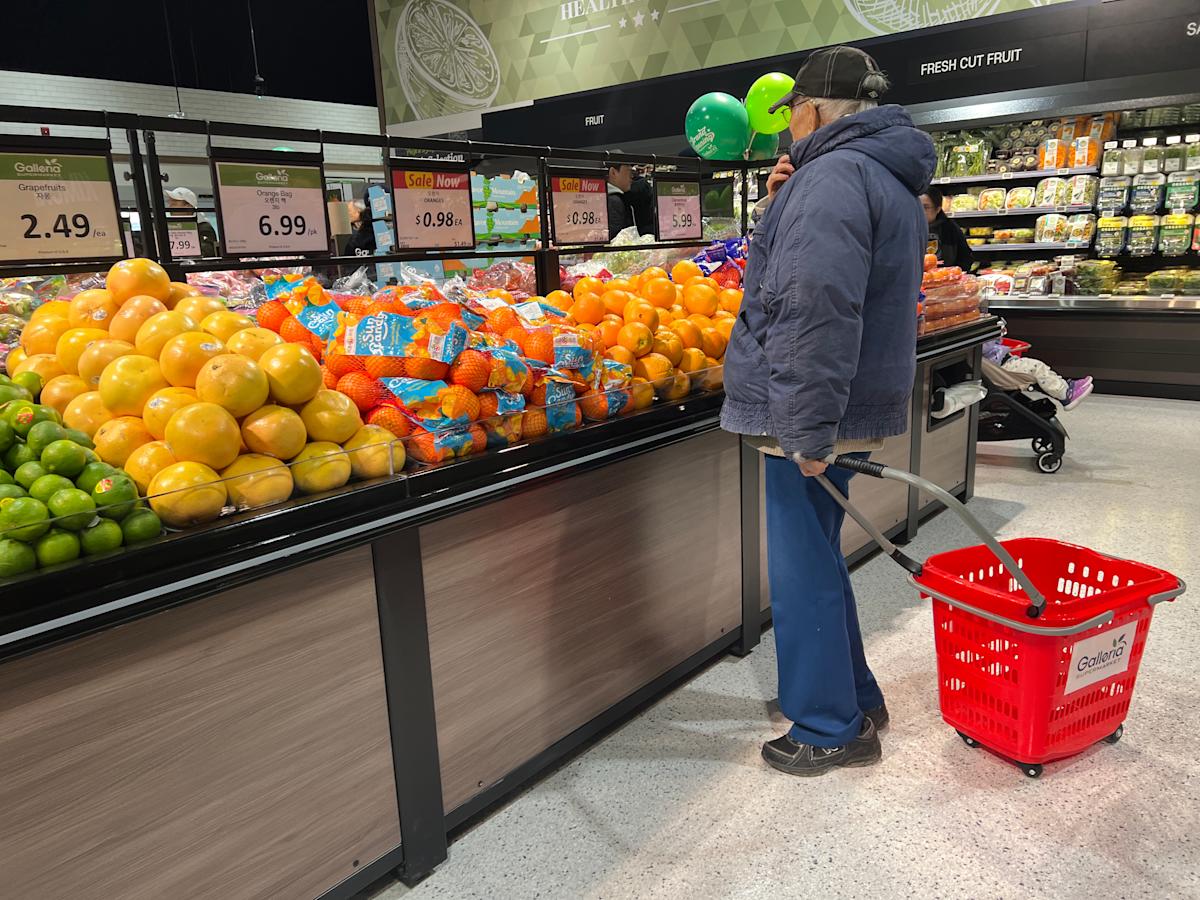
Due to higher pump prices, Michael von Massow, a food economist at the University of Guelph, says Canadians will see moderate price increases in the near term for items travelling long distances, such as imported fruits and vegetables from the southern U.S. or Central America.
For those items, transportation costs represent around 10 to 15 per cent of the retail price. In turn, a jump in fuel prices could lead to a three to four per cent rise in the price of those products.
More processed foods are expected to see smaller impacts, since transportation accounts for a smaller portion of their total cost, he adds.
Oil prices are expected to impact more imported products than domestic ones, von Massow says.
“While some of those prices [for local products] may go up because of production costs, they won’t go up as much as those of the high transportation cost products. So a relative advantage may emerge for Canadian products.”
Higher energy costs will also increase farmers’ expenses, particularly for fuel and fertilizer, adding to price pressures over time. Fertilizer markets are also exposed to the Iran war, as roughly 30 per cent of global shipments move through the Strait of Hormuz.
Fletcher Baragar, an economist at the University of Manitoba, says the scale of rising input costs can be significant. In Manitoba alone, farmers spent more than $1 billion on fertilizer and about $470 million on fuel in 2024, he says.
A 20 per cent increase would add roughly $200 million in fertilizer costs and about $94 million in fuel costs, though the impact wouldn’t be felt overnight. Many farmers have already secured fertilizer supplies for spring planting, Baragar says, and energy costs could be spread over the growing season, depending on how long energy prices remain elevated.
Baragar says some farmers can offset higher costs through global commodity prices, while those producing for the Canadian market are more likely to pass them on, meaning consumers will see higher prices as new crops hit stores later in the summer.
While some food items are expected to see sharper price increases, overall food inflation may be more modest and take longer to materialize.
Trevor Tombe, an economist at the University of Calgary, says a sustained 50 per cent rise in the cost of crude oil and fertilizer would lead to just under a two per cent increase in overall average food prices.
For a typical household, including restaurant food, that would amount to about $175 per year, including roughly $120 in grocery costs, he says.
Tombe notes there is typically a lag of six to nine months before those effects reach consumers.
He adds that if oil prices do not remain elevated, such as in the mid-$90 per barrel range, for several months, the impact on food prices may be limited or muted.
“There’s just so much uncertainty right now. It’s really hard to hang one’s hat on the particular scenario about where oil’s going to be in the future,” Tombe said.
Leah Golob is a senior reporter at Yahoo Finance Canada. Reach her at leah.golob@yahooinc.com.
Download the Yahoo Finance app, available for Apple and Android