
We are exactly two weeks from the best golf day of the year: The opening round of the Masters. There is no better sound than the iconic CBS theme song. There is no better feeling than waking up with all the various streaming options readily available. As the countdown continues, let’s talk. You asked me about potential winners, Augusta National course changes, the best concession items, and more. Here are my answers.
Of this season’s PGA Tour winners, who is most likely to win the Masters and why? — Rnnmelia
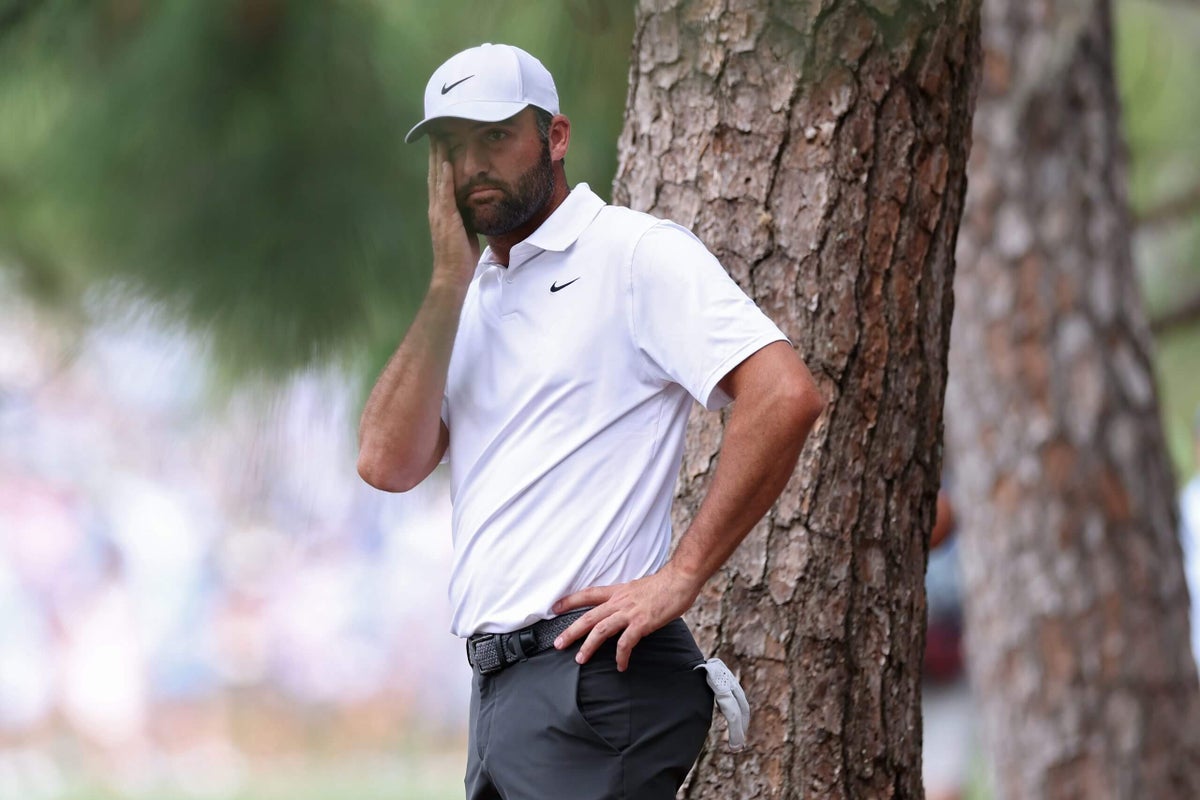
This will sound like a cop-out answer, but bear with me: It has to be Scottie Scheffler. Scheffler won the American Express in late January. Still, much has been made recently of his fall in form over his past two events — a T24 at the Arnold Palmer Invitational and a T22 at the Players Championship. Scheffler has noticeably been frustrated with his ball-striking and appears to be working with coach Randy Smith on his connection to the club, which stems from his grip. And I have to mention: Scheffler just withdrew from the Houston Open at the last second because his wife, Meredith, is due to give birth to their second child.
All of that to say, there will be people who mistakenly discount Scheffler’s chances this year. But I am of the strong opinion that you can never count this particular world No. 1 out at Augusta National.
The routing of the course strongly favors Scheffler’s iron game. His ability to shape shots both directions with extreme precision allows him to “neutralize” the severe slopes on Augusta National’s greens. He plays the course backward — Smith says Scheffler reads the greens from the fairway.
Plus, Scheffler’s swing issues aren’t really even swing issues. If you watch him on the driving range, he’s constantly working on his grip position. He even uses one of those grip molds that you can buy at Dick’s Sporting Goods. I’m confident that Scheffler can work out those kinks and find his groove at Augusta National. As for the newborn? I think the distraction might actually help Scheffler. He plays his best when he’s focused on the task at hand on the golf course, but remains detached when he’s away from competition.
Is there an aspect of the course or spectator experience that you’ve grown in appreciation for over the years? — Ethan S.
When I covered the Masters for the first time in 2024, I was completely spooked by the idea that I wouldn’t be able to have my phone on the course. I’ve never been a big written-note taker when I’m walking holes. I had to order a tape recorder. And I like to be able to do a quick Google search to confirm facts about players or check the leaderboard.
But I quickly realized how special the environment is at the Masters when nobody has access to the outside world. I think it actually helps me do my job better — I’m constantly looking up, I’m talking to patrons, I’m watching the players’ every move. You even have more time to just think … who would have thought of that? More golf tournaments should adopt the policy, but it is understandably incredibly difficult to pull off.
Matt Fitzpatrick and Akshay Bhatia had the most impressive lead-up to the Masters in recent weeks. How do their games translate to Augusta? — Dtroyan5
I love the idea of any lefty golfer at Augusta National. Just think: Phil Mickelson, Bubba Watson, Mike Weir … now Bhatia? There’s a lefty advantage. A lot of pivotal holes at Augusta National call for a right-to-left shot shape, and a power fade is a lot easier to hit for pros than a controlled draw. For example, on No. 12, the margin for error is much wider for lefties. Their natural miss would be a ball that turns over to the left, toward the fatter part of the green, with a shorter carry over Rae’s Creek.
As for Fitzpatrick, I like his iron game around Augusta. He’s currently ranked No. 7 in strokes gained approach on the PGA Tour. But I’m a little bit worried about the putting. He’s been streaky this season, despite the win at Valspar. He’s ranked No. 97 in strokes gained on the greens.
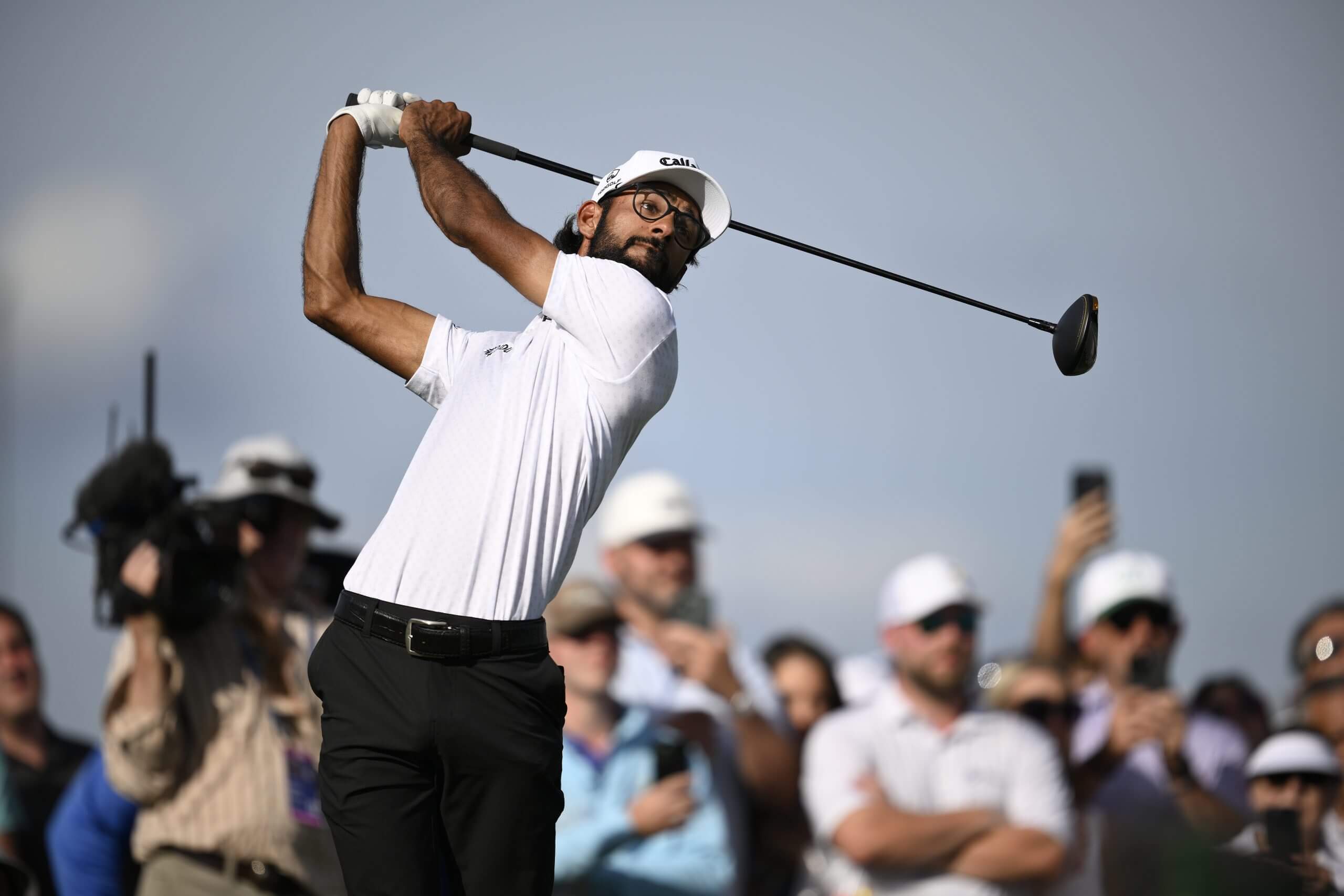
Could Akshay Bhatia be the next lefty to dominate Augusta National? (Orlando Ramirez / Getty Images)
Can you describe the elevation changes for those who have only seen it on TV, which doesn’t fully show how much difficulty it adds to shots? — Chris D.
The elevation at Augusta National is the one thing that is incredibly difficult to describe to people who haven’t been there. I have two anecdotes to share that might help.
First: During my first trip to Augusta National, I experienced the pain of shin splints for the very first time.
Second: Steve Kling, my caddie during my media lottery round at Augusta National last year, told me this one. The highest point of the golf course is the back-right corner of the green on the first hole. The lowest is Rae’s Creek, by Amen Corner. According to Kling, that elevation change is equivalent to the height of Niagara Falls.
As for how that impacts shots, it is everything. On No. 18, for example, I found the left fairway bunker with my tee shot. Massive mistake. Not only can you not see the green, but you also can’t see the pin or the fairway when you’re standing in there. It felt like I was staring at a white wall of sand and a tiny bit of grass in my peripheral vision. Now, that speaks to both how deep the bunkers are at Augusta National and how severe that hill is, but you get the point.
Another significant one is the approach on No. 3. If you’re at the bottom of that hill beneath the green, it’s incredibly intimidating. You can see the top half of the flagstick, and you just have to trust that if you land your ball up there high enough, you’ll be safe. But anywhere short of that? The ball is rolling right back to your feet (This happened to me.).
What is it like to be a female reporter working at a fairly male-dominated and conservative club like Augusta?
The only way I can describe it is that there is a constant expectation that the club wants you to walk a certain line. I made a live Golf Channel appearance centered around the Augusta National Women’s Amateur last year. In one segment on the evolution of the women’s game, I mentioned that Augusta National did not extend membership to women until 2012. Afterward, I got a few texts from friends and colleagues about how skillfully I answered the question — because, as some noted, it could have gone south quickly. That made me pause. All I did was mention a historical fact. Augusta National prefers a certain version of its own history, and it isn’t difficult to discern why. When I’m there and on site, I’m aware of that. But I am also appreciative of the club’s continued effort to enact change. The ANWA is the marquee event of the women’s amateur tournament cycle, and the club’s role in creating such excitement around it has not gone unnoticed.
Are there any course changes for this year’s Masters? Any greens being altered, etc.? — Nick H.
Only one change this year. The front of the 17th tee was reduced by 12 yards, so it is no longer possible to move up the tees. The tee marker has been relocated and the scorecard has been changed to 450 yards, 10 more than it previously was, per the 2026 Masters media guide.
Yes, that’s some funky math, but all of the Augusta National hole yardages end in a “5” or “0.”
Power rank the top 5 Masters concession stand items. — Ethan S.
I will preface this list by saying: I simply do not like pimento cheese. I have nothing against the sandwich itself; it’s just not for me.
Peach ice cream sandwich — just as good as it sounds.
Egg salad sandwich — my go-to from the sandwich menu.
Chicken salad — if I’m getting sick of the egg salad.
Azalea cocktail — not sure if this counts as a concession, but it’s delicious.
Bar-b-que sandwich — It’s coming in last because I wouldn’t eat it every day. But when I do go for it, I’m thoroughly enjoying it