
A southern Manitoba astronomy enthusiast is taking his passion for the night sky to the next level with a project that could put the region on the global astronomy map.
Kenton Dyck, founder of the Pembina Valley’s Astro Club, has become a familiar name for stargazers across southern Manitoba. Through sky-viewing events, school visits, and community outreach, he has helped bring astronomy closer to home for many in communities including Steinbach and surrounding areas.
Now, he is working on a new project that could benefit both local residents and the global scientific community.
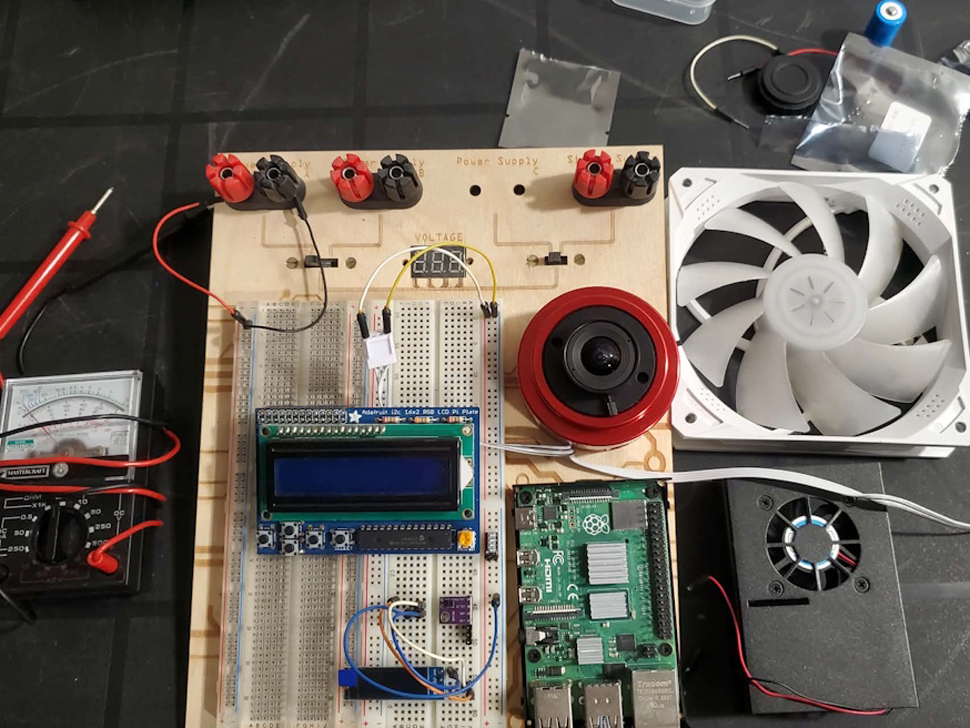
Building a one-of-a-kind sky camera
Dyck is constructing what is known as an AllSky Camera, a specialized device designed to continuously monitor and capture images of the night sky.
Unlike most consumer technology, this type of camera is not available for purchase.
Instead, enthusiasts like Dyck must build it themselves from scratch, a process that involves soldering electronics, assembling sensors, and writing custom software.
Once completed, the compact system will automatically activate at night and begin recording images every two seconds.
Related Stories:
Tracking meteors, aurora and even lightning
The device is designed to do much more than take photos.
Dyck says it will include sensors capable of detecting meteors as they streak across the sky, as well as monitoring aurora activity and changing weather patterns.
“I’m building sensors in it that will be able to do things like track meteors as they streak in. It will take that little flash of light, and it will record that.”
Additional instruments, including a magnetometer and a barometer, will allow the system to measure atmospheric and space weather conditions.
“Basically, any tool that you would use to measure atmospheric conditions will be put into this little box, and it will constantly be recording that information and sending it to a server that I will have at my house,” he said.
The system will also be highly sensitive.
“To give you an idea of just how sensitive this device will be once it’s done, if there is a lightning strike anywhere within 150 kilometres, I will know about it.”
Putting southern Manitoba on the global network
One of the most unique aspects of the project is its accessibility.
“You will be able to log into this camera from anywhere on earth at any point and see what it’s seeing,” he said.
Beyond local interest, the system will also become part of a global AllSky camera network, where similar devices share data with one another.
Dyck says his build will be the first of its kind in the Prairie provinces, and only the third in Canada.
“They’re all interconnected, and so they’re all communicating with each other and sharing data,” he said.
Related Stories:
A grassroots contribution to science
While the project is driven by passion, it also has a broader scientific purpose.
Dyck says efforts like this are becoming increasingly important as researchers look for new ways to collect data.
“One of the drives behind this project was that last year, a lot of funding was cut at NASA, and just science funding overall,” he said.
“So what you have is a lot of scientists reaching out to the general public and saying, ‘It’s very hard to get telescope time, so instead of getting one big telescope, like the James Webb telescope, let’s get a bunch of them.’”
Once operational, the AllSky Camera will continuously gather data, creating time-lapse videos of the night sky and logging events such as meteor activity with precise timestamps.
Community support and next steps
Dyck says the project is already underway, with programming in progress, though he is still waiting on some key components to arrive.
He adds that support from others in the local community has also played a role in moving the project forward.
As interest in astronomy continues to grow in southern Manitoba, Dyck believes this project will offer both educational opportunities and a new way for residents to connect with the night sky.
“I think it’ll be cool in its own little way,” he said.
-Written with files from Jayme Giesbrecht, Ty Hildebrand, and Kylee Bailey