
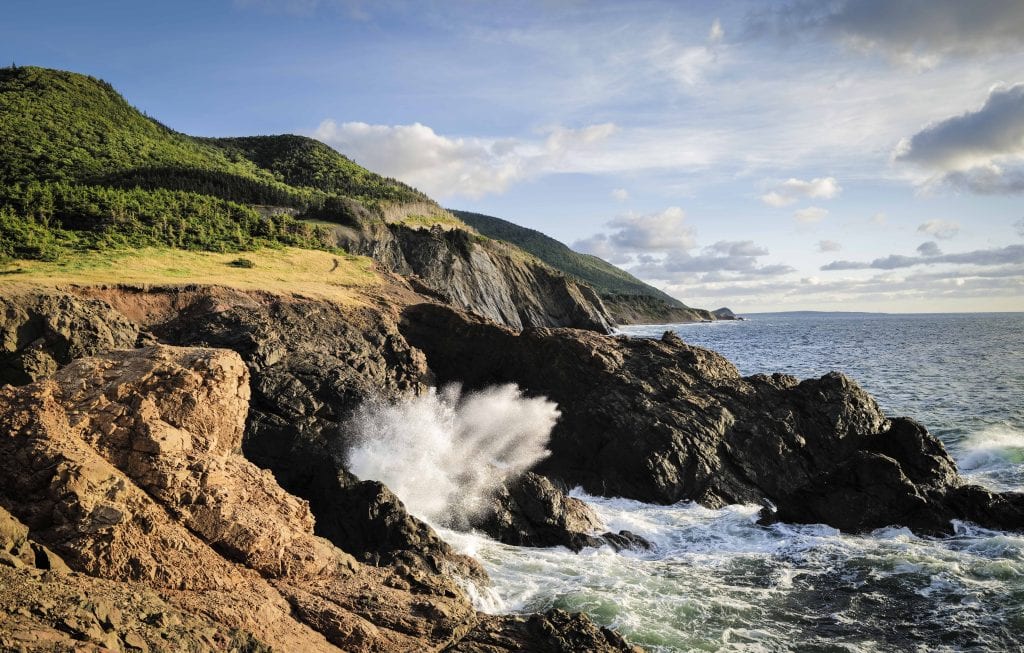
Nova Scotia’s Kejimkujik National Park and Historic Site is home to old-growth forests, white sand beaches, diverse wildlife and abundant natural beauty. But long before it was established as a national park in 1969, it was the site of Mi’kmaw fishing villages, hunting territories and burial grounds for thousands of years. Now, the Mi’kmaq will once again play a central role in deciding how that land, which is the keeper of their stories and memories, is cared for.
A new agreement between the Mi’kmaq and Parks Canada will allow both parties to govern almost all of Nova Scotia’s parks and historic lands together. Announced in December 2025, the Toqi’maliaptmu’k Arrangement, which means “we will look after it together,” reflects a relationship based in mutual respect and allyship — one that has taken decades to nurture and create.
Roughly 30 years ago, that relationship was essentially non-existent, Eric Zscheile says. He has been a legal advisor to the Mi’kmaq, who operate as one nation, since 1992 and negotiates on their behalf with the federal and provincial governments.
Nova Scotia’s national parks (excluding Sable Island), as well as many more throughout Canada, were created from land that was directly taken from First Nations, often through “dubious land surrenders,” Zscheile says. For generations, the Mi’kmaq had no say in how unceded land was protected, used or accessed, and there was a deep sense of distrust toward the federal agency as a result.
“Most Mi’kmaq refused to even go into a national park because of the past,” Zscheile says. “There was a feeling that it was government appropriation.”
Then came the Marshall Case, a 1999 landmark decision in favour of Mi’kmaw fisherman Donald Marshall that affirmed First Nations’ Treaty Right to fish, hunt and gather for their livelihood. After that, Zscheile says, things slowly began to shift.
“ People within Parks [Canada] started looking at what was happening legally when it came to the rights of Indigenous Peoples and their relationship with Indigenous Peoples, not just in Nova Scotia but across the country,” he says. “There started to be a concerted effort to say, ‘I think we have to do things differently.’ ”
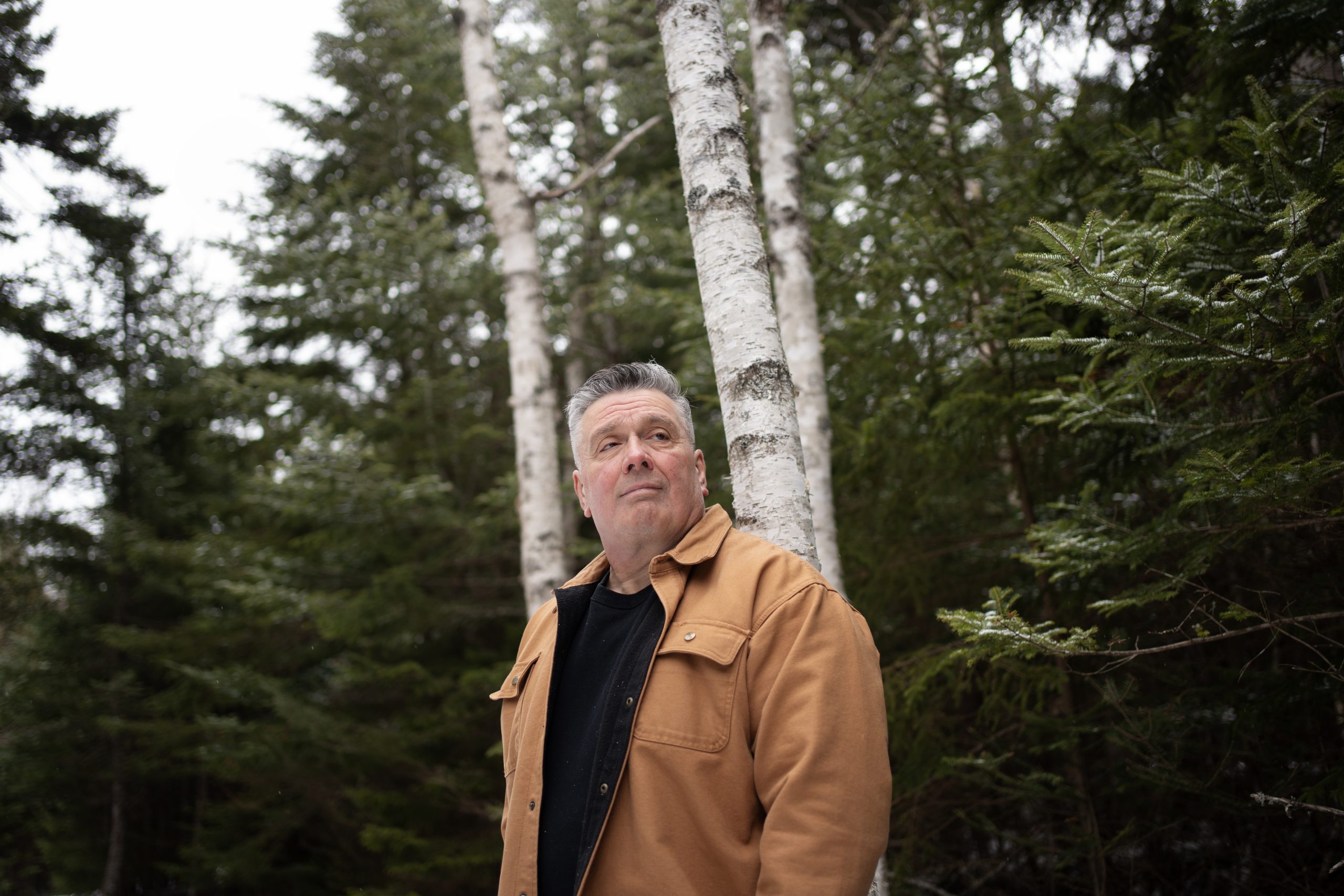 Eric Zscheile says that many Mi’kmaq “refused to even go into a national park because of the past.” But in recent decades, the relationship with Parks Canada has shifted. Photo: Darren Calabrese / The Narwhal
In the years since, progress has been gradual. Mi’kmaw leaders have worked with Parks Canada on a number of projects to help repair the community’s relationship with both the agency and the land they’d historically been excluded from. In 2012, they formed an arrangement to allow Mi’kmaq to enter national parks for free.
They’ve also worked to incorporate Mi’kmaw place names into official signage and interpretive displays, create visitor programs highlighting Mi’kmaw history and culture and organize harvesting, protection and restoration projects. One such project focused on white birch conservation and gave the Mi’kmaq access to white birch for traditional crafts, including building canoes.
Today, Parks Canada is lovingly seen by the community as the “least offensive federal agency,” Zscheile says. That’s thanks to years of collaboration and a willingness to listen and work together as equal partners.
That status as equal partners is now official, according to the Toqi’maliaptmu’k Arrangement, which took nearly a decade of negotiations to bring to fruition.
The arrangement is unprecedented and monumental in its scope. While similar agreements exist in Gwaii Haanas in B.C., Newfoundland’s Torngat Mountains and Saoyú-ʔehdacho in the Northwest Territories, those partnerships apply only to individual parks. This agreement’s underlying principle is to recognize and implement Aboriginal and Treaty Rights within lands that have traditionally been governed, managed and utilized by the Mi’kmaq.
Dive deeper on this topic
Because of that wide scope, it’s the first agreement to apply province-wide and covers all Parks Canada-administered national parks and national historic sites in Nova Scotia.
The only exception is Sable Island Reserve, which was left out because it remains unclear if Mi’kmaq traditionally frequented and used Sable Island, Jonathan Sheppard, says. Sheppard is superintendent of Kejimkujik National Park and National Historic Site, one of the locations covered by the arrangement. Discussions about the governance and management of Sable Island are ongoing between Parks Canada and the Mi’kmaq.
The choice to create a province-wide agreement, rather than one focused on individual lands, was largely based on the Mi’kmaw preference for a collective approach because the Mi’kmaw communities in Nova Scotia operate as one unified political group, Sheppard says.
“[It was] really important for the ideas associated with self-governance and self-determination that this is a pan-Nova Scotia initiative, because it is ultimately about a nation-to-nation relationship and the nation-to-nation decision-making governance structure,” he says.
A shared vision
Fundamentally, the arrangement is a framework to formalize the modern-day relationship while recognizing and implementing the Peace and Friendship Treaties, signed in the 1700s between the Crown and east-coast Indigenous communities.
“This was not about negotiating rights and it was not about creating rights or extinguishing rights,” Sheppard says. “It was really about implementing rights originating from those original Peace and Friendship Treaties.”
In practice, the framework will be guided by a co-management board that will be made up of an equal number of Parks Canada and Mi’kmaw representatives. There will also be technical committees made up of Knowledge Holders, Elders and harvesters focused on specific topics, including language, culture and heritage; archeology; natural resource stewardship and harvesting; and economic opportunities.
While exact details will be developed over the coming months, the arrangement will include opportunities for practices on the land, including in protected heritage places. This will allow for practices such as ceremonies, Indigenous-led conservation activities and place-based learning and knowledge sharing.
The 10-year agreement has an option to extend or renew, although the Mi’kmaq are free to opt out at any point if they are dissatisfied.
“ It was really clear to Parks Canada that there was a lot of overlap in vision about land stewardship, and that formed the basis for the agreement,” Sheppard says.
The Mi’kmaw concept of Netukulimk teaches about the respectful use of resources and only taking what you need from the land. It’s one of the principles Sheppard says aligns with Parks Canada’s vision for ecological integrity and preservation. Another is Msit No’kmaq, which suggests that all living beings are sacred and interconnected.
Etuaptmumk, or two-eyed seeing, is the concept at the very core of this new partnership, according to Lindsay Marshall, the Mi’kmaq relations advisor for the Cape Breton Field Unit for Parks Canada and a former chief of Potlotek First Nation.
Coined by Mi’kmaw Elder Albert Marshall, it means “looking at something with your western eye, and also with your Indigenous eye to come up with something truly beautiful and unique, and to understand it more,” he says. It is about combining both wisdoms to create a more holistic, in-depth approach.
While the timeline to establish this arrangement was long, Marshall says it was the Mi’kmaq who set the pace, not the government. This required patience from Parks Canada at times, patience that helped demonstrate respect. So far, Sheppard says, the public response has been positive.
“ I’m really proud of the way the approach has been at the speed of the communities and not rushing, not being forceful in any way,” Marshall says. “That shows understanding and appreciation for culture.”
For First Nations in other provinces who may want to develop their own arrangements, Marshall suggests a similar strategy: go slow and build a real relationship before rushing into anything.
And to federal agencies that may want to build partnerships with Indigenous communities, Marshall stresses the importance of doing the homework first.
“Before you even set foot in the community, you should learn about the community,” he says. “You go at [their] speed and you approach with respect.”
Heal the people, heal the land
For Clifford Paul, the moose management co-ordinator for the Unama’ki Institute of Natural Resources, this new arrangement is an opportunity for true healing among the Mi’kmaq.
“The Mi’kmaq language hasn’t been spoken in these areas in a long time,” Paul says. “The language belongs there. Our people belong there.”
It is also a chance to draw on Indigenous wisdom to help heal the land at a time when the environment is in dire need of protection. The Mi’kmaq have a proven track record of helping to improve the ecosystems in Nova Scotia’s parks, Paul says. In recent years, for example, they reintroduced pine martens into the boreal forest and helped to rectify an overabundant moose population through harvesting.
While the latter project was highly controversial — both with people who oppose hunting and non-Indigenous hunters who opposed being excluded — Paul says the Mi’kmaq successfully demonstrated their ability to get the job done safely while providing positive social impacts to their communities.
Dive deeper on this topic
Restoring the spiritual connection between the Mi’kmaq people and the land is another crucial part of this deal, Paul says. Although the arrangement is about resource management and economic opportunities, it is also about harvesting knowledge from these sacred lands after hundreds of years of severed access.
“ When we go to these places and do our storytelling, it widens the breadth and scope of our Traditional Knowledge,” he says. “ You heal the people by taking them back to the land.”