
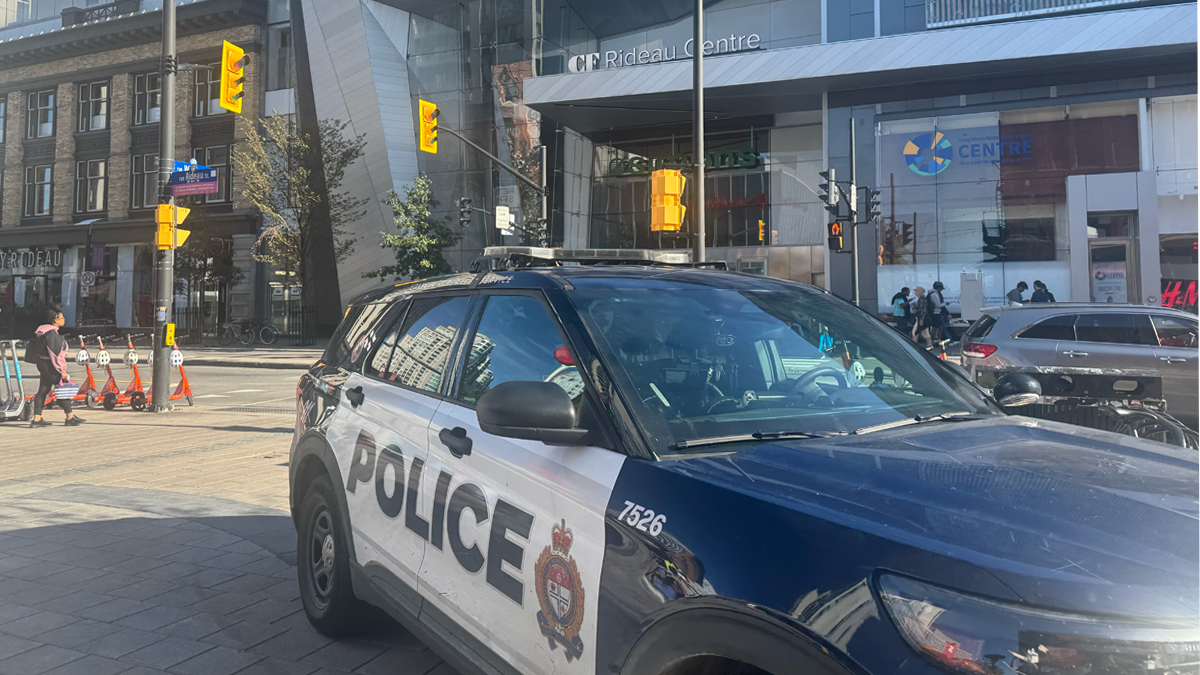
Ottawa police say the technology included in the body-worn camera pilot project is helping them respond more quickly to community needs.
In a video released by the Ottawa Police Service (OPS), for example, an officer is shown helping an elderly woman find her way home. The woman is speaking in Chinese (the video doesn’t indicate whether Mandarin or Cantonese). The officer enables a real-time translation feature on his body-camera. From there, he was able to help her get to her residence.
The OPS shared results of the body-worn camera pilot project — launched in 2025 — in a report to the Police Service Board on March 25.
Deputy Chief Steve Bell said the translation in the video was something they could have done before after finding a translator, a process that would be much slower.
The OPS said that there has been a lot of positive support from officers and the community about the cameras. Transparency, accountability and efficiency are key advantages. The AI software in the cameras allows officers to translate more than 50 languages.
“The members with the cameras were providing positive feedback,” Sgt. Devon Archer said. “Likewise, we actually had members coming to us asking to have access to the cameras when the next phase of the training was rolled out.”
The OPS also highlighted the use of Axon Draft One, an AI-supported transcription that helps officers write reports.
“It allows us to get our officers back on the road faster,” Archer said, explaining that it reduced the downtime and administrative delays necessary when writing a report.
Stubbs added that they have set up a filter to ensure that officers review the AI-supported report. He explained that AI generates a report and the filter requires officers to change 30 per cent of the report.
“That is just a failsafe to make sure it is correct; it may be 100 per cent correct in reality,” Stubbs said. “We can drop that filter to 20 per cent, to 10 per cent, or zero per cent if we want. It’s our choice.”
Police board committee members Michael Polowin and Dave Donaldson asked if the Crown would accept the reports generated by AI, with Polowin noting many judges are skeptical of AI.
“We’ve had extensive consultation with the Crown. If the Crown wasn’t supportive of this technology to move ahead, we wouldn’t move ahead with it,” Bell said.
Bell acknowledged, not all judges will support the use of AI, but reiterated it is identified by the Crown as a useful technology and would be successful in courts. Bell also said that the AI support has increased the quality of reports.
Ottawa Police Service hopes to deploy 200 body-worn cameras by the end of 2026, and an additional 650 by the end of 2027 for a cost of $30 million.