
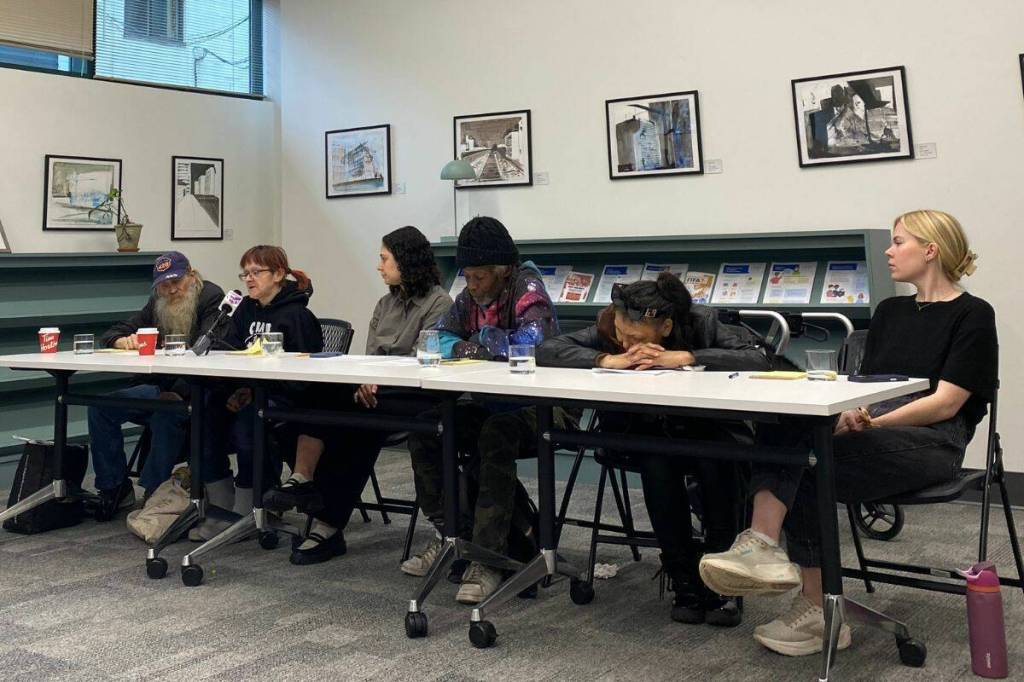
A coalition of tenant groups and drug user unions across the Lower Mainland is blasting the provincial government for the proposed changes it wants to make to the Residential Tenancy Act, calling it “a death sentence for tenants in supportive housing.”
On March 4, 2026, the province introduced Bill 11 that would amend the Residential Tenancy Act.
Housing Minister Christine Boyle previously said that the new legislation seeks to “strike the right balance” between safety and rights under the Residential Tenancy Act. It allows the temporary eviction of disruptive residents and gives operators an easier path to full eviction for tenants who possess weapons.
Laura Macintyre, Pivot Legal Society Lawyer, said “Bill 11 sets the stage for the BC NDP to continue chipping away at the rights of tenants living in supportive housing – and to do so without legislative scrutiny. It places power to revoke life-and-death protections for tenants in the hands of the government of the day.”
Members from TRAC, Surrey Union of Drug Users, Kilala Lelum Health and Wellness Cooperative, Pivot Legal Society, Our Streets, VANDU, P.O.W.E.R, Crab Park ten city, CLAS and Our Homes Can’t Wait released the joint statement Thursday (March 26).
The coalition is calling on the government to “halt” the bill before it reaches second reading next week.
“We know that tenants in supportive housing are already experiencing barriers to accessing justice,” says Sepideh Khazei, TRAC Lawyer. “Bill 11 legalizes punishment for tenants before legal proceedings, a move that will accelerate homelessness and evict tenants to nowhere.”
Gina Egilson, SUDU Board of Directors, added that “Violence is a direct result of state abandonment. Further destabilizing people when [the government doesn’t] have a plan for where they should go will only cause further violence and increase the risk of death.”
In a statement from Boyle, the housing minister, she said, “The vast majority of people living in supportive housing are looking for housing stability and support while creating a positive community in their homes and with their neighbours.”
“These proposed changes will provide tools for supportive housing providers to take quick, decisive action but only in rare instances of health and safety issues. These changes are intended to offer a measured approach by strengthening health and safety in supportive housing for tenants and staff, while ensuring that all tenants continue to be protected and supported under the Residential Tenancy Act.”
But the coalition is concerned that the amendments only focus on “problematic tenants and do not address the myriad concerns that supportive housing tenants have related to the maintenance of their building, or the increasingly unaffordable rates of rent they are forced to pay.”
TENANT GROUPS AND DRUG USER UNIONS MAKE 8 RECOMMENDATIONS
The coalition said that if the province was “genuinely concerned about the quality, safety, and security of supportive housing, it would:”
1. Consult people with lived and living experience of unregulated substance use and supportive housing residence to inform policy development in supportive housing;
2. Create minimum service standards and training requirements for supportive housing providers which include transparent third-party inspection, building maintenance, de-escalation, OFA 2 first-aid, trauma-informed care, and advanced overdose response with naloxone;
3. Stop exploiting workers through casual, non-unionized, and underpaid positions. Instead fairly compensate, provide ongoing training, and create unionized and non-casual positions in supportive housing to prevent burnout and maintain quality working conditions;
4. Require contracted housing providers to create authentic peer-led support, operational, emotional first-aid, and de-escalation roles for housing residents to more formally support site safety within their homes;
5. Require contracted supportive housing providers to solicit and follow-up on resident feedback, suggestions, and complaints through regular community consultation and by creating tenant advisory committees;
6. Expand the role of harm reduction-informed peer workers in all supportive housing environments;
7. Create peer-supported supervised inhalation spaces in low-barrier supportive housing, provide staff with effective PPE, organize floors by tenants’ drug of choice, ensure proper negative pressure ventilation, adequately maintain buildings, and seal windows to mitigate indoor smoking and related concerns;
8. Regulate the toxic drug supply, expand prescribed safer supply access, reverse harmful witnessed ingestion policy for new safer supply clients & free DULF.
-With files from Mark Page