
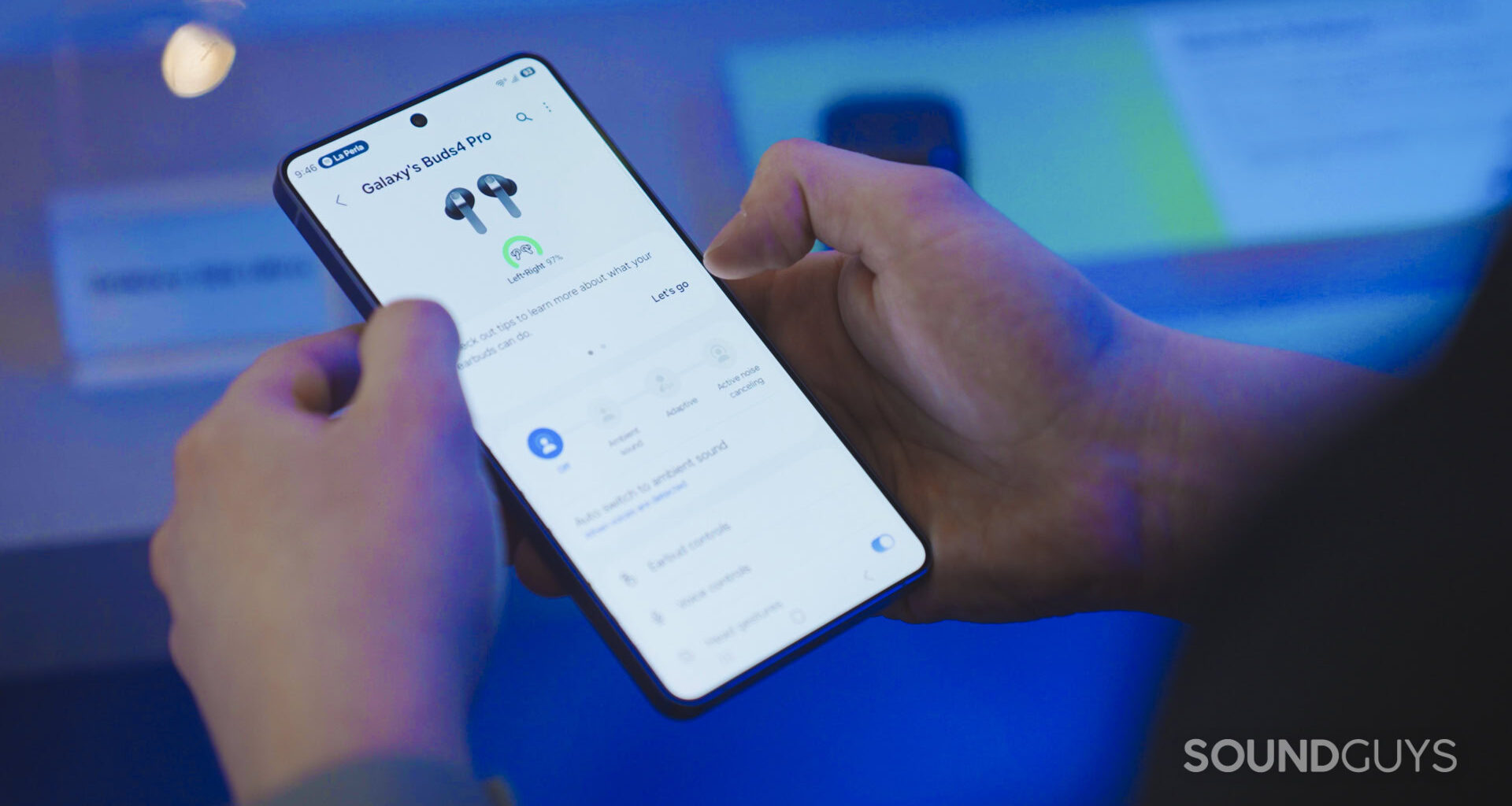
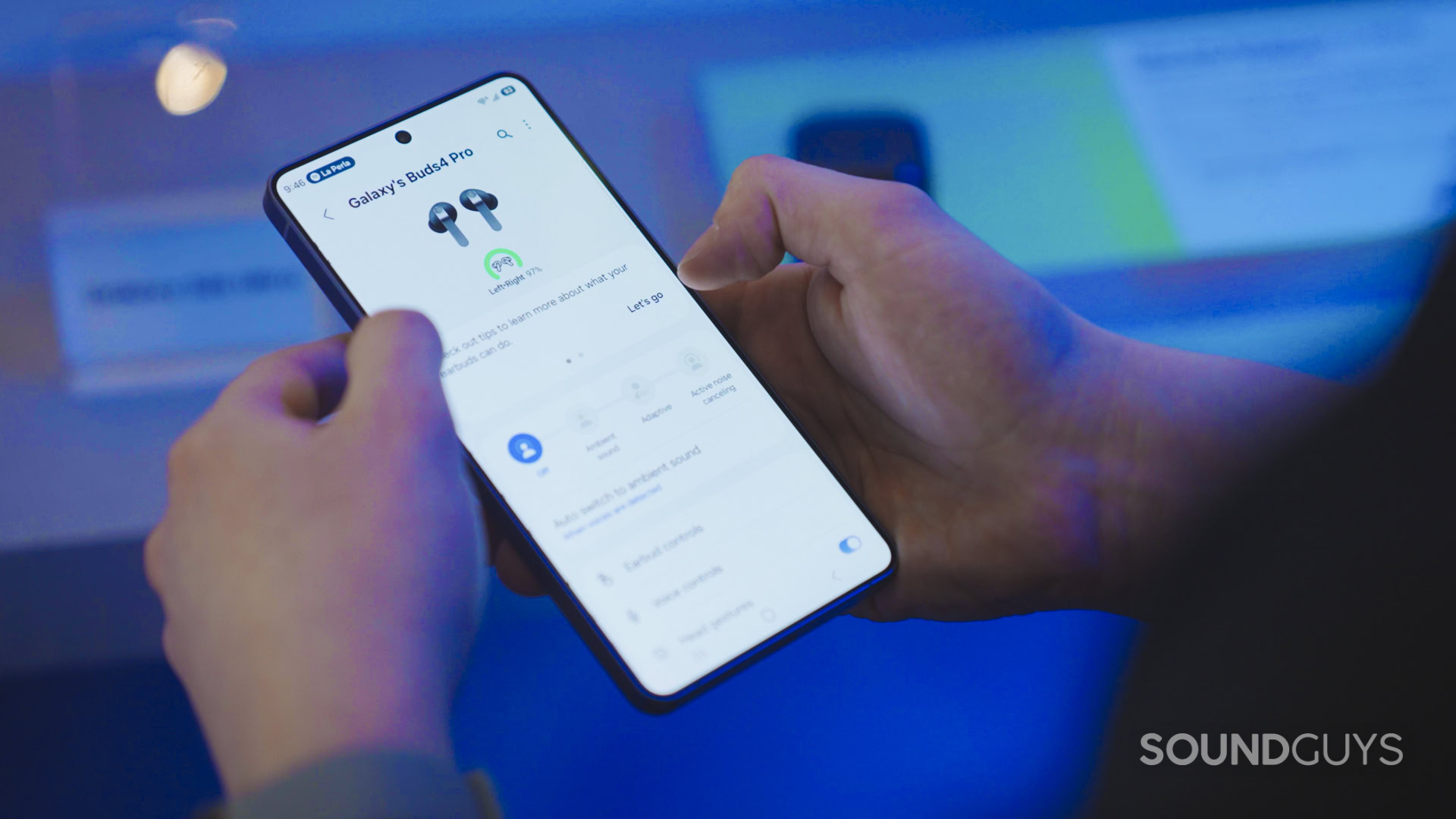
If you’ve purchased flagship earbuds in the past decade, chances are you’ve already encountered the aptly-named walled garden. Ecosystems have become divorced, often requiring multiple devices from the same brand to access the very best features. While the headphone community as a whole once blamed Apple, Samsung is equally accountable today. The Samsung Galaxy Buds4 Pro are living proof that, without the correct hardware, listeners should expect nothing less than half-baked functionality.
Will you purchase the Samsung Galaxy Buds4 Pro?
1 votes
Yes, they look awesome!
0%
No, they have too many exclusive features.
100%
Another innovation, another eye roll
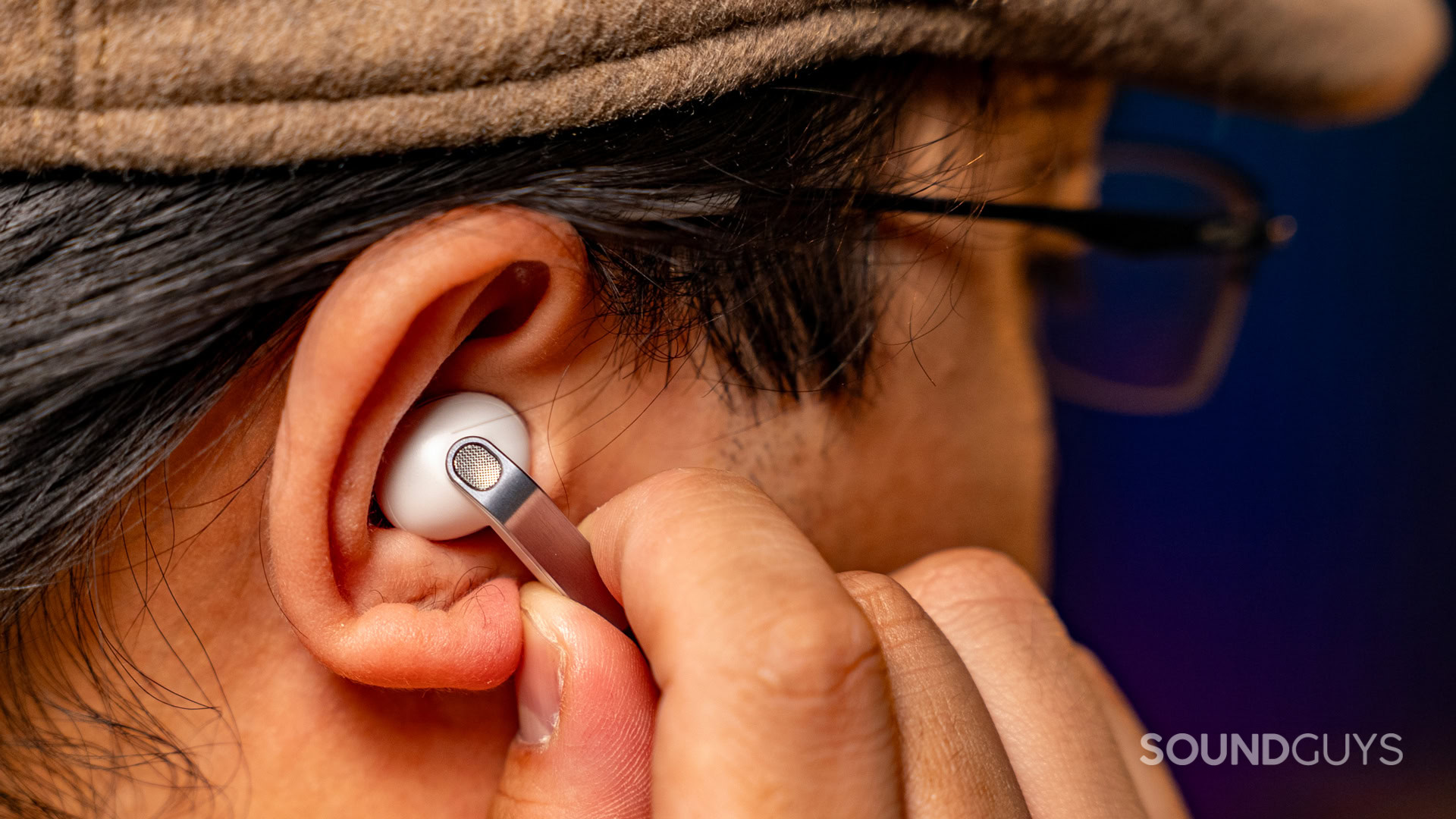
Pinches and swipes control these earbuds.
Don’t get me wrong, the Galaxy Buds4 Pro are one of Samsung’s greatest accomplishments to date. That is, provided you have a recent Samsung smartphone. Access to the Samsung Seamless Codec, for example, is limited to Samsung phones running One UI 4.0 or later. So, if you’ve been good to the planet and kept the same phone you’ve had since before 2021, you can’t enjoy wireless audio with up to 512kpbs and 24-bit/44.1kHz sampling. That’s not to mention that the feature is completely unavailable on other Android and iOS devices.
Samsung doesn’t stop there, though. The Galaxy Buds4 Pro introduce a string of new high-end features that require a Galaxy S23+ smartphone running One UI 6.1.1 or later. Take, for example, Ultra-wideband calls. This feature uses a 16kHz bandwidth limit to provide superior in-call microphone quality. Likewise, Ultra High-Quality (UHQ) audio uses an upscaling algorithm to restore previously lost auditory detail. However, you’ll need at least a Samsung Galaxy Z Fold 5+ to unlock the 24-bit/96kHz SSC UHQ codec.
The Samsung Galaxy Buds4 Pro no longer support true Multipoint connectivity.
Head gestures are the latest craze among flagship audio brands. Apple has introduced its own functionality for the AirPods Pro 2 and Pro 3, while the new HUAWEI FreeBuds Pro 5 also support answering and ending calls by nodding or shaking the head. The Samsung Galaxy Buds4 Pro are no different. However, the feature is only available within the Galaxy Wearable app on connected devices running One UI 8.5 or later. This software version launched alongside the Samsung Galaxy S26 series. That means future compatibility with earlier models, including the S22+, isn’t expected until later.
Another continuing limitation is the lack of traditional Bluetooth Multipoint on Samsung earbuds. Instead, you must download the Samsung Wear app on each non-Samsung device you wish to pair the earbuds to. Once you open the app, you can then manually connect the earbuds to each device, but this adds an extra layer of inconvenience.
Less market share, less ego
Chase Bernath / SoundGuys
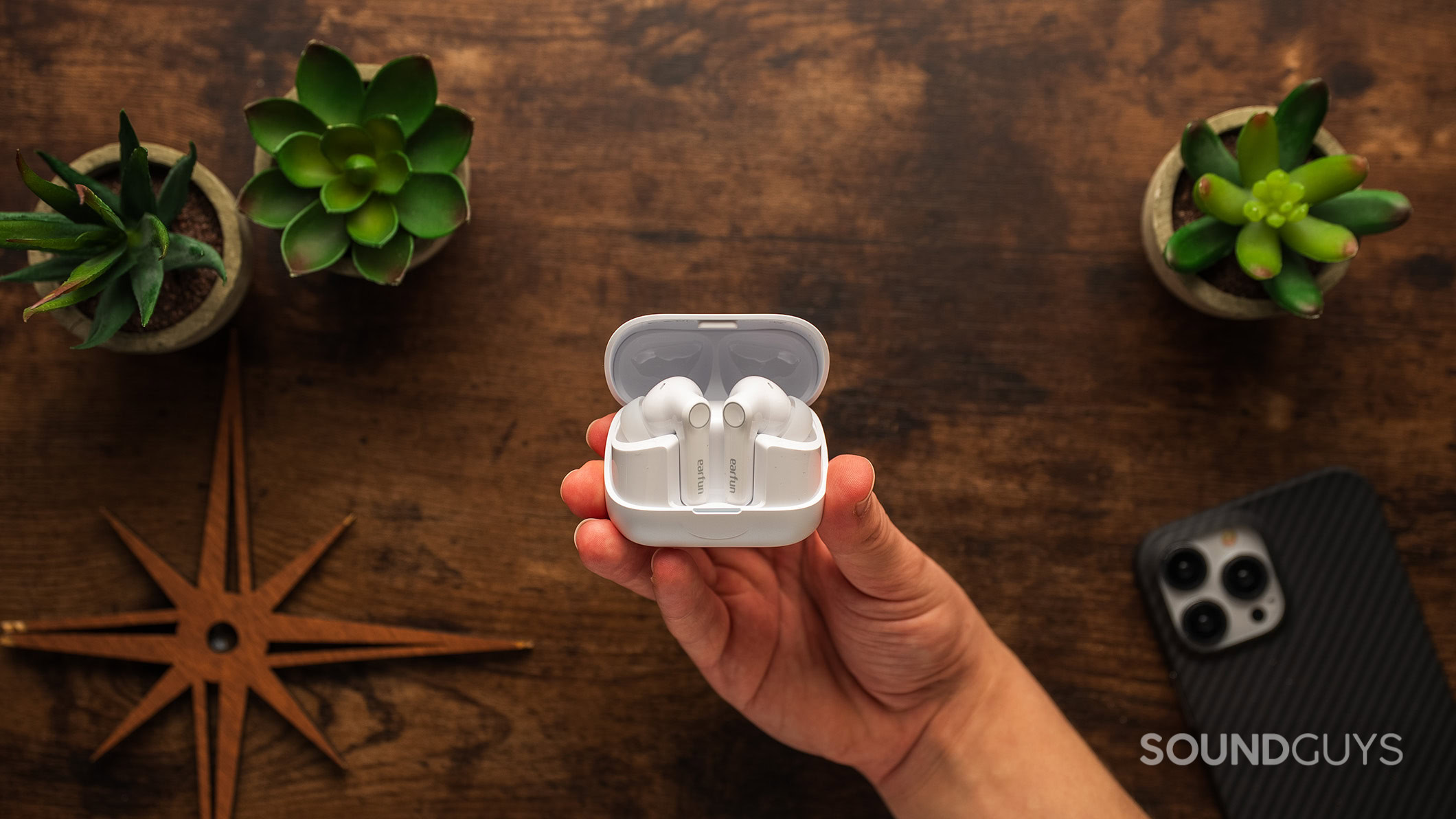
The EarFun Air Pro 4+ works equally well across Android and iOS.
It’s no coincidence that two of the biggest consumer audio brands in the US have opted for ecosystem lock-ins. After all, how else can big companies compete if not by cornering their loyal fans? The fact is, though, that many alternative manufacturers get by offering flagship features without resorting to these kinds of malicious practises.
Take, for example, the Google Pixel Buds Pro 2. These earbuds support head gestures on any Android and iOS device with the Google Pixel Buds app. Other OS-agnostic features include conversation detection, which automatically pauses music and switches to Transparency mode when you begin speaking. There’s also Adaptive Audio, which adjusts ambient sound levels based on your environment, and the earbuds support true Multipoint connectivity. If you own an Android 6.0+ phone, you can converse seamlessly in 40 languages with Live Translation.
Even budget earbuds, such as the EarFun Air Pro 4+, offer comprehensive OS-agnostic features. With the EarFun Audio companion app installed, listeners can enjoy battery status monitoring, low-latency gaming mode, and Multipoint connectivity. Android fans receive the high-res aptX Lossless and LDAC codecs, while Apple users can connect via AAC. There’s also Adaptive ANC, control customizations, Find My headphones, and a 10-band custom EQ. At CES 2026, EarFun announced that, with the latest firmware update (Android: v20.1.36+ / iOS: v20.5.5+), the EarFun Air Pro 4+ now supports AI translation. That makes them a more compelling purchase for frequent travellers than the Samsung Galaxy Buds4 Pro. They also cost $150 less.
The bottom line
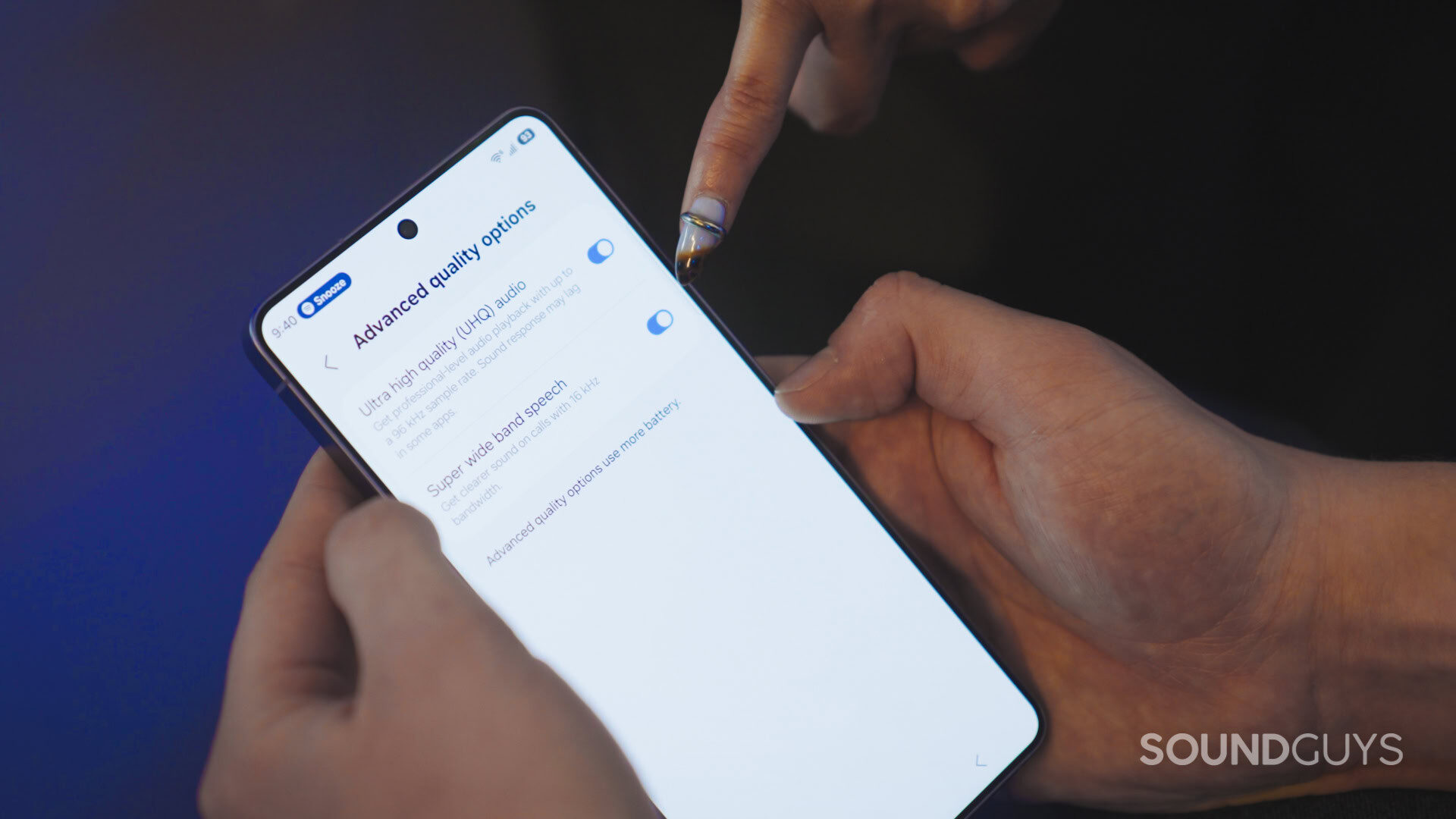
Samsung users get access to Ultra High-Quality audio.
If you have a recent Samsung smartphone, there’s no need to question the Galaxy Buds4 Pro earbuds. They offer excellent active noise cancelation, last over 6 hours per charge, and have a sound quality most consumers will like. They’re a step up from their predecessor and bundle a fistful of handy features that should keep them going for the next few years without needing an upgrade.
However, if you’re shopping for earbuds and don’t own a recent Samsung phone, I wouldn’t recommend the Galaxy Buds4 Pro. Aside from being locked out of their best features, you’ll be spending money on some of the most expensive buds on the market right now. Ultimately, there are more affordable alternatives that offer virtually the same features that work across Android and iOS by downloading their respective companion apps. Sometimes, reaching for your phone is a price worth paying to avoid being sucked into an expensive, closed-off ecosystem.
Thank you for being part of our community. Read our Comment Policy before posting.