
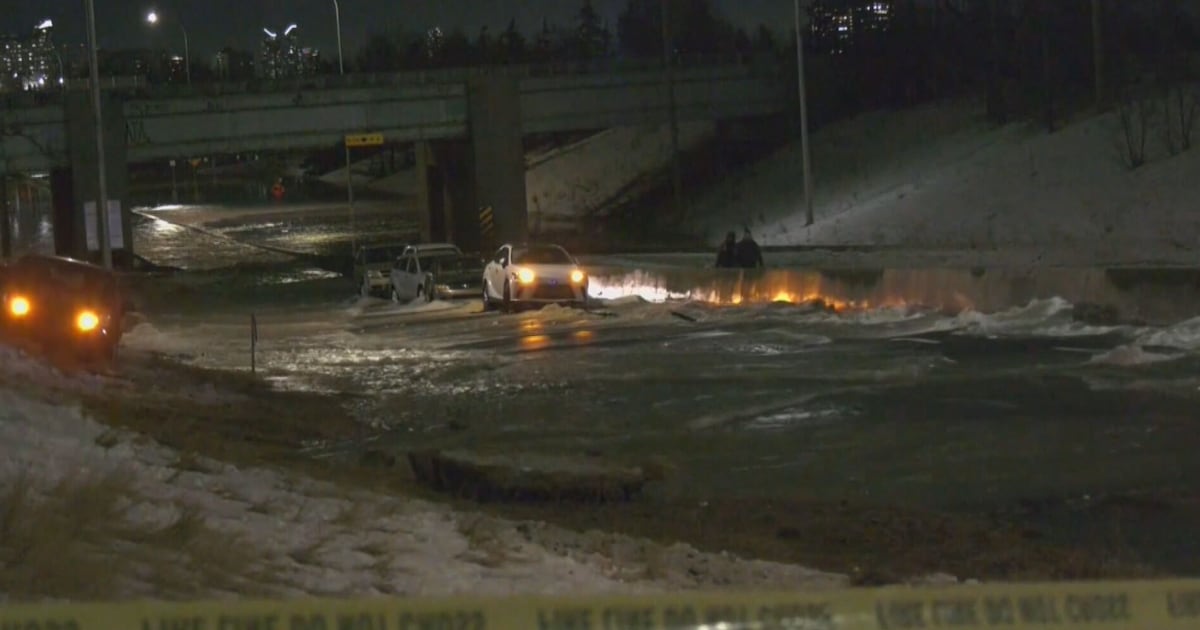
Very cold water came up to Garrett Scully’s knees, and he could feel the debris beating against his legs.
A ways ahead yet was the first of multiple vehicles with people atop, waiting on help.
Scully could see the water there was vehicle-window deep.
The acting lieutenant and aquatic specialist with Calgary Fire turned to his fellow rescuer, and they shared a silent beat before he said, “Let’s not do this.”
They’d have to find another way.
Not long prior, on the evening of Dec. 30, 2025, the aged, ailing Bearspaw feeder main ruptured a second time.
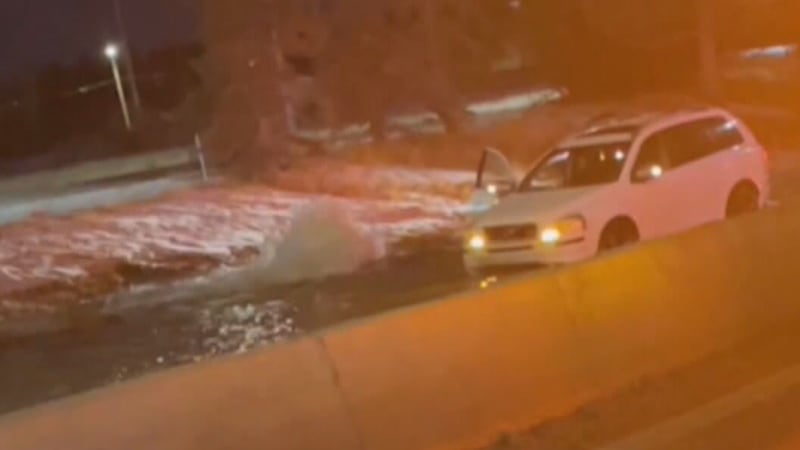
At the start, a vehicle was made briefly airborne by the force of it.
Now, city water continued its steady, heavy bleed from under the northwest Calgary road.
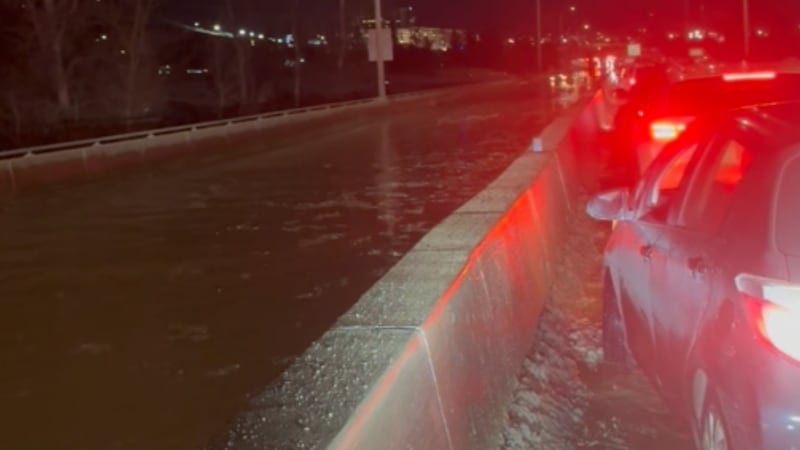
People previously driving somewhere, now going nowhere, scrambled atop dead rides as the water rose.
Brent Falhman, district chief with Calgary Fire, said the task was clear, but “you have to think about the right way to do it.”
And “you have to decide how much you’re going to risk.”
“You risk a lot to gain a lot,” he said, “and you risk a little to gain a little.”
 (Courtesy Janice Rendflesh) ‘Hard to figure out what’s happening’
The main break occurred near the Sarcee Trail/16 Avenue N.W. interchange, a few blocks from the last one in summer 2024.
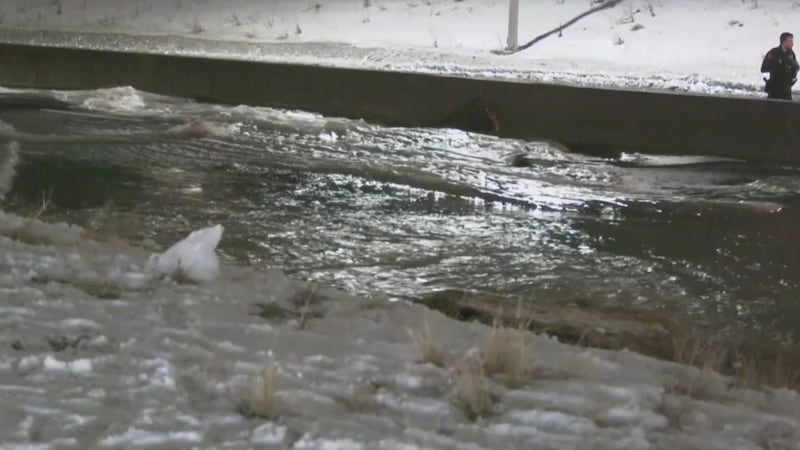
Seemingly endless water flowed off the road, taking over pathways and continuing into the park.
The 911 calls followed quickly and in quantity, but it wasn’t known yet what the situation was.
Scully said in the moment, “There are so many people calling dispatch, it’s hard to figure out what’s happening.”
What he saw when he arrived “didn’t make sense.”
“You see it, and it’s just like, ‘There’s an artificial river going down the road right now,’” he said.
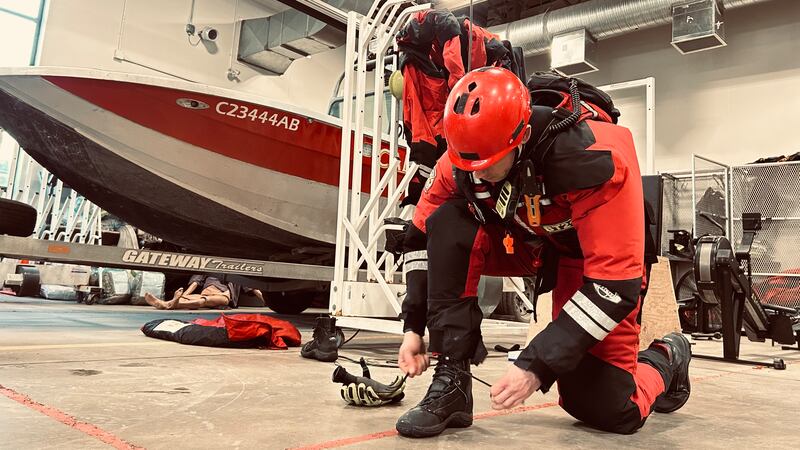
Scully said Calgary Fire’s aquatic team trains “all the time” and that it’s “all very hands-on.”
But this, he said, “It’s in a road—we don’t train for that.”
 (Courtesy Brandon de Carlo)
Out in the wet, up to his knees, debris beating against his legs, he was at risk of losing his footing a couple of times.
Fahlman said that was too much risk.
“The water’s moving so fast, it could carry you,” he said, “and if you get swept ‘downstream,’ eventually it was dumping by that bridge over the river.
“And the road underneath is getting chewed up pretty good,” he said, “and if you try to walk across, you could get trapped in that asphalt peeling up.”
‘You adapt to the situation’
When it becomes clear “plan A” isn’t going to work, Scully said you go to “plan B,” then “plan C,” and on and on if need be.
He said you run through as many options as you have to.
He said you do the job.
Falhman said, “You adapt to the situation.”
“You’ve never done this on 16th Avenue,” he said, “but you’ve done it on the river.”
 (Damien Wood / CTV News Calgary)
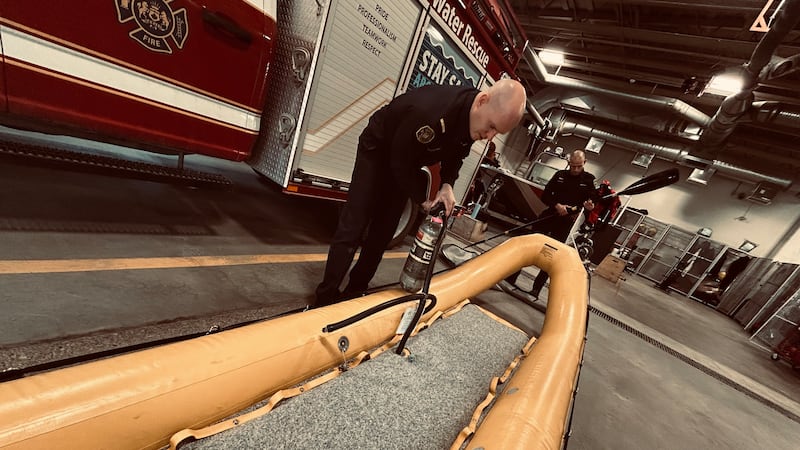
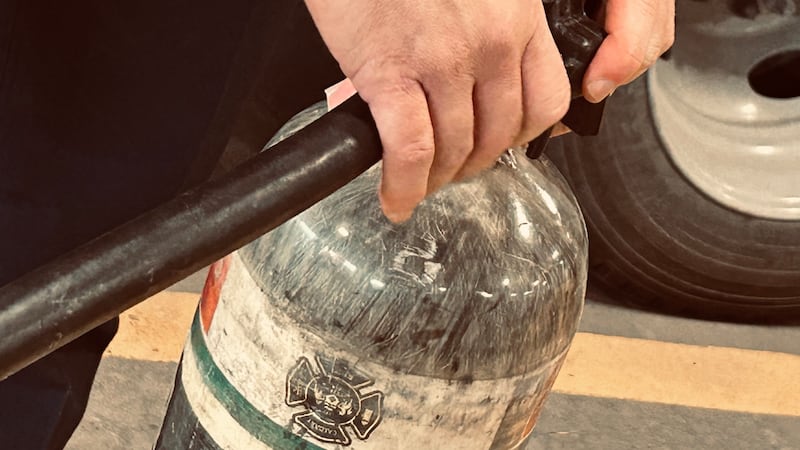
Firefighters went back in the water with a kind of inflatable raft that can be fast-filled with the same canisters they use to breathe when battling blazes.
The night’s calls, which police looked over recently with CTV News, show one vehicle was floating down the road.
A family with special-needs children was trapped inside another.
Someone was navigating the crisis on a broken leg.
All told, more than a dozen people were in need of rescuing.
“Imagine you’re sitting on top of your car,” Fahlman said, “and you’re like, ‘What do I do now?’
“You’re helpless.”
Scully said, “Seeing those people’s relief, when they saw us there, was huge.”
 (Damien Wood / CTV News Calgary) ‘It’s a lot’
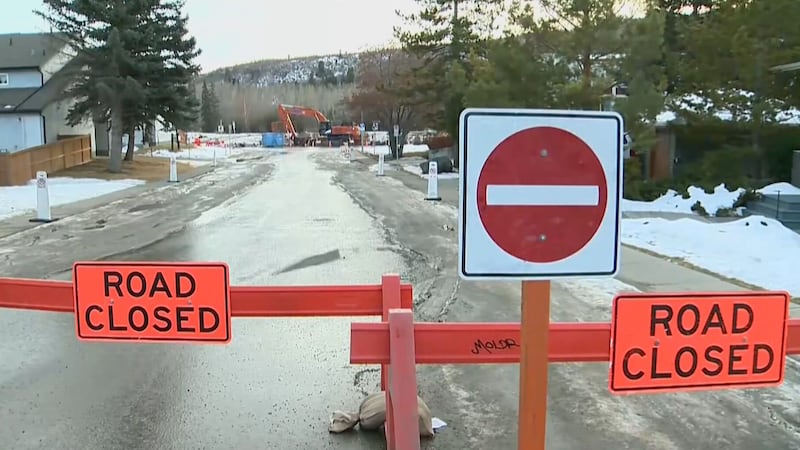
Police shuttered many a road over an area of size and put a helicopter overhead to light up the secured perimeter.
Somewhere, city crews getting better-versed in water woe began work to turn off the tap.
Firefighters, meantime, paddled from “shore” to vehicle and back again, over and over, to save the stranded.
Scully said you make “hundreds of decisions” along the way in a rescue.
Some are little.
Others are anything but.
Each takes time, saves time, adds a complication or takes one away.
“It’s a lot,” he said, “and it’s stressful.
“(But) it all worked so well for such a different call.”
 (CTV News Calgary)
At a pace of about two to three minutes a person, everyone was brought safely back.
No fatalities; no one injured.
As his raft got back aground, ferrying the last person who needed ferrying, Scully said he finally felt some relief of his own.
‘A swift-water rescue on the No. 1 highway’
After the first main break, a local state of emergency was declared.
Water use restrictions were put in place.
The city carried out 29 repairs along the Bearspaw line, with the work completed by November 2024.
A little more than a year later, after the second break, the emergency operations centre doors opened again.
And water use restrictions were put in place again.
This time, repairs took weeks, not months, though additional work to maintain and ultimately replace the line is ongoing.
 (CTV News Calgary)
Immediately after the second break, somewhere, firefighters gathered around a table.
The second break didn’t unfold like the first.
If there were ever a third, it would very likely be different, also.
Fahlman said they discussed it anyway—as they would any event.
He said it’s called an “after-action review,” where they discuss an event “while it’s fresh in our minds.”
“It was kind of the conversation this time,” he said.
“‘Did you ever think we would do a swift-water rescue on the No. 1 highway through Calgary?’
“‘No, not a chance.’”
Related Stories