

Listen to this article
Estimated 4 minutes
The audio version of this article is generated by AI-based technology. Mispronunciations can occur. We are working with our partners to continually review and improve the results.
Municipal leaders across rural Alberta are pushing the provincial government to take action on what they say are unfairly high distribution fees paid by their residents for electricity.
The Fair Electricity Distribution Alliance is a growing coalition with dozens of members representing affected Alberta communities.
Most of them, like the County of Grande Prairie and Fort McMurray, are in the province’s north, but there are also municipalities in east-central Alberta around Lloydminster and Drumheller.
The alliance has sent a letter to the Alberta government urging legislative action of distribution rate equalization. It says affected households can pay an average of $118 a month in distribution costs compared to $34 in non-impacted regions.
“It’s mainly the north,” said County of Grande Prairie Reeve Amanda McDonald. “It’s anywhere where there’s less population per distance…. You’re going to see higher distribution fees.”
Last week, the county presented a resolution at the Rural Municipalities of Alberta (RMA) spring convention. The resolution passed, which means the RMA to continue advocating on the issue.
A typical electricity bill is mainly broken down by energy consumption and the cost of delivering it. Delivery charges include transmission of electric energy from generating facilities to substation transformers, and distribution, which is moving electricity from the substation transformers to customers.
Feeling the impact
La Crete resident Bob Wiebe said he would like to see some action on the high costs.
He has been developing a property outside of the remote hamlet, located about 670 kilometres northwest of Edmonton, on which he eventually hopes to build a house and shop. Wiebe said he spent around $60,000 to have electrical lines installed late last year.
In the first two months, only 49 kilowatt hours of electricity were used to power a yard light, at a cost of $4.65. But when delivery charges and other fees were included, the bills totalled more than $445.
“It makes me wonder, considering I just paid a lot of money to bring that line almost a mile onto my property,” Wiebe said
In comparison, the January bill for his home in La Crete came in at $331.25, of which just over a third was for usage.
‘Affordability and fairness are important’
Atco Electric is the wire service provider to the majority of northern and east-central Alberta. The company says that geography, terrain and infrastructure requirements in rural areas impact the price of distribution fees.
In a statement to CBC News, it said it is aware of the growing alliance.
“We agree that affordability and fairness are important issues. Atco Energy Systems advocates for fair cost allocation among distribution customers and is focused on safely and reliably delivering electricity, improving efficiency, reducing costs where possible, and investing in system resilience,” the statement added.
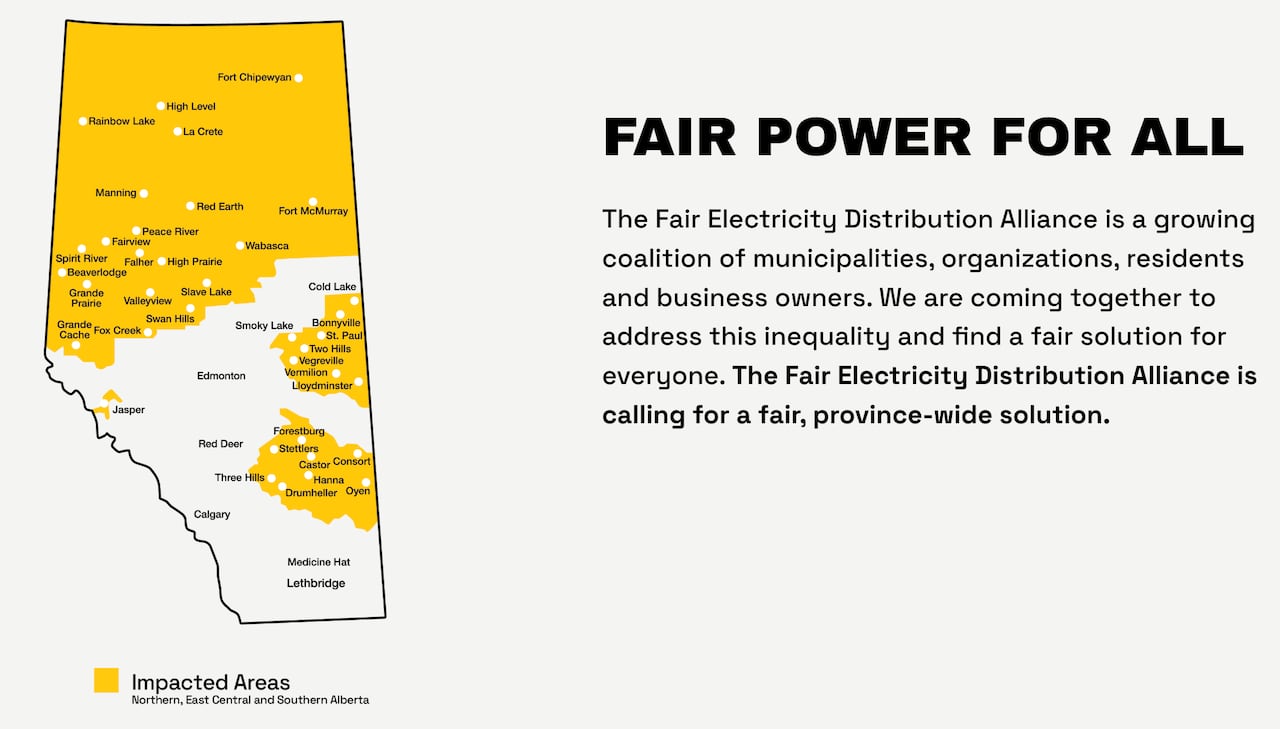 A screen capture from the Fair Electricity Distribution Alliance website, showing a map where highlighted areas are affected by higher distribution costs. (Fair Electricity Distribution Alliance)
McDonald said there are solutions available, noting billing practices in British Columbia and Saskatchewan that she said use flat fees or other equitable billing schemes for distribution fees.
“You don’t have to recreate the wheel. There are other provinces who are doing this where they have uniform rates or they have slightly higher but consistent rural rates,” she said.
Working on solutions
McDonald said the county and other leaders in affected areas have spent years advocating for change, adding there have been positive conversations with Nathan Neudorf, Alberta’s minister of affordability and utilities.
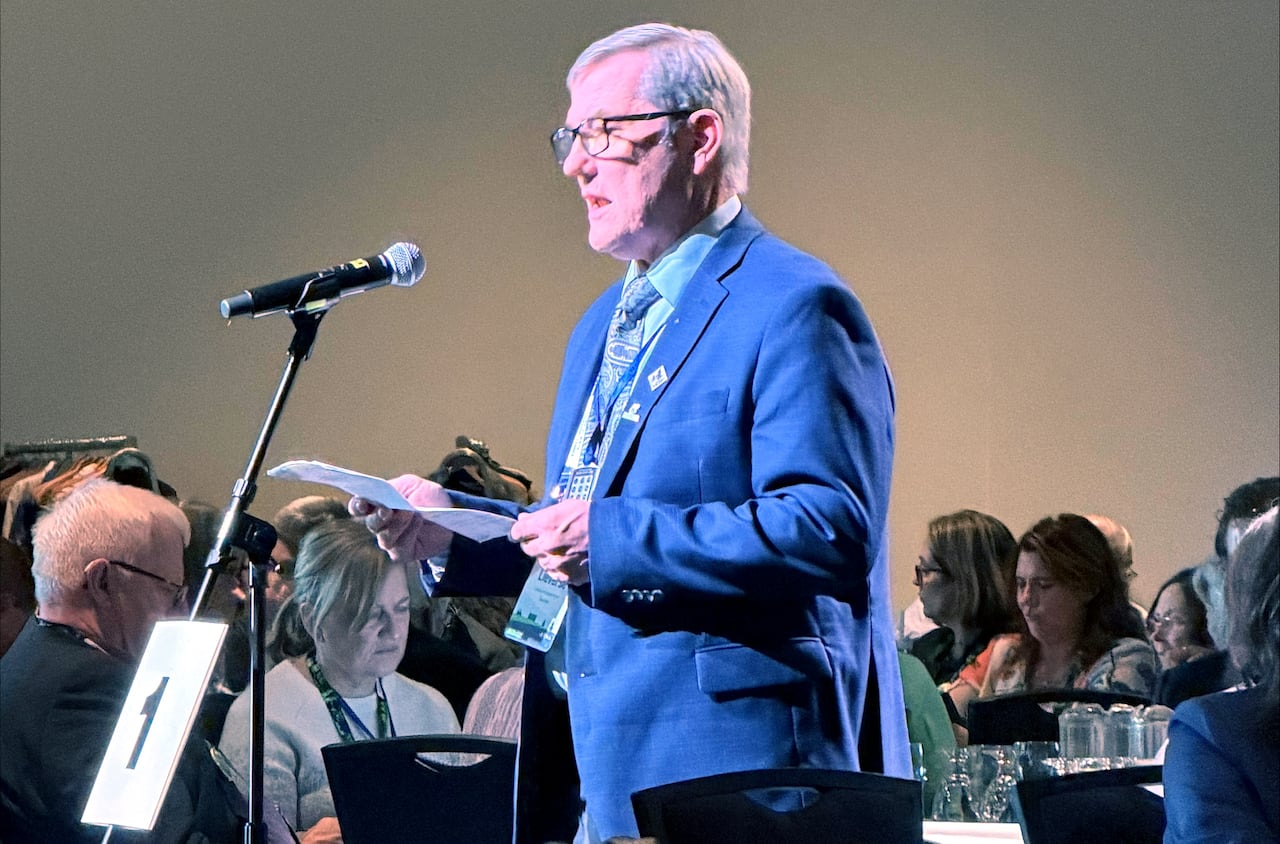 County of Grande Prairie Coun. Brian Lieverse presented the county’s resolution at the spring RMA convention in March. (County of Grande Prairie)
“It’s a lot of work to kind of get the consensus and get it through the system of a provincial system that has a lot of steps,” she said.
Neudorf said he is currently working on the issue.
“In the coming months, our government will conduct a comprehensive review of distribution rates to address regional disparities and explore targeted measures to reduce delivery costs, especially in rural areas and improve the efficiency of existing infrastructure,” the minister’s office wrote in a statement to CBC News.