
There are a lot of people polishing their resumes right now down at Maple Leaf Sports & Entertainment headquarters.
Some of them are doing so because they’re about to be out of a job, as GM Brad Treliving will not be the only one fired this spring. Others simply want out of the gong show that has become the Toronto Maple Leafs’ front office.
As bad as the Leafs have been on the ice this season, cratering to the bottom of the NHL standings the past two months, it’s somehow been worse behind the scenes. The richest team in the league has now become its most small-minded and timid, afraid to do anything approaching creativity or boldness. They’ve become completely paralyzed not only by their failures on the ice but also by the dysfunction that’s settled in the past three years, which is why they’ve done absolutely nothing to address their issues all season.
On the day yet another Leafs executive was shown the door, if you want to try to explain the inexplicable — the whys that don’t seem to have any reasonable answers with this team — you can start right at the top of the organization.
Why did the Leafs enter the 2022-23 season with a lame-duck GM who was feuding with the president, including not even sitting in the same room with one another at games, only to have that blow up spectacularly at an end-of-season press conference?
Why did they then hire Treliving, a GM with a terrible track record with the perennially struggling Calgary Flames, to take over after a brief, unthorough search?
Why did they then enter the 2024-25 season with a lame-duck president who scrambled to save his job, refusing to trade a star player in Mitch Marner who was set to walk for nothing and pushing for rushed, lopsided trades that now look like some of the worst in franchise history? (Which is hard to pull off in Toronto.)
Why did they then not replace that president, and allow the weak GM hired under duress to steer the ship by his lonesome this season, effectively shutting the remaining contention window of a team that had 108 points last season?
With the season already lost, why wasn’t that weak GM removed in advance of a pivotal trade deadline at which the organization needed to pull some value out of this failed campaign? Why didn’t they put someone in charge who could start to pull things apart and tank properly when it became clear a bottom-five finish would be the only thing worth playing for with 35 games to go?
On and on and on it goes.
At the end of the day, you can blame Treliving for the poor moves he made as GM for why Toronto is where it is, and you would be right. He did, in fact, make terrible decisions and shed talent again and again.
You could also blame coach Craig Berube, who somehow still remains behind the bench — in yet another act of bizarre indecision — for the fact this is arguably the worst defensive team in hockey, and you would also be right. And you could blame former team president Brendan Shanahan for presiding over all of it when things began to really turn sideways three years ago, and get a big green check.
But at some point, when the unforced errors happen again and again like this, you need to direct all of those questions higher up the food chain. How on earth has ownership allowed this once-promising front office and roster — a team that had the third-best regular-season record in the league and made the postseason every year in a nine-year period between 2016-17 and 2024-25 — to get turned into dust over the past two years, never once getting a key decision right?
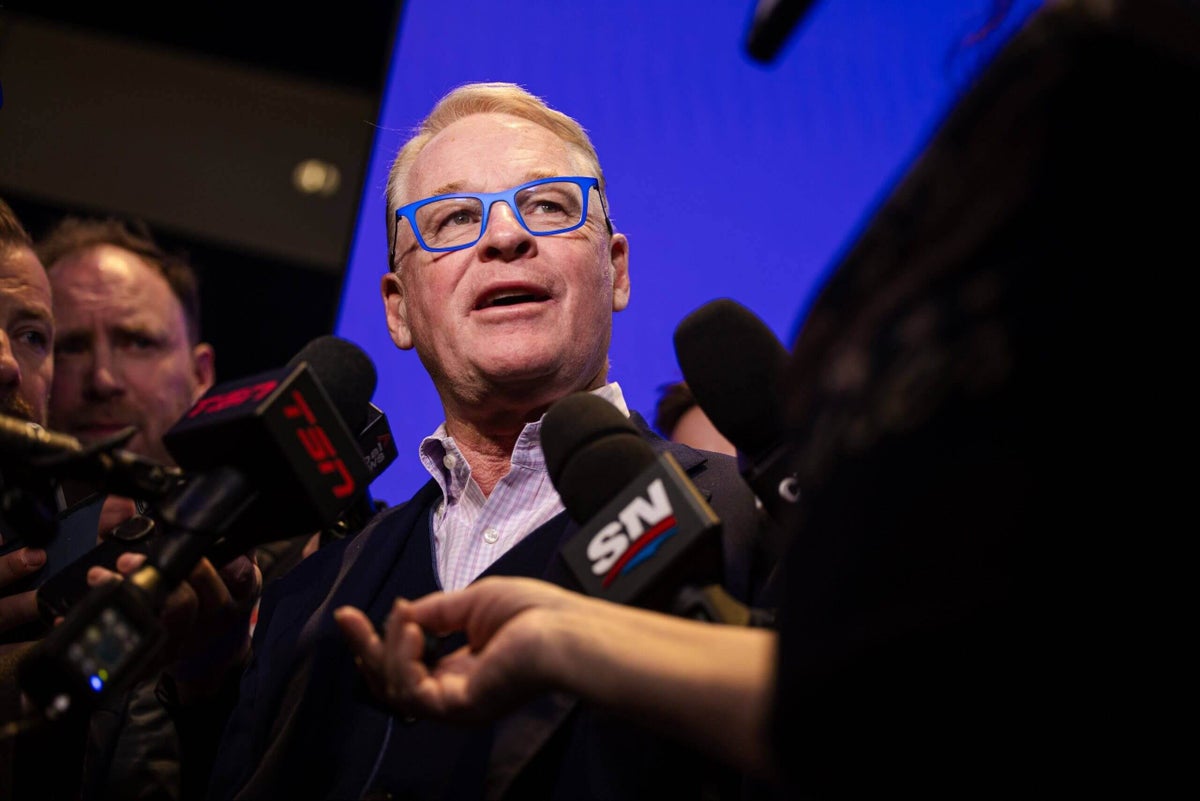
Part of the answer is that the Leafs ownership situation has been in flux, with the three-headed monster that was Canada’s two telecoms and Larry Tanenbaum being broken apart as Rogers Communications prepared to take over sole custody of the franchise. MLSE president and CEO Keith Pelley — a media executive whose most recent experience was running the PGA European Tour — has been the face of that group for two years now and will oversee the search for Treliving’s replacement.
It’s a hire so important that it will determine whether the Leafs return to the laughingstock status they flirted with for the first 10 years of the salary cap era or start to turn things around.
According to a source in the organization, Pelley was “very present” during the Leafs’ bungling of the trade deadline earlier this month, which was not the best showcase of the team’s decision-making process and one of the final nails in Treliving’s coffin. Pelley spent the intervening weeks surveying Leafs staff and people around the team and league about where things went wrong, and Treliving’s role in that decline.
Pelley then went to Rogers leadership — executive chair Edward Rogers and president Tony Staffieri — for permission to begin cleaning house by firing Treliving, an announcement expedited on Monday night when word began to slip out.
It’s obviously the right decision, but it’s very troubling that it took so long to make. Treliving had been concerned about his job security for basically the entire season, and it affected the effectiveness of the front office. Now the focus immediately shifts to Pelley attempting to find a new team president and GM by targeting the biggest names in NHL management.
Will anyone qualified want this job? Probably. It remains a marquee organization, and Pelley can dangle not only a massive salary but also a dual president-GM role in order to pry someone out of a big job elsewhere.
But given the track record of this ownership group, it’s fair to wonder if the Leafs can use that largesse effectively and identify the right candidate to lead the team out of this morass. What Toronto needs right now is some new ideas at the top, someone willing to build out a powerhouse executive team that can innovate and take big swings that fix not only the roster but also the culture of mediocrity that has seeped into every decision the Leafs make.
It’s plausible at this point that even airlifting in the top exec in the NHL won’t be enough to get the Leafs back to contention, not with the age of their core, the dearth of free agents available and the lack of prospects, picks and assets in general they have available. Job one for whoever Pelley chooses will be to properly assess whether a retool of this mess is even possible. If they determine it is not, they need to be willing to pull the plug on this era and rebuild through the draft, a process that may take years. And they’ll need to convince ownership of that path, painful as it may be.
Whether MLSE will be willing to entertain that message at this point — with season tickets to sell and TV ratings to boost as part of ownership’s cable empire — will be telling, as another misfire on their watch could set the Leafs back decades.
But if they don’t like where they are at, the reality is they did this to themselves along the way.