
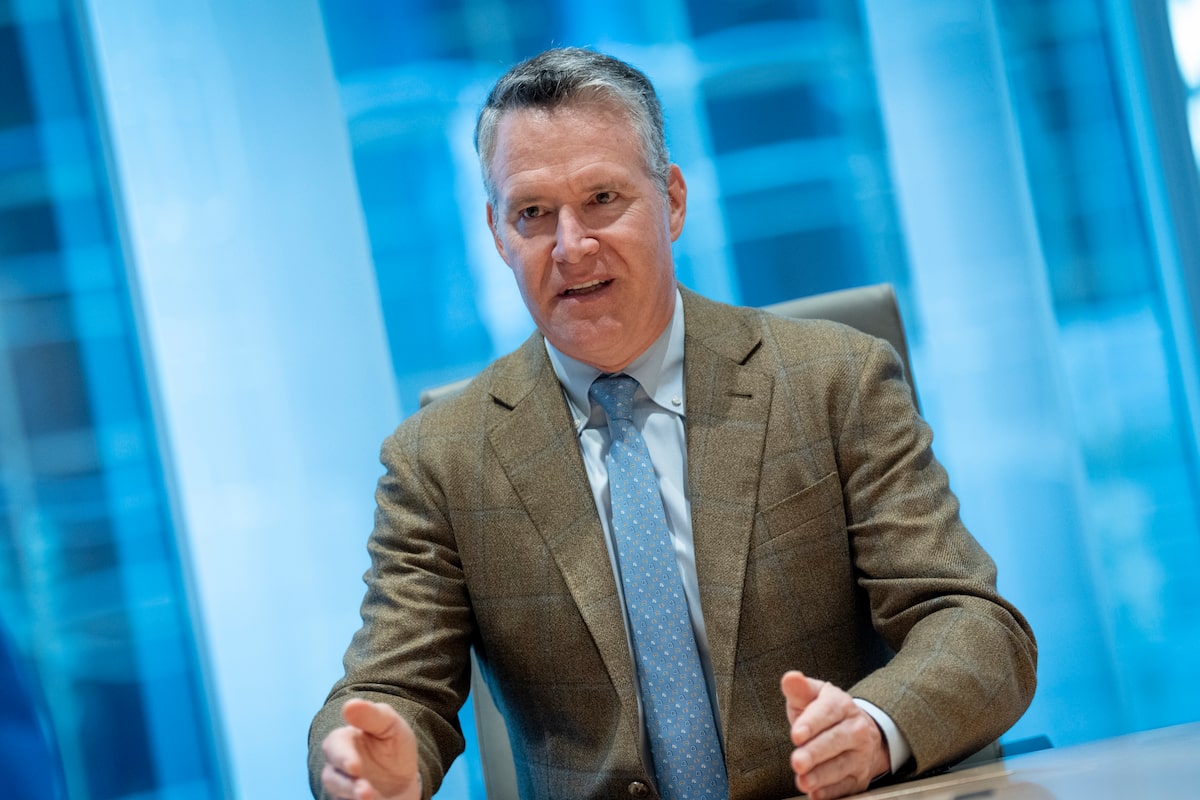
TC Energy chief executive François Poirier says geopolitical events have presented Canada with a ‘generational opportunity.’Todd Korol/The Globe and Mail
The Middle East conflict and U.S. trade tensions have amplified the need for Canada to ramp up exports of liquefied natural gas to Asia, says the chief executive officer of TC Energy Corp. TRP-T
The United States far outpaces Canada in the race to supply LNG globally, François Poirier said in a speech to the Canadian Club of Ottawa that was webcast on Tuesday.
“Geopolitical events have presented Canada with a generational opportunity,” he said. “But to seize it, Canada must improve competitiveness and attract global capital to build big things again.”
Before the U.S. and Israel launched attacks on Iran on Feb. 28, about one-fifth of the world’s oil and LNG supplies passed through the Strait of Hormuz.
Why the Strait of Hormuz has been a global commerce chokepoint for centuries
Qatar, the world’s second-largest LNG exporter after the U.S., halted its production after Iran attacked Qatari facilities and the strait virtually closed to marine traffic.
“With safe shores and proximity to markets, Canada can offer a reliable alternative,” Mr. Poirier said, adding that LNG exports to Asia “can strengthen energy security for our allies while delivering significant economic benefits for Canada.”
LNG Canada, this country’s first export terminal for natural gas in liquid form, began exporting from Kitimat, B.C., to Asia last June. Two smaller B.C. projects – Woodfibre LNG near Squamish and Cedar LNG in Kitimat – are under construction.
The contentious Coastal GasLink pipeline, operated by TC, is supplying natural gas from northeast B.C. to LNG Canada and will be used for Cedar.
Climate activists say Canada needs to focus on renewable energy, not on fossil fuels such as LNG. They also warn about methane leaks from the production of natural gas through fracking in northeast B.C.
Groups urging the federal government to put the brakes on LNG development include the Wet’suwet’en Nation, Skeena Watershed Conservation Coalition, Dogwood, David Suzuki Foundation and Canadian Association of Physicians for the Environment.
Canada is the world’s fifth-largest producer of natural gas. LNG Canada’s shipments last year put this country in 19th place out of 24 LNG exporting nations.
“The U.S. continues to lead in the race to meet global LNG demand – a race Canada should be winning with its proximity to Asia and abundant low-cost natural gas supply,” Mr. Poirier said.
Prime Minister Mark Carney announced in September that LNG Canada’s Phase 2 expansion plan made the list of major projects of national interest to be considered for fast-tracking.
In November, Mr. Carney said Nisga’a Nation-backed Ksi Lisims LNG in northwest B.C. has been added by Ottawa to the growing roster of plans submitted to the Major Projects Office, which is seeking to expedite a wide range of developments in sectors such as energy, mining and infrastructure across Canada.
“It is very encouraging that the federal government has acknowledged the problem and created the Major Projects Office,” Mr. Poirier said.
The lack of LNG supplies from Qatar has sent shocks across the global industry, with benchmark spot prices for LNG in European and Asia-Pacific markets surging in March.
“Businesses and Indigenous leaders need to collaborate much, much sooner in the development cycle to build alignment and shared economic prosperity and move at the pace dictated by global customers,” Mr. Poirier said.
“Generational success will depend on our ability to execute, not by our ability to follow process. It is time to own the economic podium.”