
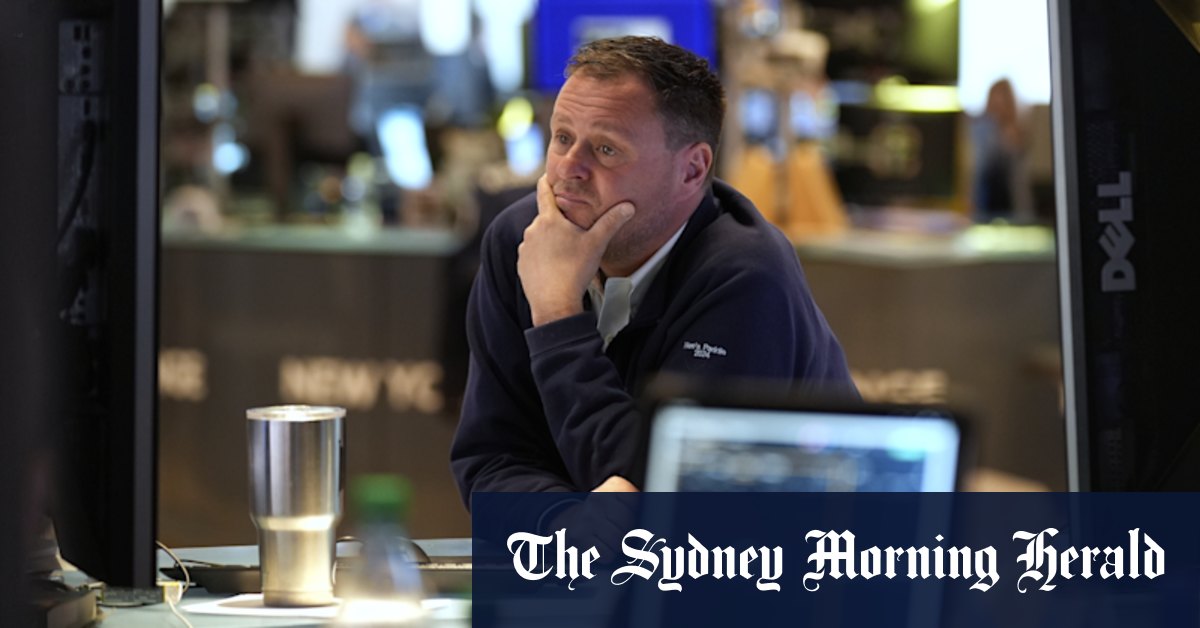
Although the profit result was higher than market expectations, Barrenjoey analyst Andrew Adams said this was helped by foreign exchange movements, and some of the details within the result were “more debatable” and could lead to volatility in the share price.
The big four bank stocks all closed lower. ANZ fell 0.3 per cent while Westpac lost 1 per cent, and NAB and Commonwealth Bank both fell 0.9 per cent.
Tech shares weighed on the bourse, with WiseTech losing 1.4 per cent and Life360 closing 4.2 per cent lower.
The lifters
Financial services software company Iress finished at the top of the bourse with a 12.2 per cent gain after the company confirmed reports of a buyout bid from US private equity giant Blackstone.
Pilbara Minerals finished 9 per cent higher and financial services company Block gained 8.3 per cent on strong profit growth.
Loading
Mining stocks are higher, with iron ore heavyweights Fortescue (up 1.8 per cent), BHP (up 0.9 per cent) and Rio Tinto (up 1.1 per cent) advancing. Gold miners continued their winning run, with Newmont climbing 2.2 per cent, Northern Star lifting 4 per cent and Evolution Mining closing 2.1 per cent higher.
Furniture seller Nick Scali’s share price rose 6.9 per cent after it unveiled a 5.8 per cent lift in group revenue to $495.3 million. However, net profit fell by 28.3 per cent to $57.7 million.
MLC Asset Management senior portfolio manager Anthony Golowenko said there was “solid momentum” in the Australia and New Zealand businesses, underpinned by a 7.3 per cent uplift in written sales in the second half, while Fab Furniture, the business acquired in the UK, had undergone rebranding to Nick Scali.
“This profitable growth story keeps on keeping on in ANZ, with strong progress and still some work to do in the UK,” Golowenko said.
Energy stocks were mixed. Yancoal rose 1.8 per cent, but Woodside fell 0.6 per cent and Santos gained 0.3 per cent.
The lowdown
Despite a few shaky days in equity markets due to mixed economic data, concerns about stagflation in the US and higher tariff rates for India, the global sharemarket still managed to finish higher, said AMP deputy chief economist Diana Mousina.
But there could be some bumps ahead. “There remains a high risk of a modest global equities correction, driven by the US,” she said.
Loading
Some investor fears have settled now that tariff rates on major US trading partners have been largely signed, but the threat of secondary tariffs and sector tariffs remained possible and probable, Mousina said.
“So the next few months are likely to be messy for sharemarkets and the US is likely to underperform. But on a six- to 12-month outlook, we think sharemarkets will be higher as Trump pivots towards more market-friendly policies, the economic data stabilises and the Fed cuts rates again.”
While Australia’s sharemarket finished Friday’s session lower, continued strength in the mining sector is helping the bourse retain most of the week’s history-making gains.
“Yesterday’s session was subdued, with the ASX 200 consolidating after its three-day winning streak earlier this week culminated in a new record high,” said IG Markets analyst Tony Sycamore.
“The next move for the local bourse will largely depend on events next week including Tuesday’s Reserve Bank interest rate meeting, Thursday’s July labour force report, and numerous earnings updates.”
Loading
AMP’s Mousina is expecting the Reserve Bank to cut rates by 25 basis points when it meets next Tuesday.
Overnight, the S&P 500 fell by 0.1 per cent after climbing earlier in the day to the edge of its record, which was set late last month. The Dow Jones lost 224 points, or 0.5 per cent, in mid-afternoon trade, and the Nasdaq composite added 0.4 per cent.
After the closing bell on Wall Street, Trump said he would nominate Council of Economic Advisers chairman Stephen Miran to serve as a Federal Reserve governor.
Miran would fill the position opened by Federal governor Adriana Kugler’s surprise resignation announced last week, as she returns to her tenured professorship at Georgetown University.
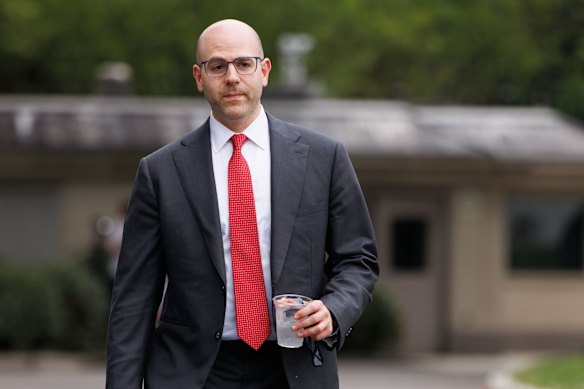
Council of Economic Advisers chairman Stephen Miran is to be nominated as governor of the US Federal Reserve.Credit: Bloomberg
The term expires on January 31, 2026 and is subject to approval by the Senate.
Meanwhile, worries are high that Trump’s tariffs are damaging the US economy, particularly after last week’s worse-than-expected report on the job market. But hopes for coming cuts to interest rates by the Federal Reserve and a torrent of stronger-than-expected profit reports from big American companies are helping to offset the concerns, at least for now. Lower interest rates can give the economy and investment prices a boost, though the downside is that they can also push inflation higher.
The Bank of England cut its main interest rate on Thursday in hopes of bolstering the sluggish UK economy.
Loading
The US tariffs that took effect on Thursday morning were also already well known, as well as lower than what Trump had initially threatened. Some countries are still trying to negotiate down the tax rates on their exports, and continued uncertainty seems to be the only certainty on Wall Street. All the while, the US sharemarket faces criticism that it’s climbed too far, too fast since hitting a bottom in April and left prices looking too expensive.
The latest reports on the US economy came in mixed, meanwhile, which left Treasury yields relatively stable in the bond market.
One said that slightly more US workers applied for unemployment benefits last week. That could be an indication of rising layoffs, but the number remains within its recent range.
“There is nothing to see here!” according to Carl Weinberg, chief economist at High Frequency Economics. “These are not nearly recession readings.”
A separate report said that productivity for US workers improved by more during the spring than economists expected. That could help the US economy grow without adding more pressure on inflation. And that’s particularly important when Trump’s tariffs look set to increase prices for all kinds of things that US households and businesses buy.
Loading
On Wall Street, Apple helped cushion a broader drop for the market amid hopes that its massive size can help it navigate Trump’s economy. Its stock rose 3.2 per cent after its chief executive, Tim Cook, joined Trump at the White House on Wednesday to say the company is increasing its investment in US manufacturing by an additional $US100 billion over the next four years.
Trump also announced a 100 per cent tariff on imported computer chips, but he added, “If you’re building in the United States of America, there’s no charge.”
Intel sank 3.1 per cent after Trump called for its CEO to resign, while accusing him of being “highly CONFLICTED”, though he gave no evidence.