
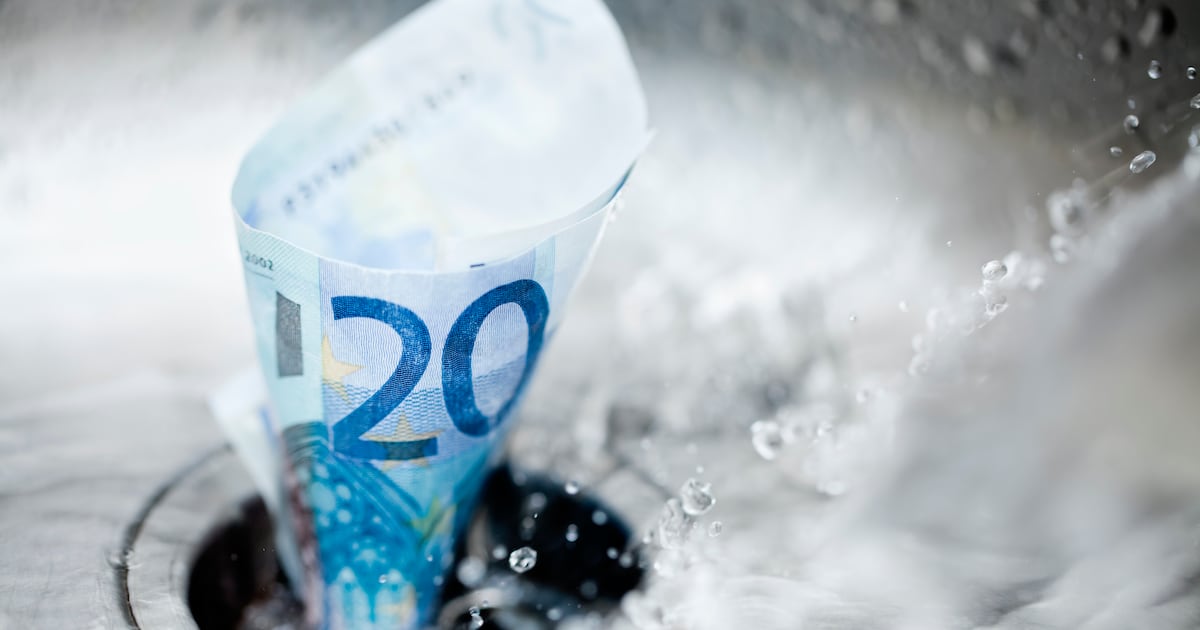
Have you fallen for any pranks yet today? On April Fools’ Day, a little extra vigilance goes a long way. As the saying goes, a fool and his money are easily parted, but it can often be our own bad habits, careless spending and quiet complacency that do the most damage.
Left unchecked, these can sabotage your finances far more effectively than a scam. The good news? With a bit of planning and some legwork, you can avoid becoming the punchline. Here, financial experts share their top tips on how not to be a fool with your finances.
“If I had to give one main tip, it would be this: Look at where your money is going, not where you think it’s going,” says Teresa Bruen, financial services spokeswoman at Gallagher.
“Most people don’t have a spending problem, they have an awareness problem,” says Bruen.
Take groceries for example. These have become an outsize drag on household finances. Food prices are climbing at their fastest rate in more than two years, according to data from Worldpanel by Numerator published last month. Prices in Irish supermarkets are almost 7 per cent higher, on average, than they were this time last year.
We need to eat of course but maybe we cannot shop like we used to. Ferreting out the best value supermarket for your “big shop” will make a difference, but it’s those sneaky interim shopping trips to backfill essentials that can really throw things off kilter.
When a stop-off for milk generally morphs into a bottle of vino, a fancy bar of chocolate and a takeaway coffee, you’ve got shopping creep.
Taking a bit of time each month to review your spending can highlight surprise areas of leakage, says Bruen. Use your banking app to drill down and see where your money went in February for example and prepare yourself for some truth bombs.
“It’s the small stuff – subscriptions, takeaways, random online buys – all that stuff quietly adds up,” says Bruen.
[ Sort your finances out over a few drinks with friends: The ‘admin party’Opens in new window ]
Make sure your good habits aren’t being cancelled out by pricey incidentals, sneaky direct debits or by failing to shop around for better priced insurance and utilities.
Where you can save, siphon the money into a dedicated account to build towards an emergency fund or a specific financial goal, says Bruen.
“Focus on small, sustainable changes that you can stick to throughout the year. Consistency is what drives long-term success and even small steps can lead to significant progress over time.”
Save yourself
Got cash in a savings account? Chances are, it’s losing money there.
Irish households saved €1 in every €8 of their disposable income in the final three months of last year, according to the Central Statistics Office (CSO). But too much of this is being saved in easy-access bank accounts. We are missing out on better returns available through short-term fixed deposits or other investment options.
“My top tip would be to actively shop around for the best home for your deposits,” says Dan Malone, of Honest.ie. Sticking your money in a low interest account is actually making you poorer, he says.
“The average instant access savings account in Ireland currently pays 0.13 per cent interest, which turns into a negative 1.91 per cent after taxes and inflation,” says Malone, who is a chartered accountant and a qualified financial adviser.
“For example, €10,000 deposited today in the average Irish instant access savings account would only be worth €8,246 in 10 years time, a loss of 17.5 per cent,” he calculates.
You’re not physically losing money but you will be able to buy less with it due to inflation – that’s the increase in the price of goods and services over time, he explains.
Use a free savings account comparison tool to compare rates. You’ll find one on free sites like Honest.ie or use the comparison tool of the Competition and Consumer Protection Commission (CCPC), a statutory consumer protection body.
You’ll find savings rates as high as 3.1 per cent are available to Irish savers with European banks through the savings platform, Raisin, all covered by the same €100,000 EU-wide deposit guarantee scheme that we are familiar with in Ireland.
Raisin’s Starter Account offers 3.1 per cent return over three months. Raisin won’t deduct the 33 per cent Government tax on the deposit interest, however, so you will have to settle this yourself via a year-end tax return.
Go with MoCo and you’ll get 2.6 per cent until July 2nd when their rate drops to a variable rate of 2.1 per cent. MoCo will deduct the tax for you.
Stick with the pillar banks, and rates are as low as 0.25 per cent and 0.01 per cent.
Pay your future self
Accessible savings are important for your three to six-month emergency fund, short-term spending needs and planned purchases within the next few years. If you are lucky enough to have more, there is better growth to be had by putting it into your pension and or investments.
“One of the biggest mistakes people make is putting off investing because they feel it’s not the perfect time; markets feel uncertain, news reports are scary, life is busy, or they plan to start next year,” says Avril McGarry, private client consultant, with NFP Ireland.
This is especially true of pension saving, McGarry says.
“Starting early makes an enormous difference to your pension, simply because your money has time to grow.”
 ‘Start early, invest regularly and stick to the plan,’ says Avril McGarry
You don’t need to start big, you just need to start and keep at it. And when you factor into tax relief on pension contributions, it really is a no-brainer.
For every €100 you contribute from your salary to your pension, your take-home pay will only fall by €60 if you pay tax at 40 per cent, or by €80 if you pay tax at 20 per cent.
Contribute €300 a month, for example, and your take-home pay will only go down by €180 if you pay tax at 40 per cent, and by €240 if you pay tax at 20 per cent, but the full €300 will be invested into your pension plan.
Another common mistake is reacting emotionally when the markets fall, such as by stopping pension contributions, moving to cash or selling an investment at the worst possible time, says McGarry.
“Markets have always had ups and downs, crashes, recessions and global events … history shows that investments can recover from losses over time and that the long term trend is usually investment growth.”
“If I could leave people with one takeaway this April fools day, it’s don’t let short-term fear or the search for the perfect time fool you out of making good financial decisions. Start early, invest regularly and stick to the plan.”
Switch up your mortgage
Are you paying too much for your mortgage? For most people, their mortgage is their biggest financial commitment, so you’d be a fool not save if you can.
A typical mortgage switcher in Ireland could save €2,399 or more within a year of switching, according to Irish Mortgage Advisers, the professional body of mortgage brokers.
Those on fixed mortgage rates that are about to expire in the coming months stand to save most, especially those who locked in at ultra-low fixed rates before 2022, according to Trevor Grant, chairman of the industry group. They are now likely to jump up to a much higher rate.
If you have given your home an energy upgrade, or bought a more energy efficient one, you could be leaving money on the table by not switching too – either to a better “green” rate with the same lender or to a new lender.
A borrower with a €300,178 mortgage – the average switcher mortgage being drawn down today – could save nearly €200 a month, or €2,400 a year, by switching from a 4.4 per cent rate to one the cheapest rates available – a 3.12 per cent variable rate, says Grant.
[ Over-saving may be quietly costing Irish households thousandsOpens in new window ]
“If the same borrower qualified for a green mortgage, they could save up to €218 a month or €2,617 a year,” he says. Over the lifetime of your mortgage, switching can yield tens of thousands in savings.
New consumer protection rules mean that if your fix is ending, your lender must now show you your mortgage refinancing options with them, with euro estimates of what each means for your repayments.
But you have to actively opt into the best rate, otherwise you will just roll on to a variable rate with your bank which is likely to involve considerably higher repayments.
Your bank won’t tell you if other banks are offering better rates, however, so you’ll need to research that yourself. Talk to a mortgage broker, or use a mortgage rate comparison tool like that on CCPC.ie to compare rates.
Some lenders will contribute to your switching costs which can amount to anything between €1,000 to €2,000.
Only switch to another lender if you are satisfied that you will save a relatively significant sum over at least a three-year period, say Irish Mortgage Advisers.
Healthy outlook
You’d also be foolish not to query price increases, especially if paying more means getting less. But that’s exactly what is happening with some health insurance plans.
Health insurance can be one of your biggest fixed expenses after a mortgage or rent. Average premiums rose from €1,827 to €1,902 per adult in 2025, according to Health Insurance Authority figures, with some individual premiums much higher.
An “average” increase of 4.7 per cent on Laya plans comes into effect from today, April 1st. Irish Life and VHI have also announced increases recently.
But we need to be careful of increases quoted as averages, says Dermot Goode, founder of broker, Health Insurance Ireland. While a provider might announce an average increase of 5 per cent across all plans for example, the increase on your particular plan could be much higher, says Goode.
[ A good plan can transform your financial realityOpens in new window ]
And don’t assume that auto-renewing on the same plan, at a higher renewal premium, means you keep the same cover, he says. If you’re not vigilant about switching plans or providers, your health insurance can cost more than it needs to, and with potentially less cover.
The vast majority of people with private health insurance have never switched provider or plan, despite rising prices and the potential for significant savings when shopping around, according to research from the Health Insurance Authority (HIA) published in March.
Some 46 per cent of adults in Ireland have private health insurance, but 70 per cent have never switched to another company or plan.
Only 4 per cent of consumers switched providers over the past 12 months, while 15 per cent moved to a different plan offered by their existing provider over the same time frame.
Consumers stay an average of 20 years on health insurance plans, says the HIA. That could be an indication of the complacency, or the headwreck it can be to choose between plans.
Set aside an hour and use the HIA comparison tool, or speak to a broker to guide you. It could save you hundreds of euros on your cover.