
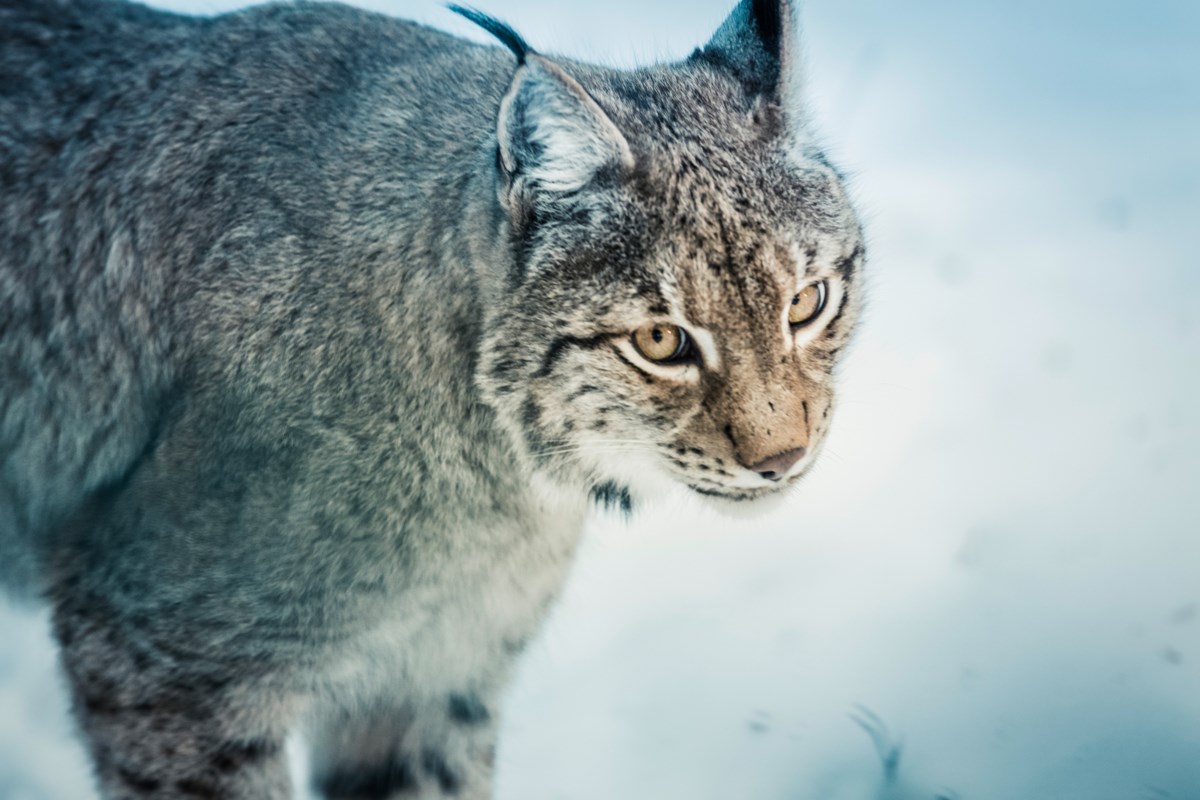
While fairly rarely seen, Roger Desjardins said several of the wild cats have visited his backyard over the past few years
A Saturday morning in March turned into a bit of a magical experience for Roger Desjardins of Val Therese.
On March 28, he happened to have his phone on him when a lynx, the species of large wild cats that call the boreal forest home, ran across his backyard.
While rarely seen because they are wary of people, lynx can be found throughout the boreal forest and their population is considered stable in Ontario.
Desjardins, who lives on Kenneth Drive, said he has seen a few of the animals over the years.
“ We have seen lynxes several times in the past few years as well as bears and moose,” he said. “We have also seen deer and coyotes and other smaller critters.”
In a February blog post for Ontario Parks, southeast zone biologist intern Christine Terwissen characterized lynx as the “king” of winter animals because they are active throughout the cold season thanks to their thick, soft fur.
“Lynx can be found throughout Canada’s boreal forest, which in Ontario generally means north of Algonquin Provincial Park,” Terwissen wrote. “However, not many people manage to spot them since lynx are notoriously wary of people.”
The cat can be identified by its unique ear tufts, much longer than those of bobcats, and their stubby black-tipped tails.
While the animal itself can be hard to see, the tracks they leave behind are easier to spot.
“The first way to identify a lynx track is by size,” the post reads. “They’re usually around 7-8 cm wide. Their particularly large furry feet, which act like snowshoes, allow them to run quickly over snow.”
This ability is a perfect adaptation to catch the lynx’s favourite food: the snowshoe hare.
To spot lynx tracks, look for:
a very round shape
three lobes on the pad
claw marks are rarely visible.