

Listen to this article
Estimated 4 minutes
The audio version of this article is generated by AI-based technology. Mispronunciations can occur. We are working with our partners to continually review and improve the results.
It’s the day of an Artemis II launch attempt, and aboard the Space Launch System rocket will be a small package from New Brunswick.
The National Tree Seed Centre in Fredericton is sending five seed species on the mission.
“We were confined to a small package of about 20 centimetres by seven centimetres by half a centimetre in size,” said Darren Derbowka, the National Tree Seed Centre co-ordinator.
That’s a total of about 2,600 seeds the centre is sending on the mission, he said.
NASA’s Artemis II lunar mission involves four astronauts, including the Canadian Space Agency’s Jeremy Hansen, who will travel around the moon in the Orion capsule.
The spacecraft could launch from the Kennedy Space Center in Florida as early as Wednesday evening, just under two months after the initial launch was postponed because of a hydrogen leak during a wet dress rehearsal. NASA also shelved plans for a March attempt after discovering a problem with the rocket’s helium flow.
The mission has several opportunities, or launch windows, depending on risk and system-check clearing. Weather is a factor, but NASA says things look like an “80 per cent go” for April 1.
It will be the first crewed lunar mission since Apollo 17 in 1972.
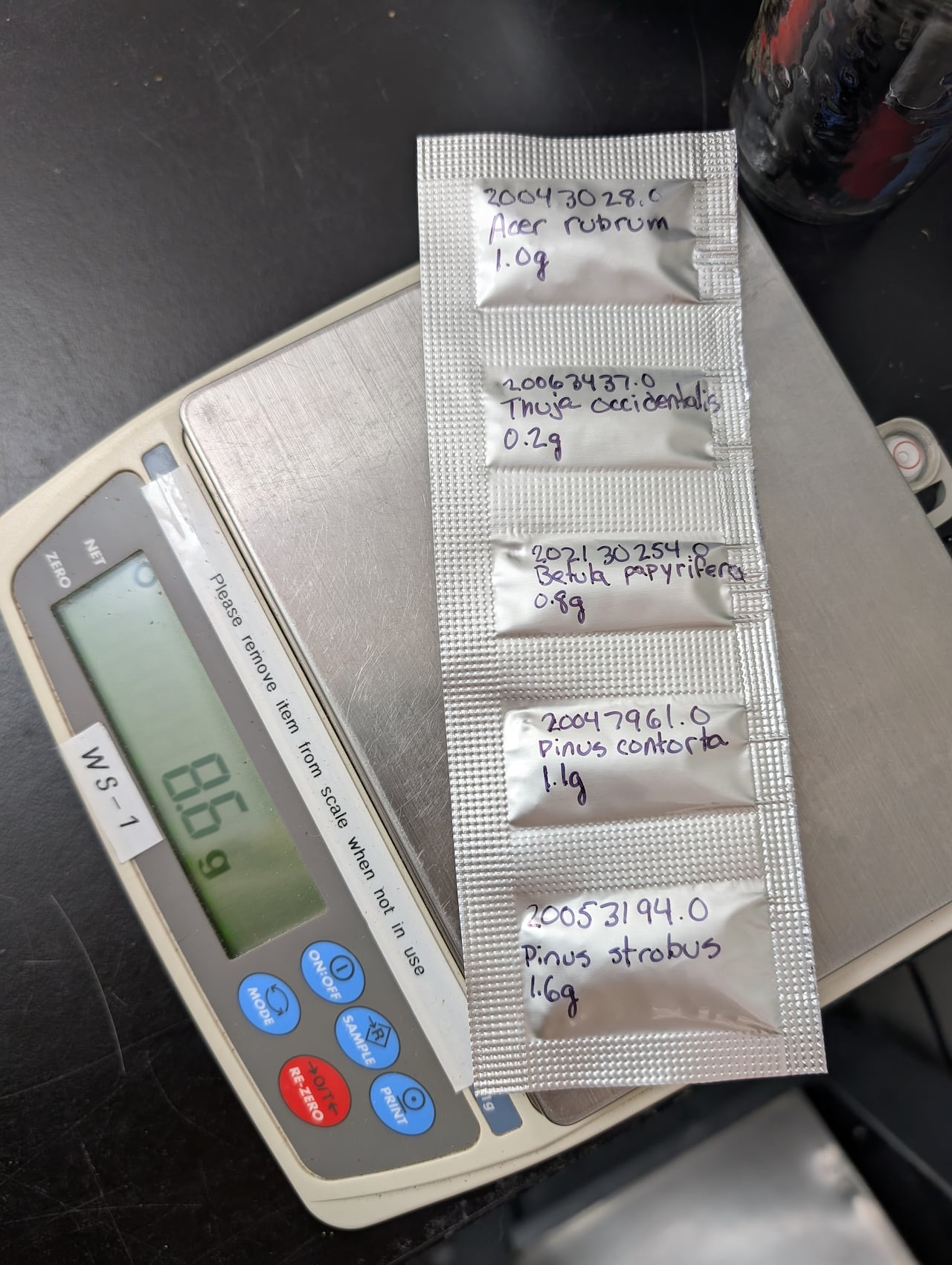 The packaged seeds that will be heading into space on the Artemis II mission. (Submitted by Darren Derbowka)
And while the astronauts in the Orion capsule won’t be releasing or planting the seeds from Fredericton in space, Derbowka said the message is important.
“Our forests are really facing unprecedented challenges from climate change, habitat loss and invasive species, and right now, 25 per cent of Canada’s native tree species are listed as threatened,” Derbowka said.
“The message of this mission is really to raise [awareness of the] importance of tree seed, because it underpins all of the ecological, economic and cultural values that we take for granted in our forest.”
No science will be conducted on the seeds, other than seeing if the seeds survive the trip there and back, he said.
Derbowka said the centre chose five species that are part of different ecological niches.
Eastern white cedar was chosen and is one of four sacred medicines important to many Indigenous people in Canada.
Red maple was chosen because the red leaf is the symbol on the Canadian flag. The white birch was chosen partly for its broad distribution across Canada.
Eastern white pine, a sentinel tree species, stands tall above the forest canopy.
The final species, lodgepole pine, was selected because it’s an “unfortunate example of how climate change is having drastic and negative impacts on a species,” Derbowka said.
“Warmer winters have allowed mountain pine beetle populations to explode, with devastating consequences for that species,” he said. “But there’s also a double whammy with warmer, drier summers leading to further wildfires fuelled by the standing, dead lodgepole pines.”
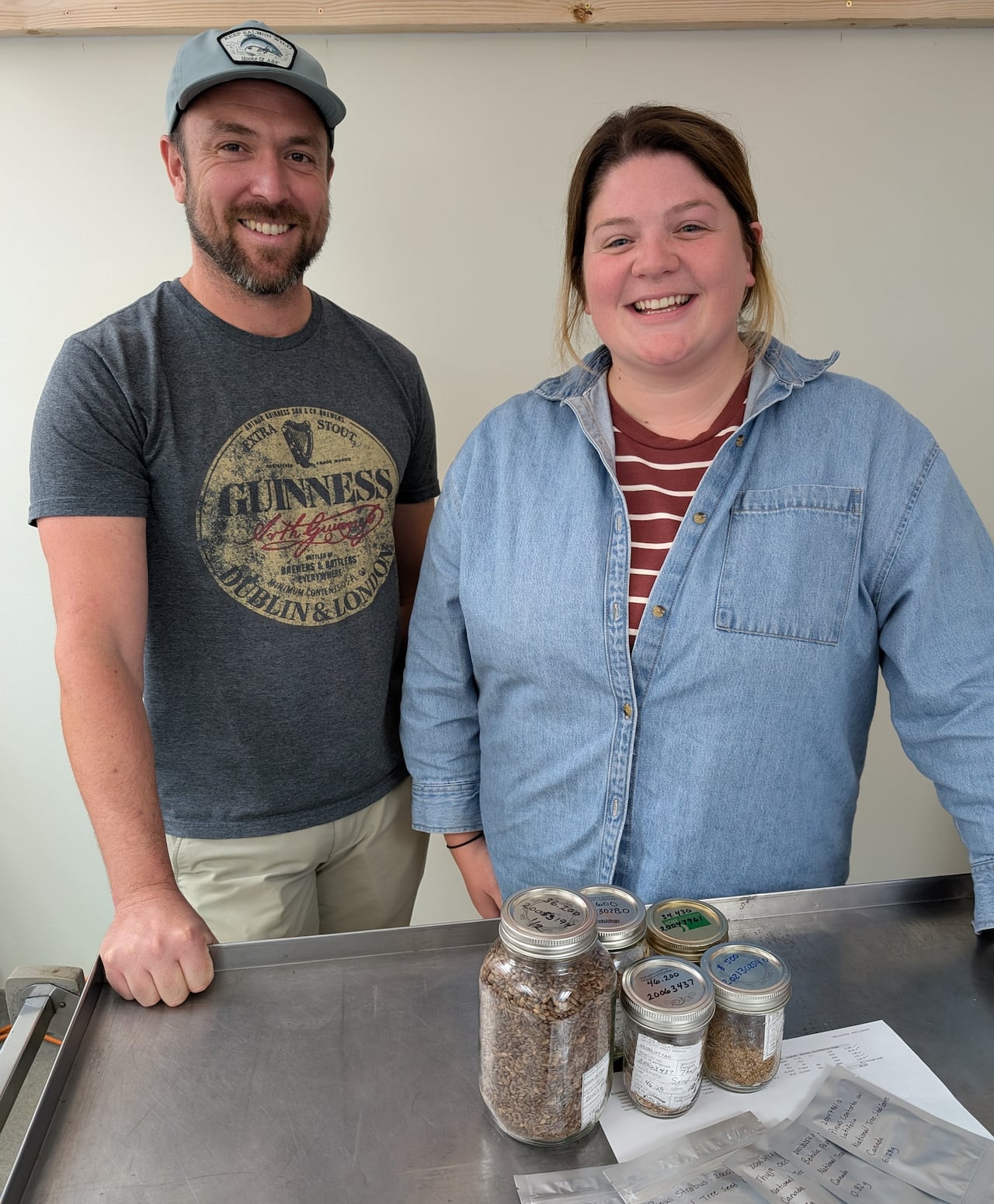 National Tree Seed Centre staff members Mathew Brophy and Lyndsey Liston prepared the seeds for the Artemis II mission for packaging. (Submitted by Darren Derbowka)
The idea of sending seeds and seedlings into space isn’t a new one, Derbowka said.
He said the Canadian Space Agency contacted the Laurentian Forestry Centre in Quebec, because that centre was involved in a previous space mission.
The Laurentian centre then contacted the National Tree Seed Centre in Fredericton, which houses about 14,000 seed collections from more than 250 native Canadian tree and shrub species.
The seed centre had sent white spruce seedlings into space in 2010 as part of some research underway at the time. Those seeds were planted in a number of different locations when they returned, and the centre has the same hope for these seeds.
“We’ll grow them out and see if there’s any difference between the seed that went into space and the same seeds that didn’t go into space,” Derbowka said.
“And we want to plant them in prominent locations where people can interact with these trees, become inspired and really think about forest research and forest conservation and seed collection.”