
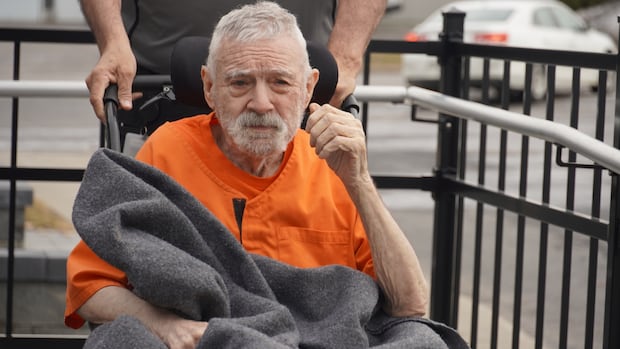
Rodney Nichols, the former Montreal man accused of murdering a Tennessee woman whose body was found in 1975 in an eastern Ontario river, is not fit to stand trial, a judge decided Wednesday.
Nichols, now 83 and living with dementia, was charged by Ontario Provincial Police in 2022 with murdering 48-year-old Jewell Parchman Langford, who was his girlfriend back in 1975.
Her killing was one of Canada’s oldest cold cases until her remains were identified in 2020 with the help of investigative genetic genealogy.
Nichols was extradited from the United States in 2023 to stand trial in Canada. He had been living for years in a retirement home in Hollywood, Fla., and was interviewed there by the FBI, OPP and other police agencies in 2022.
At the end of the three-day fitness hearing in L’Orignal, Ont., Justice Brian Holowka accepted a joint submission by assistant Crown attorney Louise Tansey and defence lawyer Laura Metcalfe that Nichols’s dementia renders him unable to understand and participate in the case against him.
He had been due to stand trial starting in April.
The hearing was unusual, with the Crown presenting case evidence that would typically not be allowed because of its irrelevance to Nichols’s health.
But it was presented with the consent of the defence after much negotiation, with the judge noting the transparency will help the public better understand the context of the hearing and why a trial on the merits of the case is not going ahead.
Parchman Langford’s niece, Denise Chung, was also allowed to read a victim impact statement during the hearing. That was done out of compassion for the family, the judge said, as they’ll likely have no other public forum to express their loss.
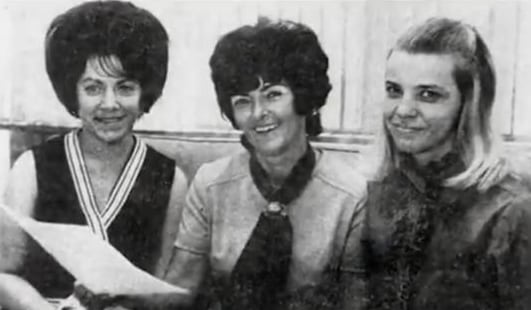 Ontario Provincial Police identified Jewell Parchman Langford’s remains in 2020, 45 years after she disappeared. She is pictured here in the centre. (Ontario Provincial Police)
With her husband’s arm draped around her shoulder, Chung told court that Parchman Langford was “a remarkable woman” who was “bright and cheerful and full of life” and “heavily involved” with her community and her family back in Tennessee.
Her disappearance “traumatized the family” and “completely broke” Parchman Langford’s mother, who “spent every dollar she could” trying to hire investigators and chase leads, Chung said.
In the end, Parchman Langford’s mother and siblings died never knowing where she’d ended up or what had happened to her, Chung said.
Outside court, Chung said she felt closure and that all the justice that could have done in the case had been done.
While it was hard to hear the results of the Westmount, Montreal and Ontario police investigations — details she hadn’t heard before, and which have since been playing over and over in her mind — Chung said she’s grateful for all their efforts over the years and the fact they didn’t give up.
“We got the best that we could get under the circumstances. I feel like there was so much evidence of what really happened,” Chung said.
“And I feel like for our family, we will be as content as we can be that as much justice as can be done at this point is done.”
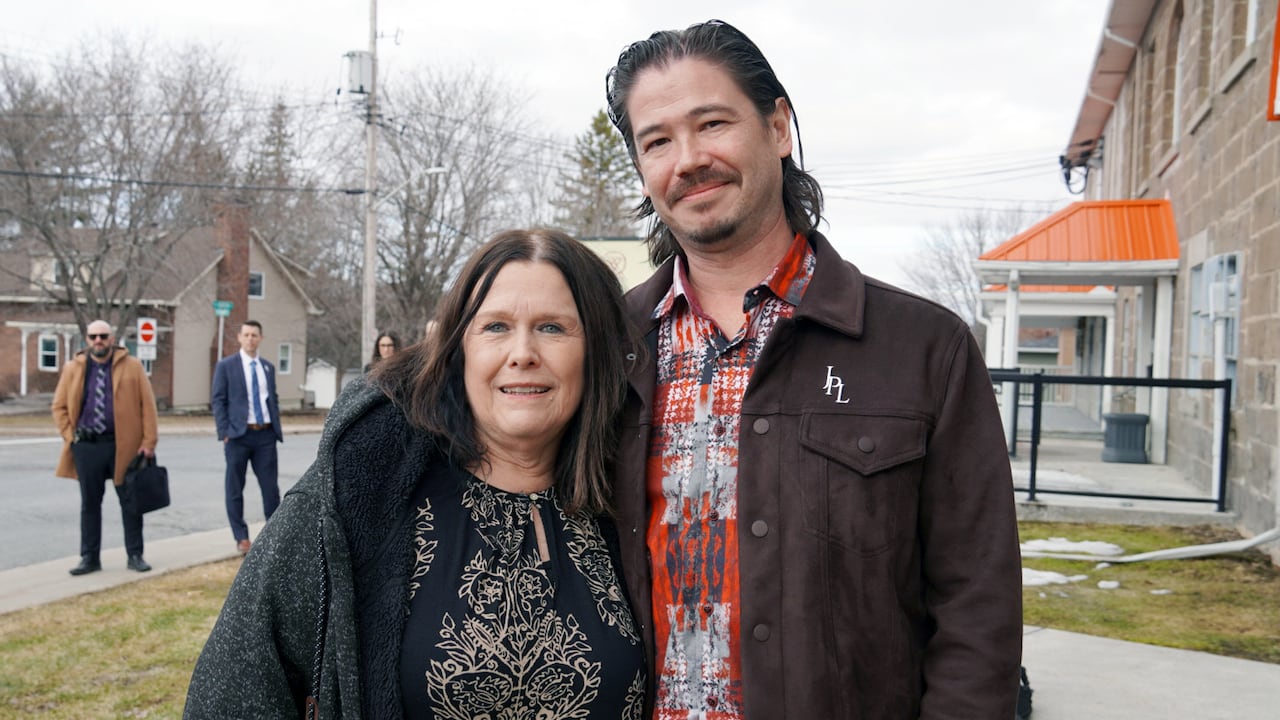 Denise Chung read a victim impact statement in court Wednesday, with her husband Johnathan Chung standing next to her. (Frédéric Pepin/Radio-Canada)Admissibility of video would have been challenged
The evidence against Nichols has not and will likely not be tested in court, and he remains innocent.
Earlier this week, court watched video evidence showing Nichols making incriminating statements to law enforcement officials, including that the dress ties binding her wrists and ankles were his.
But he was already suffering from cognitive decline at the time he made the statement, and court heard Wednesday that if Nichols had been deemed fit to stand trial, the defence would have challenged the video’s admissibility during pre-trial motions.
Now that he has been deemed unfit, Nichols will be transferred from the medical wing of the Ottawa-Carleton Detention Centre to the forensic unit of the Royal Ottawa Mental Health Centre, under the jurisdiction of the Ontario Review Board.
The evidence against Nichols has not and will likely not be tested in court, and he remains innocent.
Typically, alleged offenders deemed unfit are treated with the goal of making them fit again, but it’s unlikely that will happen due to Nichols’s ongoing cognitive decline.
It is too early, however, for a judge to rule that he will never be fit to stand trial.
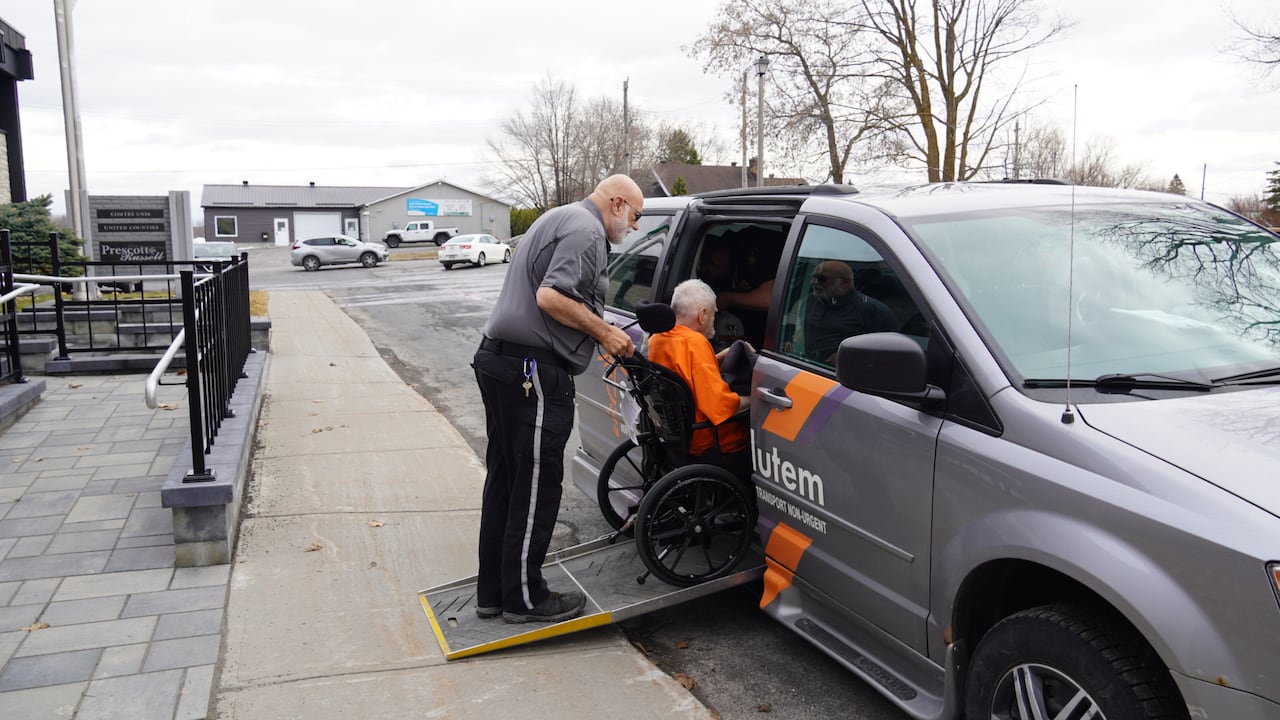 Rodney Nichols is wheeled into a van outside the courthouse in L’Orignal, Ont., on April 1, 2026. Nichols was deemed unfit to stand trial Wednesday in connection with the death of Jewell Parchman Langford more than five decades earlier. (Frédéric Pepin/Radio-Canada)A case going back decades
Unidentified for 45 years, Parchman Langford was long known only as the “Nation River Lady” after the location where her body was located in Casselman, Ont., along Highway 417 between Ottawa and Montreal.
In 1975, Nichols was a star player for the Westmount rugby club and had just moved into a house in Montreal with Parchman Langford, a woman from Tennessee he’d met in Florida.
She paid for the house herself in cash, but only Nichols’s name was on the deed.
A few days later, Parchman Langford stopped communicating with her family in the United States. Her body was found on May 3, 1975.
Parchman Langford’s identity was established through genetic genealogy, which helped find her family members in Tennessee. Parchman Langford had left the state in the 1975 to live in Montreal with Nichols.
The discovery led the OPP to work with police in Montreal, where her family had reported her missing in 1975.
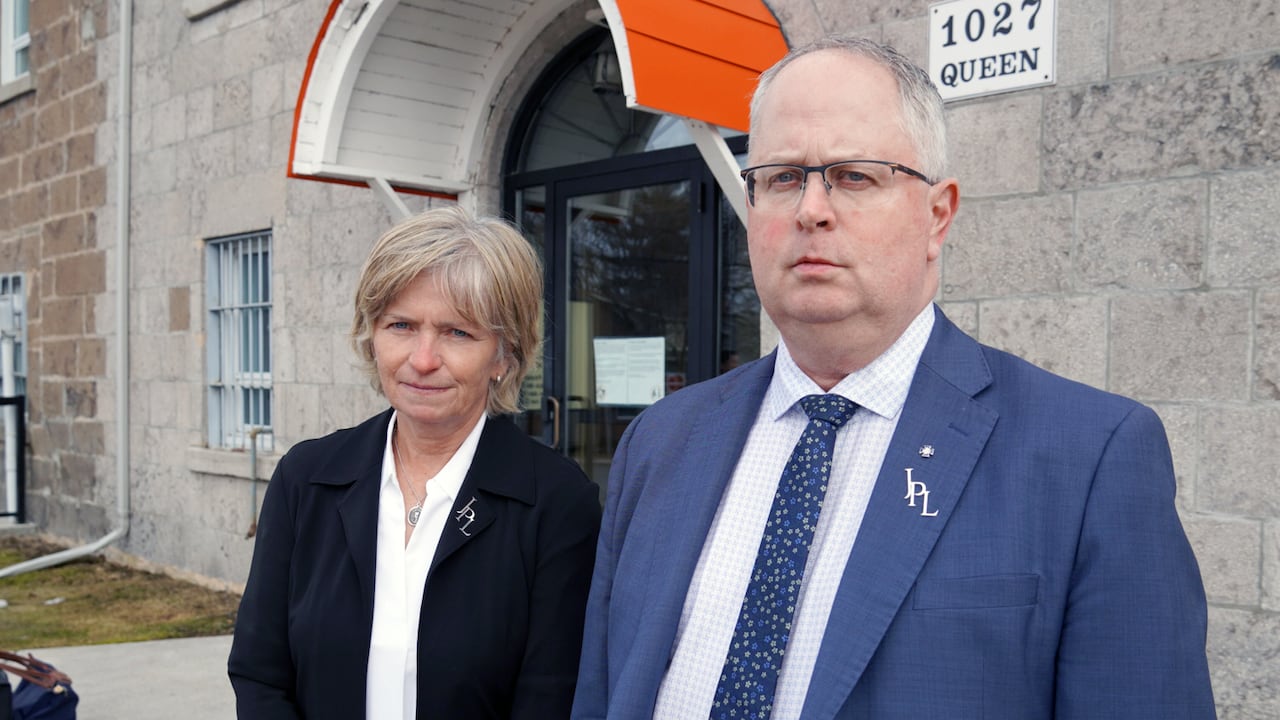 It was Janice Mulcock, left, a retired detective-constable with the OPP who first broached the idea of potentially solving the Nation River Lady case using investigative genetic geneaology. She worked with retired detective-superintendent Dan Nadeau, right, who was the case manager on the file. (Frédéric Pepin/Radio-Canada)
Outside the courthouse Wednesday, assistant Crown attorney Louise Tansey reflected on the five-decade wait for justice.
“Time revealed the secret of the identity of the remains of Jewell Langford, the remains known as Nation River Lady. Time gave us investigative genetic genealogy and revealed the mystery of the disappearance of Jewell Langford,” she said.
“Time also deprived all of us — the community, Mr. Nichols, Jewell Langford’s family — of a trial on its merits.”