

Listen to this article
Estimated 4 minutes
The audio version of this article is generated by AI-based technology. Mispronunciations can occur. We are working with our partners to continually review and improve the results.
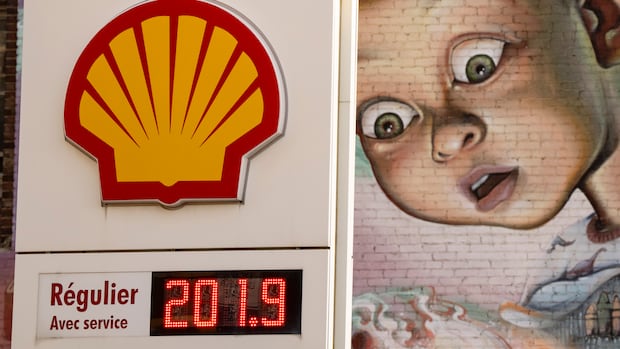
The price of gas crossed the $2 per litre mark in parts of Canada this week, something the rest of the country could also soon be facing as the Iran war drags on, some experts warned.
Canada’s east and west coasts appear to be getting hit the hardest, according to data from GasBuddy.com. In Newfoundland and Labrador, the average retail price of gas was 203.5 cents per litre as of 5:25 p.m. ET Thursday evening, the website showed.
Gas prices rose to over $2 per litre in many stations in Montreal on Thursday as well.
GasBuddy showed an average of 200.2 cents per litre for all of British Columbia Thursday, but parts of the province, including Vancouver, have been seeing gas prices reaching over $2 per litre since mid-March.
Iran has restricted ship traffic in the Strait of Hormuz, the waterway through which one-fifth of the world’s oil is shipped, in response to the U.S. and Israeli attacks that began on Feb. 28. That has led to one of the largest supply shortages in global energy market history, and pain at the pumps as a result.
In Portugal Cove-St. Philip’s, N.L., Dawn Sharpe says she heard some “colourful language” from customers at Sharpe’s North Atlantic, the gas station she co-owns, after the price passed the $2/litre threshold this week.
“People are just getting frightened, I guess, is a good word for it,” she told CBC News on Wednesday.
WATCH | Gas prices surpass $2/litre in Newfoundland and Labrador: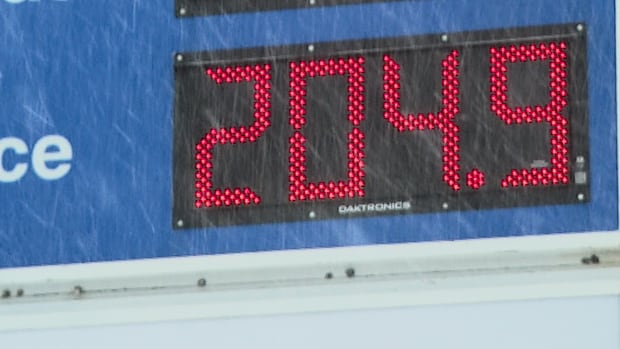
Gas is up over $2 a litre in St. John’s for first time in almost 4 years
How high can it go? That’s the question people across Newfoundland and Labrador are asking, as the latest increase puts the price per litre of gas over $2 in much of the province. The CBC’s Zach Goudie reportsHigher prices coming
While the rest of the country has so far been insulated from those prices, that probably won’t last the longer the conflict drags on, said Warren Mabee, director of the Institute for Energy and Environmental Policy at Queen’s University in Kingston, Ont.
“As these disruptions continue, prices will be kept high, and they could edge higher,” he said.
Just how high gas prices could get is hard to pinpoint, said GasBuddy petroleum analyst Matt McClain.
“We really need the Strait of Hormuz to reopen, and until it gets reopened, we really just have a volatile situation when it comes to crude oil when 20 per cent of the world’s oil supply is still missing in action,” he said.
“There are scenarios out there where it could be quite high, and I am genuinely concerned about that.”
WATCH | Gas prices continue to soar: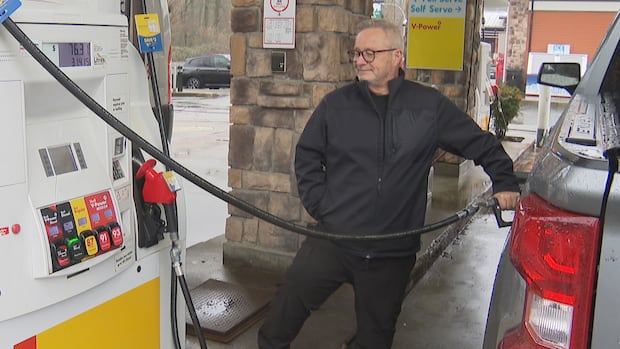
Soaring gas prices hitting Canadians hard. And it could get worse
Canadians across the country are experiencing sticker shock at the pump as the Middle East war drives fuel prices ever higher, with transport companies and those who drive for a living especially hard hit.
In a prime-time address Wednesday night, U.S. President Donald Trump said his “core strategic objectives” in Iran are near completion and that the war will end soon, but he gave no precise timeline for when the conflict would end.
Trump briefly referenced the rising gasoline prices in his address, promising that once the war ended, the Strait of Hormuz would “open naturally” and gas prices would come down rapidly.
With many countries facing energy shortages, the end of the conflict and reopening of the Strait of Hormuz wouldn’t automatically bring gas prices down, Mabee said.
There’s also been damage to critical energy infrastructure in the Gulf during the war, Mabee said. That will take longer to repair and could keep prices high even longer, he said.
“Even if the conflict were to end tomorrow, even if they were able to cease hostilities and everything sort of went back to normal, it would take some time for that supply to be backfilled,” he said.