
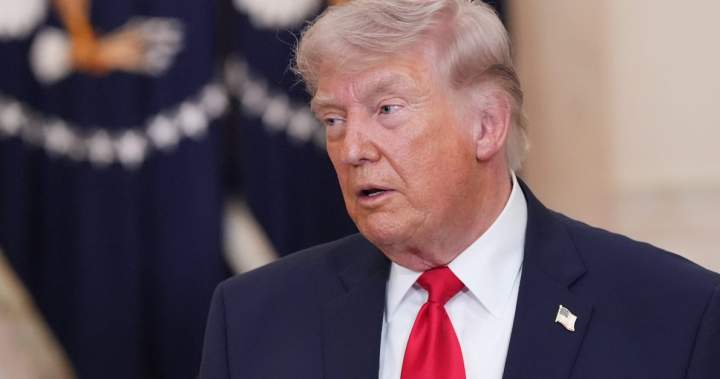
U.S. President Donald Trump signed an executive order on Thursday imposing 100% tariffs on branded pharmaceuticals imported into the U.S. unless manufacturers agree to government drug pricing deals or commit to making their products domestically.

The world’s biggest drugmakers signed deals with the U.S. government last year that exempted billions of dollars of drugs from tariffs. Generic drugs have also been exempted, but small and mid-sized companies are exposed to the penalties unless they craft their own deals or move their production.
Under the new executive order, the U.S. will impose a 100% tariff on patented drugs not made in the country and not covered by drug pricing agreements.
Large pharmaceutical companies have 120 days to announce plans to avoid the 100% tariff; smaller companies have 180 days.
Companies can move manufacturing to the U.S. in exchange for a reduced 20% tariff.
Story continues below advertisement
Drugmakers that onshore and sign most-favored-nation pricing agreements with the U.S. Department of Health and Human Services are exempt from tariffs.
The U.S. has already agreed to such deals with 17 drugmakers, of which 13 have been finalized and four are being negotiated.
3:39
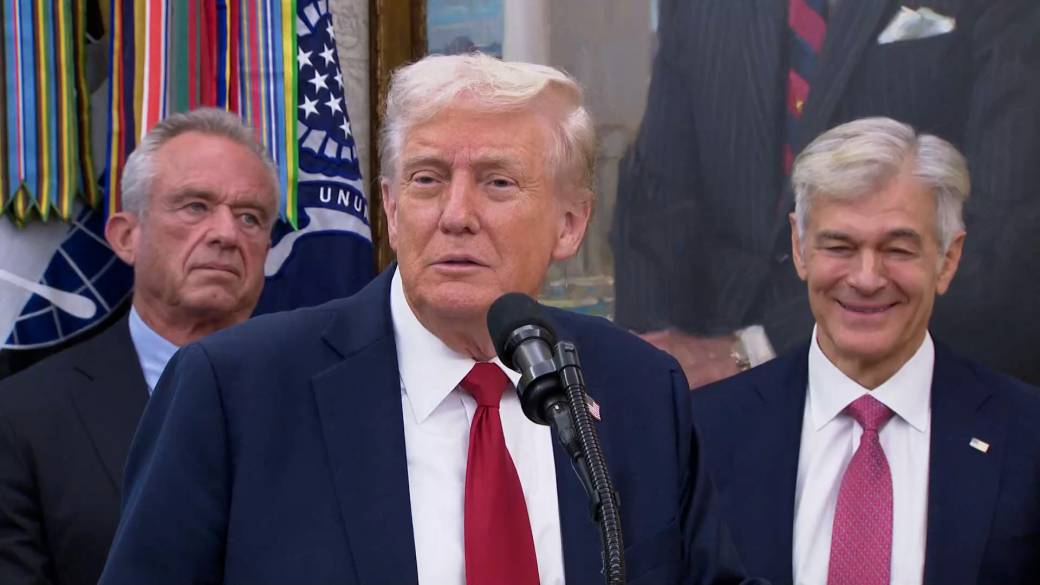
Trump says Pfizer to implement ‘most favoured nation’ pricing for new prescription drugs
Tariffs are reduced to 15% for drugs produced in the European Union, Japan, South Korea and Switzerland due to existing trade agreements. The U.K. has a separate tariff deal.
Generic drugs will be exempt from tariffs for at least one year. More than 90% of medicines sold in the U.S. are generics, according to the U.S. Food and Drug Administration.
Get daily National news
Get daily Canada news delivered to your inbox so you’ll never miss the day’s top stories.
Orphan, veterinary and other specialty drugs are exempt if they are from trade deal countries or meet urgent public health needs.
Story continues below advertisement
U.S. patients by far pay the most for prescription medicines, often nearly triple what patients pay in other developed nations.
Trump has been pressuring drugmakers through his most-favored-nation drug pricing policy to lower prices to what people pay in other high-income countries.
Major drugmakers that have signed deals, which exempt them from tariffs for three years, include Pfizer and Eli Lilly, among others.
Many companies, including about half of those represented by industry lobby group PhRMA, have not yet signed deals.
Industry sources say small and mid-sized drugmakers are seeking individual arrangements to avoid tariffs and new pricing rules.
The executive order risks creating an “unfair two-tiered system of exemptions” benefiting only big companies that have already made most-favored-nation deals with Trump, said the Midsized Biotech Alliance of America, an industry group.
Mid-sized drugmakers “lack diversified portfolios to absorb these sudden cost increases,” MBAA President Alanna Temme said in a statement.
U.S. duty rates adjusted for steel, aluminum and copper derivative products
Trump on Thursday also adjusted his national security tariffs on steel, aluminum and copper imports to cut duty rates on derivative products made with the metals, simplify compliance and avoid under-reporting of import values.
Story continues below advertisement
In a proclamation signed by Trump, the United States will maintain a 50% import tariff on steel, aluminum and copper commodity imports under Section 232 of the Trade Act of 1974, but apply the rate to the prices paid by U.S. customers, according to a White House announcement and a senior Trump administration official.
More on Economy
More videos
It was not immediately clear how the sales price and resulting tariff would be determined.
1:20
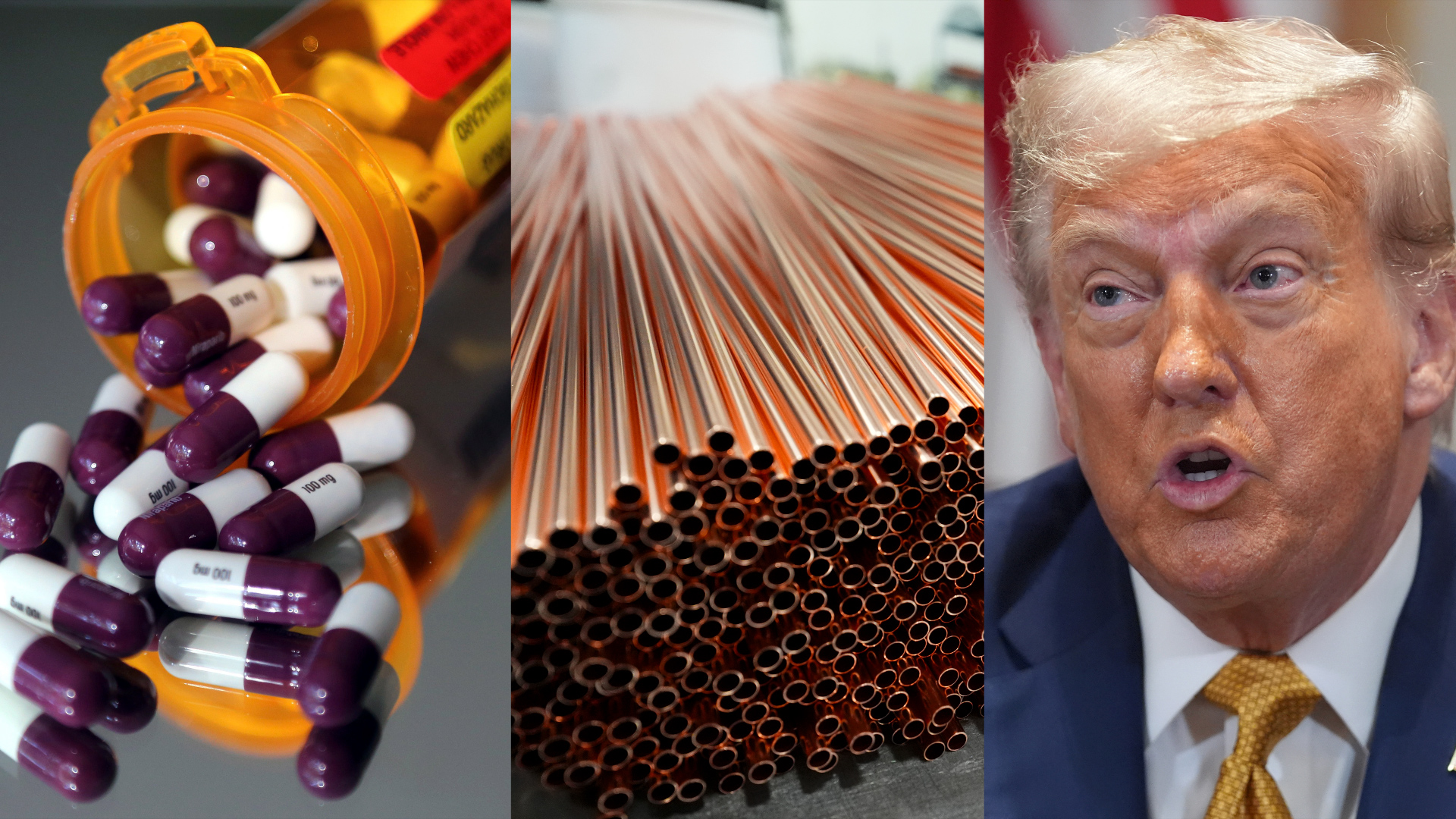
Trump vows 50% tariff on copper, 200% on pharmaceuticals
The official said some importers had been claiming artificially reduced import values to reduce their tariff costs.
The U.S. will eliminate the prior 50% duty on derivative products made with steel, aluminum and copper if the product’s content of the metals is below 15% by weight.
The official said this would eliminate the Section 232 duties from products with minimal metals content such as a perfume bottle with an aluminum cap, or a dental floss container with a tiny steel cutting blade.
Story continues below advertisement
Certain metal-intensive industrial and electrical grid equipment will have tariffs cut to 15% from 50% previously through 2027 to accelerate an industrial build-out, the White House said. Steelmakers had been pressing for this lower rate for steelmaking machinery made in Germany and Italy.
Derivative products with more than 15% steel, aluminum or copper content by weight would get a reduced, 25% tariff, but on the entire value of the import, not just the metal content. So a washing machine or gas range made substantially from steel would get a flat 25% tariff.
Products made abroad but entirely with American steel, aluminum and copper will be subject to lower tariffs of 10%.
The changes are aimed at simplifying an overly complicated tariff regime that gave importers headaches in trying to determine the value of the metal content of thousands of derivative products from tractor parts to stainless steel sinks and railroad equipment.
“So it’s easier, it’s simpler, it’s more straightforward. For many products, it’ll be lower. For some products, it’ll be a little higher, but mostly, it’s fine,” the official said, adding that the administration reviewed the changes with industry and has received positive feedback.
The changes overall should have no material economic difference from the prior tariff regime, the official said. But by charging the 50% duty on the full sales value of commodity metals, there may be some increased tariff revenue coming in.