
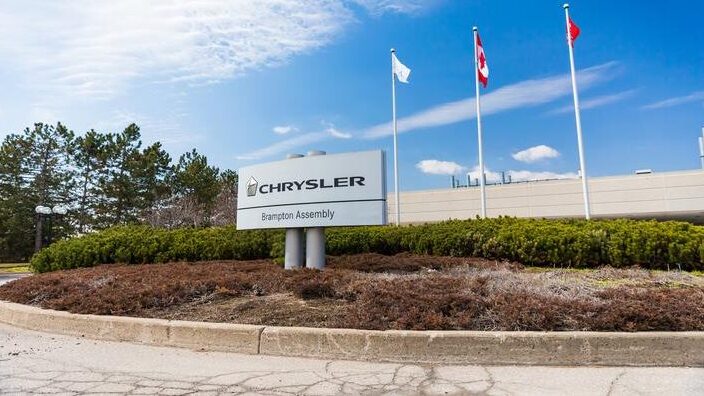
Stellantis is once again evaluating its next move for the idled Brampton Assembly Plant in Ontario, Canada—and this time, the conversation is taking a global turn. According to reports from Bloomberg, the automaker is exploring the possibility of building electric vehicles (EVs) based on Chinese automaker Zhejiang Leapmotor Technology at the long-shuttered facility.
For those who have been following the situation closely, this marks a significant shift. Brampton was originally slated to produce the next-generation Jeep® Compass (J4U), but those plans were scrapped after geopolitical tensions and tariff policies reshaped the North American auto landscape. Now, Stellantis appears to be considering a joint-venture approach that could bring Chinese-developed EVs into Canadian production.
A Strategic Pivot For Brampton
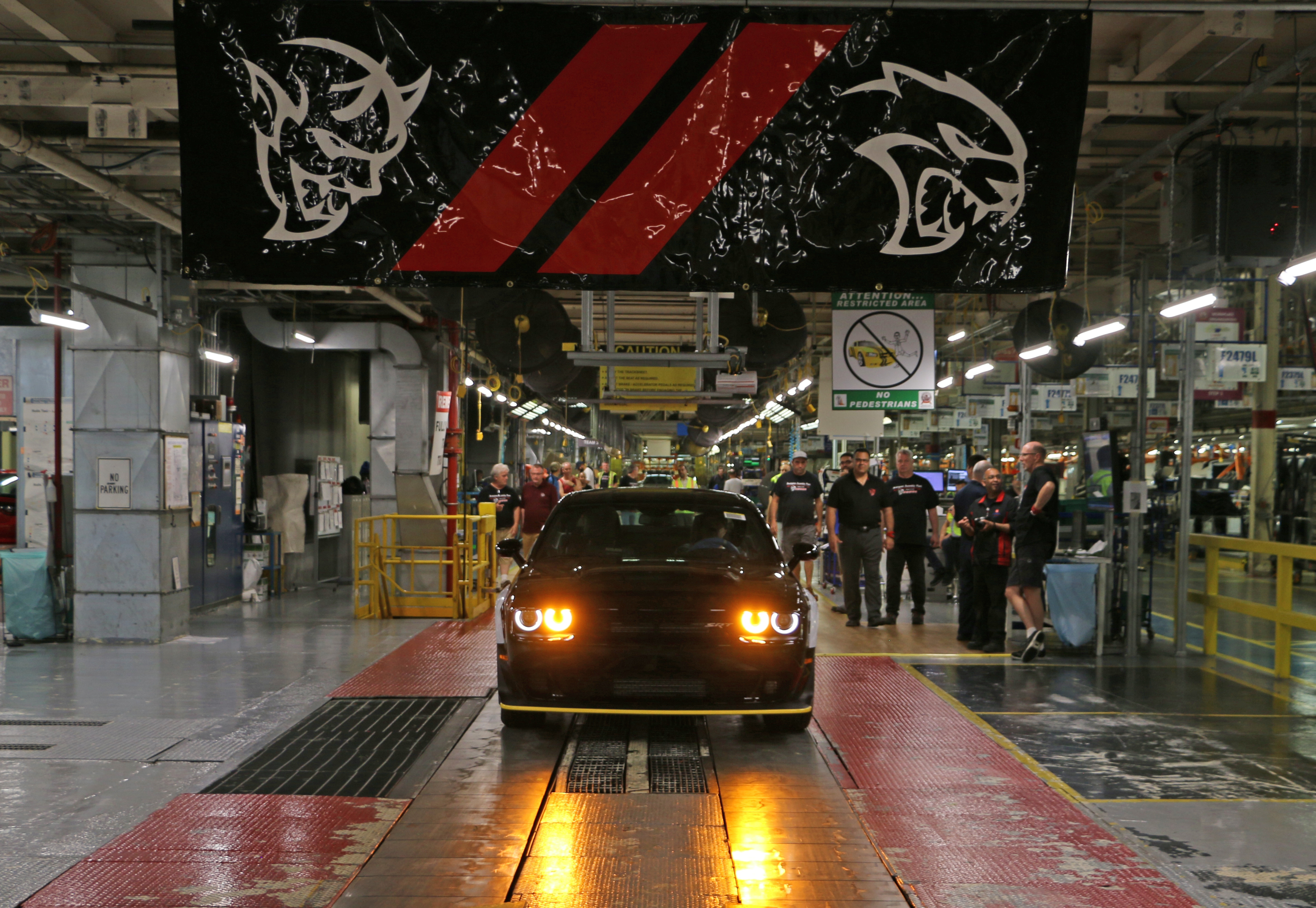 The last 2018 Dodge Challenger SRT Demon rolls off the line at Brampton. (Stellantis).
The Brampton plant, located just outside Toronto, has been idle since 2024. It was undergoing retooling for future Stellantis products before those plans were abruptly paused. The facility employs—or once employed—roughly 3,000 union workers, making its future a critical issue for both the Canadian government and the broader automotive supply chain.
According to Bloomberg, Stellantis has been in early-stage discussions with Leapmotor about potentially using the site to build EVs. Stellantis already owns a significant stake in Leapmotor and formed a global joint venture, Leapmotor International, to expand the Chinese brand’s reach beyond its domestic market.
Reuters echoed similar details, noting that the talks remain preliminary and no final decisions have been made. However, the idea of producing Chinese-developed vehicles in Canada has already sparked debate across the industry.
Political Pressure And Trade Concerns
 Leapmotor C10 EV Crossover. (Leapmotor).
The timing of these discussions is no coincidence. Canada recently opened the door to increased cooperation with Chinese automakers, aiming to attract new investment and boost domestic production. But this comes with risks—especially when it comes to relations with the United States.
U.S. officials have made it clear they are wary of Chinese vehicles entering North America through Canada. There have even been threats of steep tariffs—potentially up to 100%—on Canadian goods if such partnerships are perceived as a backdoor for Chinese imports.
That puts Stellantis in a delicate position. On one hand, the company needs to maximize the value of its global partnerships. On the other, it must navigate a highly sensitive political and economic environment.
Government Expectations And Local Impact
Canadian officials have emphasized that any deal must prioritize local jobs, suppliers, and technology security. Industry Minister Mélanie Joly made that clear, stating:
“Any new auto investments will prioritize Canada’s supply chain, including Canadian labor and parts suppliers,”
She has also outlined broader expectations for localization, ensuring that Canadian companies and workers benefit from any new investment. That includes major suppliers like Magna International, Linamar, and Martinrea, which collectively support around 200,000 jobs across the country.
Labor unions, including Unifor, have also voiced concerns. They are particularly wary of “knockdown kit” assembly strategies, where vehicles are largely built overseas and only finalized locally. That approach could significantly reduce the number of jobs created at the plant.
Stellantis Responds
 Stellantis Canada Headquarters in Windsor, Ontario. (Stellantis).
For its part, Stellantis is keeping its options open. The company has emphasized that no final decision has been made and that it remains committed to maintaining a strong presence in Canada.
In a statement, Stellantis North America spokesperson LouAnn Gosselin said:
“Stellantis remains focused on a strong Canadian footprint and is actively evaluating future programs for Brampton, with the objective to ensure that any investment decision is sustainable and a long-term commitment that supports workers and suppliers,”
She added:
“We are in active discussions with government officials and key stakeholders to ensure that the conditions for success are in place to support continued investment in Canada,”
That language suggests Stellantis is trying to balance global expansion with local accountability—something that’s becoming increasingly important in today’s auto industry.
What This Means For The Future
 Leapmotor C10 EV Crossover. (Leapmotor).
If Stellantis moves forward with Leapmotor production in Brampton, it would mark the first major Chinese-backed automotive manufacturing effort in Canada. It could also signal a broader shift in how automakers approach EV production, leveraging global partnerships to stay competitive.
From a financial standpoint, such a move could help Stellantis reduce costs. Chinese EV platforms are often more affordable to develop, which could translate into lower-priced vehicles for consumers. For example, a compact EV built using Leapmotor technology could potentially come in well below traditional North American offerings—perhaps in the $25,000 to $35,000 USD range (approximately $34,000 to $48,000 CAD).
However, the trade-offs are significant. Questions remain about supply chains, software security, and whether vehicles produced under such a partnership would even be allowed to cross the U.S.-Canada border.
The Bottom Line
Right now, everything is still on the table. Stellantis could partner with Leapmotor, pivot to another product, or even consider selling the plant altogether. But one thing is clear—the future of Brampton is no longer just a North American story. It’s part of a much larger global shift in how vehicles are designed, built, and sold.
For Stellantis, the challenge will be finding a path forward that satisfies governments, workers, and customers alike—while staying competitive in an increasingly complex EV market.
Source: Bloomberg
Like this:
Like Loading…