
In elections, as in hockey, they don’t ask how, they just ask how many.
Campaign game-planning, stick-handling of issues, attack strategies, pressure tactics — these things are ultimately for analytical wonks, whereas most people only care who gets the most votes.
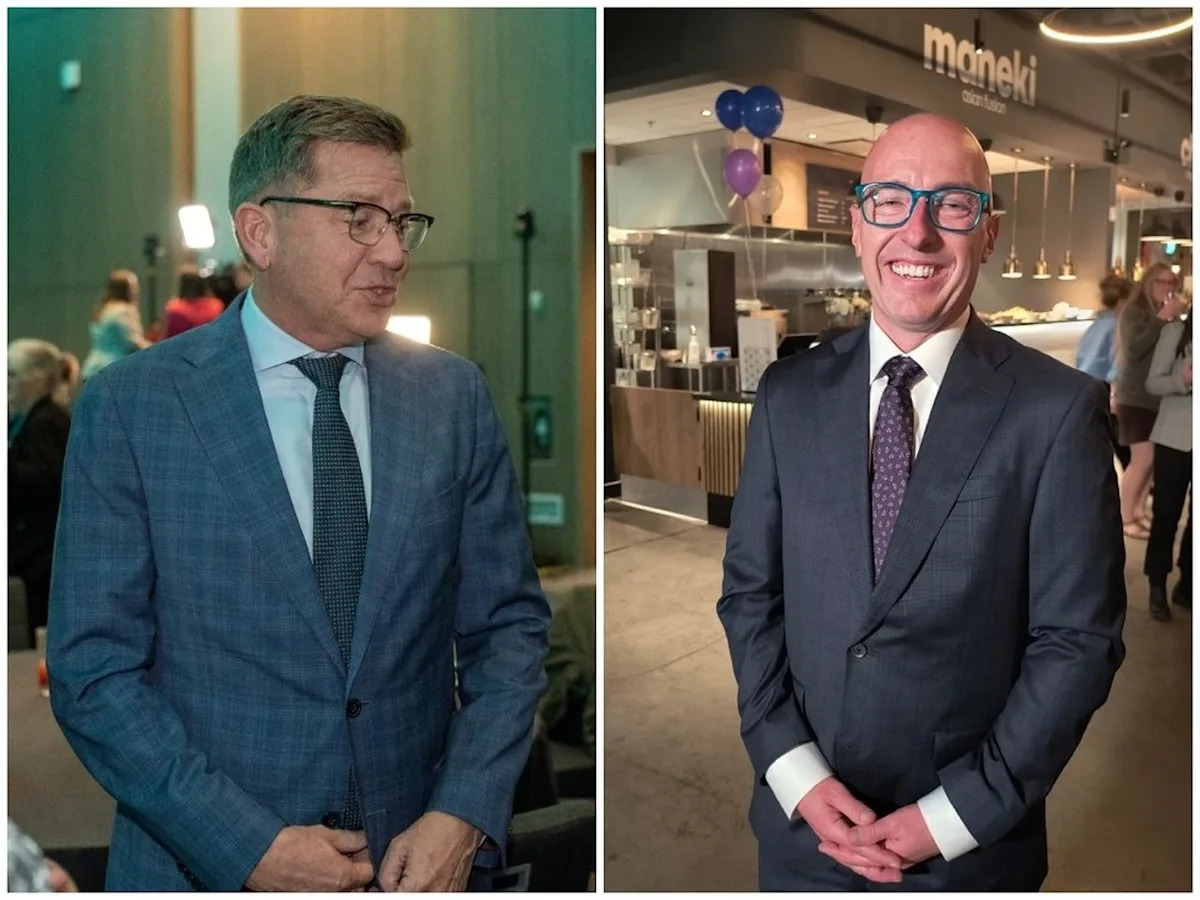
And that is perhaps how Mayor Andrew Knack and several city councillors may want to look at last year’s unusual Edmonton municipal election, in which spending power and vote generation did not particularly align.
Obviously we all know that wealth doesn’t guarantee wins — sometimes it can even be seen as a vice — but usually there is a reasonably strong correlation, as money can buy a lot of ads, name recognition and sophisticated campaign help. That’s typically been the pattern in Edmonton’s mayoral contests, in which the candidate with the most bread gets the benefit.
Except that didn’t happen last fall, when the campaign that spent by far the most was defeated by a Knack campaign that had less than one-sixth of the resources.
I’ll save the Cinderella or David vs. Goliath references. But it’s fair to say that we don’t often see disparities that wide, and it is worth digging into a little further.
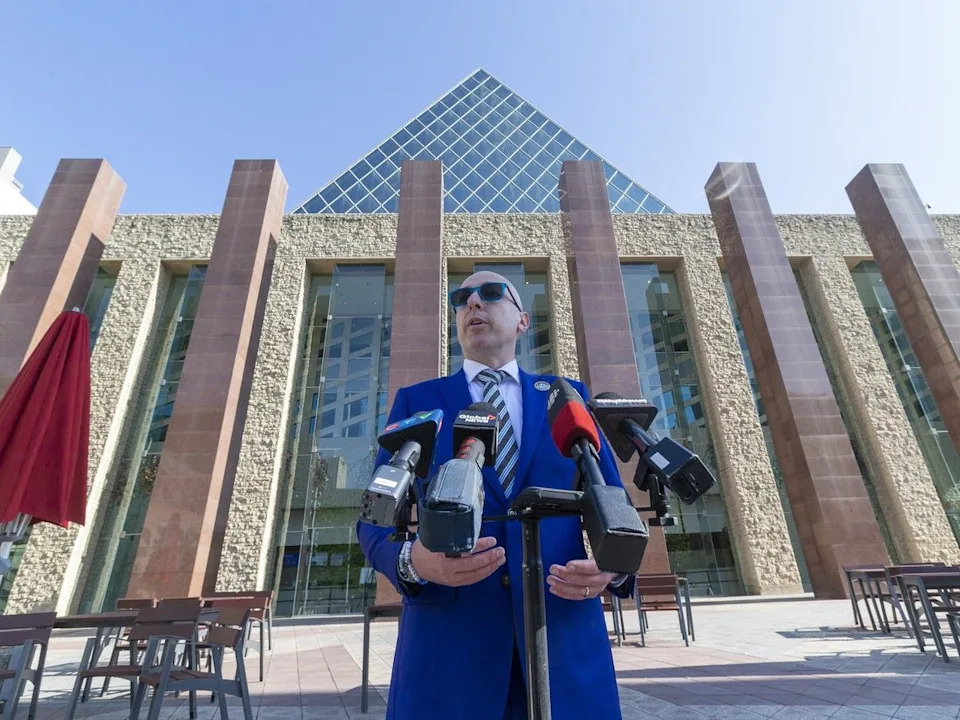
Andrew Knack, then a mayoral candidate, holds a news conference in June 2025 outside city hall in Edmonton.
Lean and not-so-lean campaigns
Recently released disclosure statements by Edmonton Elections show that Knack raised and spent just over $240,000 on his campaign, mostly funded by a lot of relatively small-ish donations from individuals, including several from the city’s NDP-affiliated crowd.
That tab ranked third in the race, behind Michael Walters’ spending of $346,000 and way, way back of Tim Cartmell, who I’ll get to in a moment.
For context, Knack also spent barely 35 per cent of the $675,000 that Amarjeet Sohi spent to win the 2021 election.
Perhaps he wished to raise and spend more, but that’s all he ended up getting and all he ended up needing. Victory cost a minuscule $3 per vote at a time when $3 doesn’t seem to buy much of anything anymore.
As for Cartmell, who was organizing and campaigning well before any of the other contenders, he spent $812,500 in 2025 and around $136,000 in 2024. That adds up to a total of $948,500, which is more than the other 12 mayoral candidates combined. It is undoubtedly the most expensive race ever run in an Edmonton civic election.
To put things in even sharper perspective, Cartmell’s advertising budget alone was higher than Knack’s entire campaign. In the bang-for-buck calculation, if you care about that sort of thing, Cartmell ended up spending about $15.38 per vote.
And that doesn’t include any spending of his party, Better Edmonton.
The disclosure statements show the party brought in about $371,000 and spent about $530,000. The disparity seems to have been mostly covered by a post-election net transfer of $121,000 from Cartmell’s own campaign war chest, though the party was still left with a $38,000 deficit at the end of the year.
Alberta rules allow parties to spread around their money how they see fit, whether that’s focusing on the mayor’s race, a handful of key council races or the whole city. As such, it’s hard to be precise on how much of Better Edmonton’s expenses directly supported Cartmell, though I think we can safely assume much of it did.
With that wrinkle in mind, the combined spending power of Cartmell’s campaign and his party’s added up to around $1.48 million. That’s how we can say that Knack won with less than one-sixth of the resources of his rival.
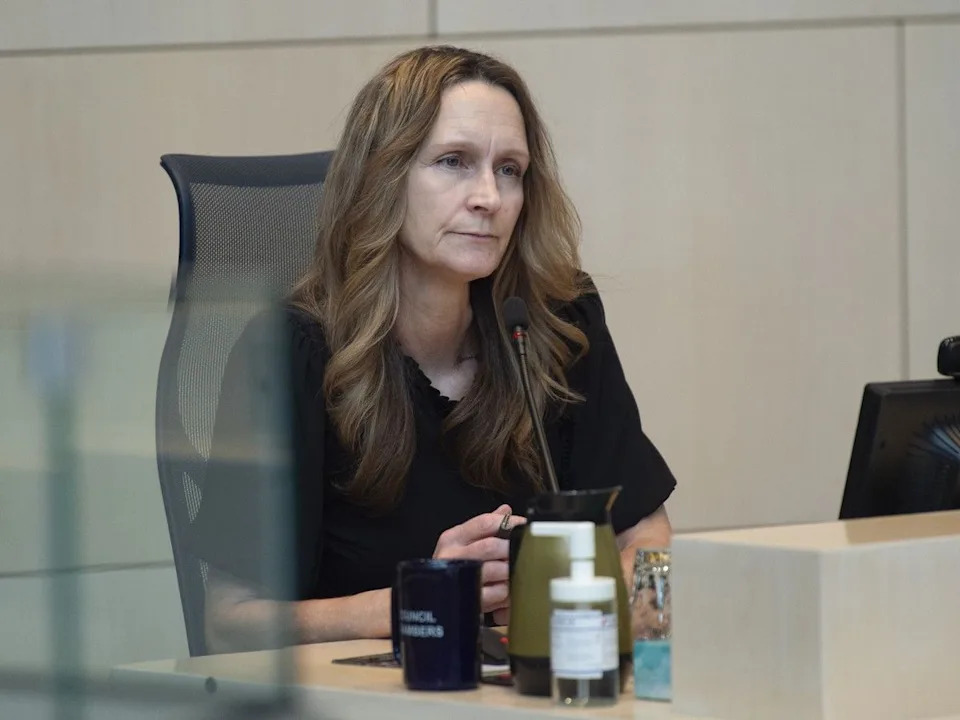
Edmonton Coun. Karen Principe won her 2025 municipal election race in Ward tastawiyiniwak by spending just $7,900.
How much capital for a council seat?
And it turns out that this incongruence between wealth and winning also played out in many of the council races.
In fact, eight of the city’s 12 wards were won by candidates who were outspent by at least one opponent, including a few who overcame massive financial disparities.
One of the biggest of these was in the southeast’s Ward Sspomitapi, where incumbent Jo-Anne Wright spent just $18,500 and still managed a comfortable victory over Harman Kandola who raised and spent nearly $83,000. Kandola was officially part of the Better Edmonton team, but also distanced himself from the party during the campaign.
Up on the north side, Ward tastawiyiniwak incumbent Karen Principe won easily despite an election tab of just $7,900, well below Fidel Ammar ($17,500) of PACE, and Farhan Chak ($74,200), who finished third and fourth in votes, respectively. Principe represented Better Edmonton, so some of the party’s funds may have gone to help her, but her personal campaign expenses were by far the lowest of any winner.
Next door in Ward Dene, council veteran Aaron Paquette ($32,300) won over his Better Edmonton rival Banisha Sandhu, who spent two and a half times as much ($80,700). Anne Stevenson won re-election in central O-Day’min despite two challengers spending more.
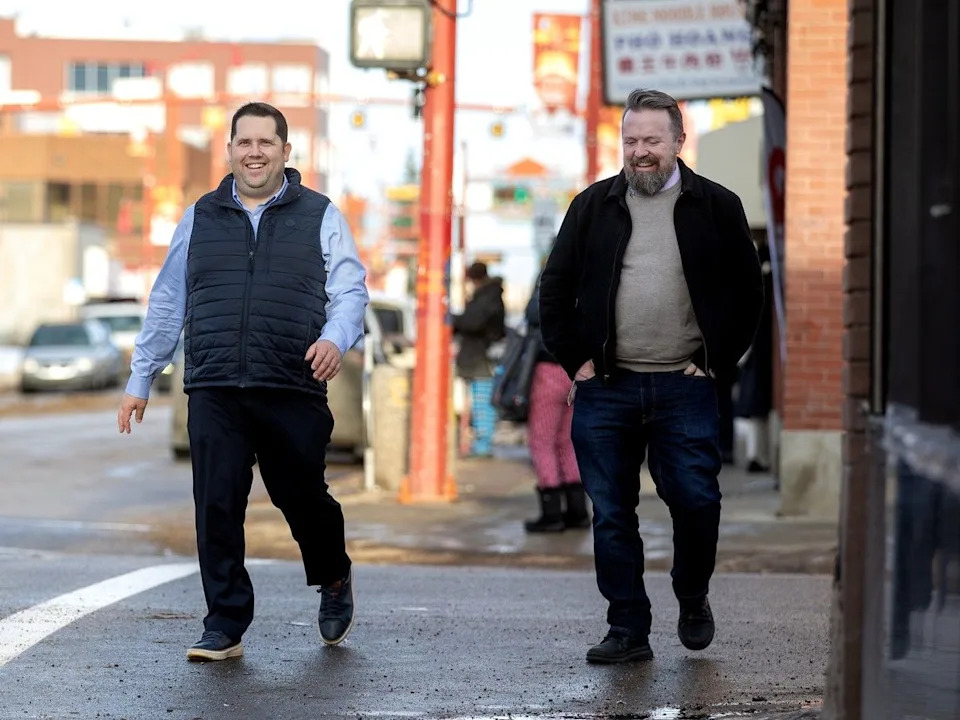
Edmonton city councillors Michael Janz, left, and Jon Morgan walk through Chinatown after attending the launch of the 2026 Chinatown Vibrancy Fund on Jan. 13.
And it wasn’t just incumbents who pulled this off.
In the southwest ward of Ipiihkoohkanipiaohtsi, Jon Morgan’s tab of $29,200 was enough to beat a pair of much better-financed rivals — incumbent Jennifer Rice ($75,000) and third-place finisher Funke Olokude, who spent $70,000 in 2025 and another $18,800 the year before.
Further to the west in Ward sipiwiyiniwak, Thu Parmar ($59,000) eked out a victory over Better Edmonton’s Darrell Friesen ($80,500).
Crazily enough, of the six council candidates who spent at least $74,000 on their campaigns, none of them won.
(Such expenditure levels didn’t happen everywhere. In the central-south ward of papastew, the five candidates combined spent less than $50,000, led by incumbent Michael Janz at $26,100.)
In some ways, the outcome of the fall election remains a bit of a head-scratcher, in that so little turnover occurred despite several signs of a “change” narrative in the city. While we may never know the hows and whys of that, it is nonetheless gratifying to see that money probably wasn’t one of the explanations, or was at least not definitive to the results.
If anything, wealth may have been a turnoff for some voters in regard to the financial juggernaut that was the Cartmell and Better Edmonton campaign.
That said, one election’s vote dynamics does not change the fact that there remains some real challenges with campaign finance rules — particularly around transparency, sourcing and limits. Big money and dark money is the subject for Part Two of this column, so stay tuned for that in the days ahead.
Related
Bookmark our website and support our journalism: Don’t miss the news you need to know — add EdmontonJournal.com and EdmontonSun.com to your bookmarks and sign up for our newsletters here.
You can also support our journalism by becoming a digital subscriber. Subscribers gain unlimited access to The Edmonton Journal, Edmonton Sun, National Post and 13 other Canadian news sites. Support us by subscribing today: The Edmonton Journal | The Edmonton Sun.