
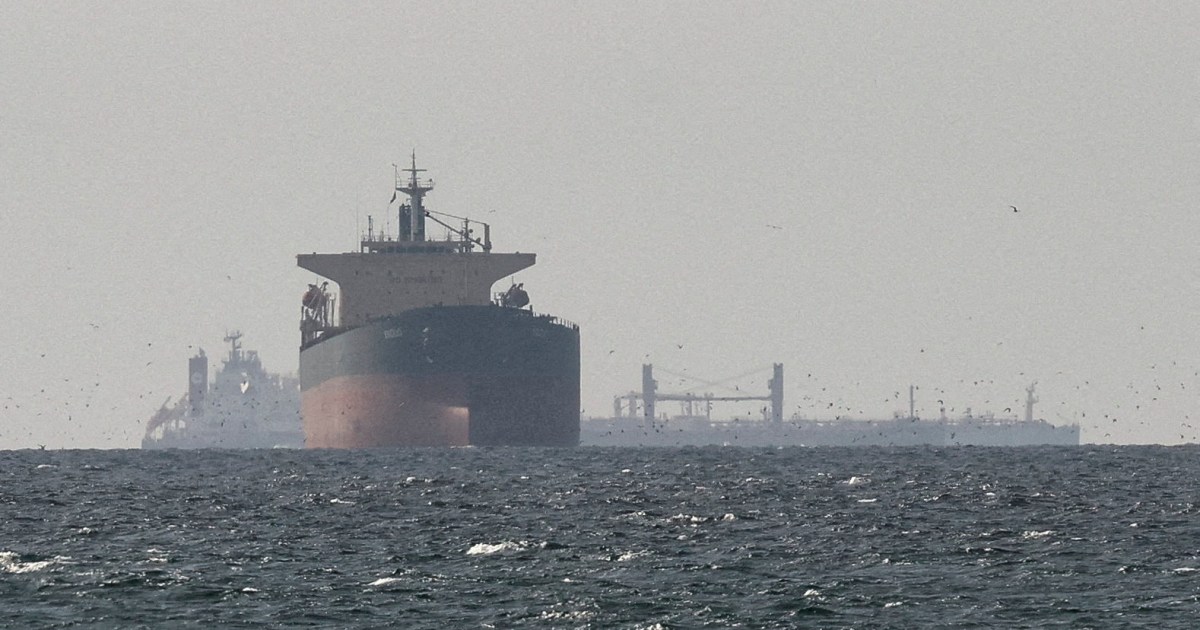
It was not immediately clear how the vessel, which Marine Traffic tracking data shows is sailing south along the coast of Oman, secured safe passage.
Published On 3 Apr 20263 Apr 2026
|
Updated: 3 hours agoUpdated: 3 hours ago
A French container ship, three Oman-linked tankers and a Japanese-owned gas carrier have crossed the Strait of Hormuz, as some vessels make the passage through the contested waterway.
The container belonging to French shipping giant CMA CGM is the first Western vessel known to have made the passage since Iran effectively closed the strait, the Marine Traffic vessel website showed on Friday.
Recommended Stories list of 4 itemsend of list
The Malta-flagged Kribi, owned by CMA CGM, crossed the Strait on April 2. It was not immediately clear how the vessel, which the data shows is sailing south along the coast of Oman, secured safe passage.
There was no immediate comment from CMA CGM.
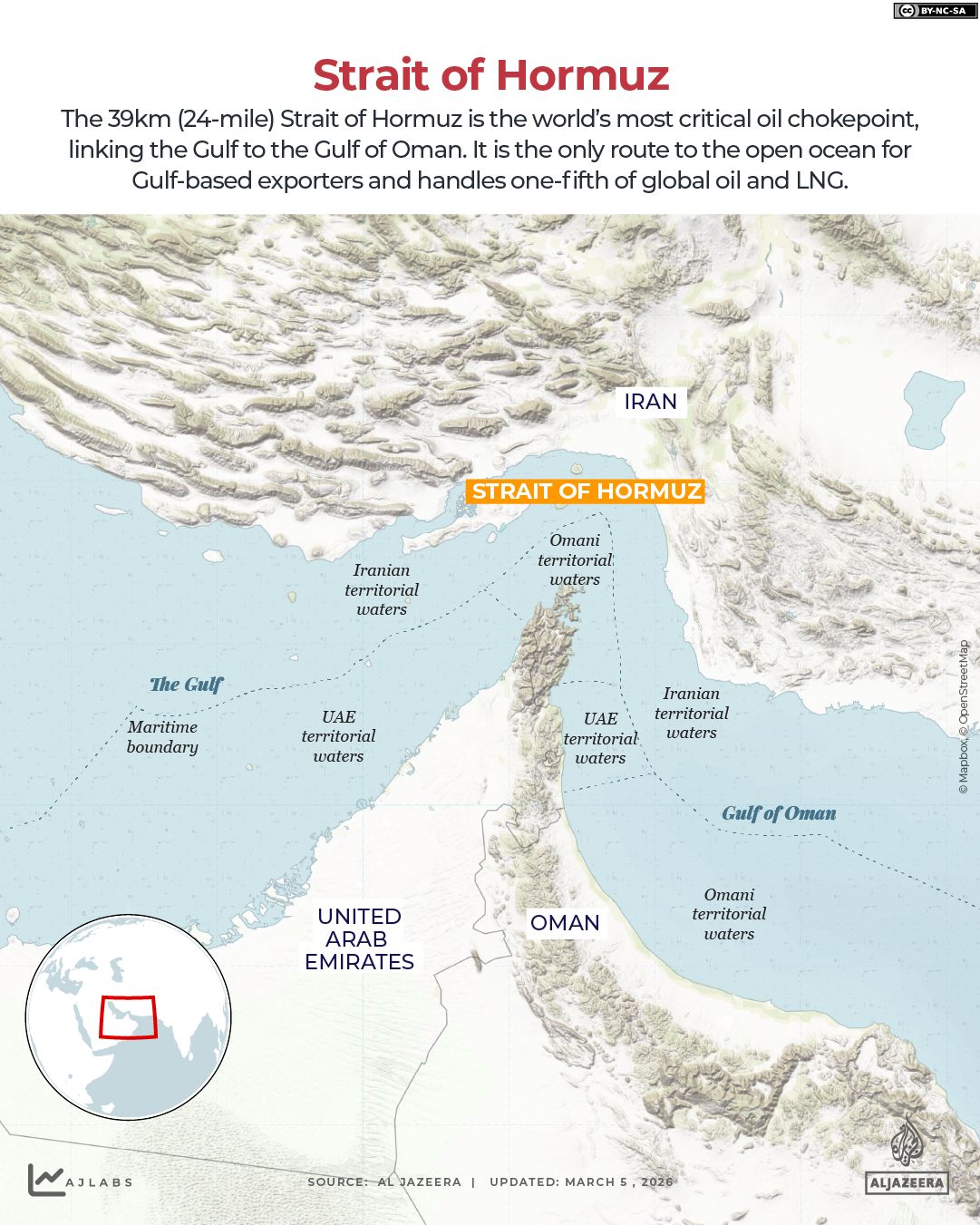
However, LSEG shipping data showed the vessel on Thursday changed its destination to “Owner France”, signalling to Iranian authorities the nationality of its owner, before crossing the strait’s Iranian territorial waters.
 [Al Jazeera]
The vessels appear to have switched off their AIS transponders during the crossing because their signal disappeared on vessel-tracking data.
Two very large crude carriers and one LNG tanker operated by Oman Shipping Management also exited the Gulf on Thursday, according to MarineTraffic and LSEG data.
Japan’s Mitsui OSK Lines said on Friday that the LNG tanker, Sohar LNG, which it co-owns, had crossed the strait, making it the first Japan-linked vessel and the first LNG carrier to do so since the conflict began on February 28.
Only about 150 vessels, including tankers and container ships, have transited the strait since March 1, according to data firm Lloyd’s List Intelligence. Most were linked to Iran and countries such as China, India and Pakistan.
Beijing expressed “gratitude” on Tuesday after three of its ships passed through the strait, including two container ships on Monday belonging to state-owned shipping giant Cosco.
Energy crisis
Until the war led to the effective blocking of the strait, it was the route for about a fifth of global oil and liquefied natural gas supplies. As a result, fuel prices have skyrocketed worldwide.
On Wednesday, US President Donald Trump insisted that petrol prices would fall quickly once the war concluded, but offered no solution for reopening the Strait of Hormuz. Instead, he invited sceptical US allies to do it themselves. He insisted that the war would be worth it.
French President Emmanuel Macron said on Thursday it would be unrealistic to launch a military operation to open the strait, and that only diplomatic efforts would work.
Macron has worked with European and other allies to build a coalition to guarantee free passage through the strait once hostilities have stopped.
Meanwhile, writing in the US journal Foreign Affairs, Iran’s former top diplomat said that Tehran should make a deal with the United States to end the war by offering to curb its nuclear programme and reopen the Strait of Hormuz in exchange for sanctions relief.
Tehran could “declare victory and make a deal that both ends this conflict and prevents the next one”, wrote Mohammad Javad Zarif, foreign minister from 2013 to 2021.