
The Portland Fire and Toronto Tempo officially have players. It was a process that both front offices spent months preparing for due to long, drawn out collective bargaining agreement negotiations that played a role in setting the rules for the 2026 double expansion draft.
While there was some speculation that a star player like Arike Ogunbowale would be selected in the expansion draft, this double expansion draft featured mostly role players and several younger ones. Only two of the 22 players selected were 30 years old or above, while the rest were all in their twenties. Besides the Las Vegas Aces, Seattle Storm and Chicago Sky, the rest of the league lost two players. The Storm and the Aces only lost one, with both the Fire and Tempo declining to choose a second unprotected player. The Chicago Sky didn’t lose any players, but they had to pay a price for that.
With foundational rosters set for both Portland and Toronto, their needs in free agency have become more apparent. The Fire need more frontcourt players, and the Tempo need some more guard play.
With free agency dates still undetermined, here are five takeaways from what was a fast-paced expansion draft show, where, if you blinked, you might have missed the picks.
Bridget Carleton was a hot commodity
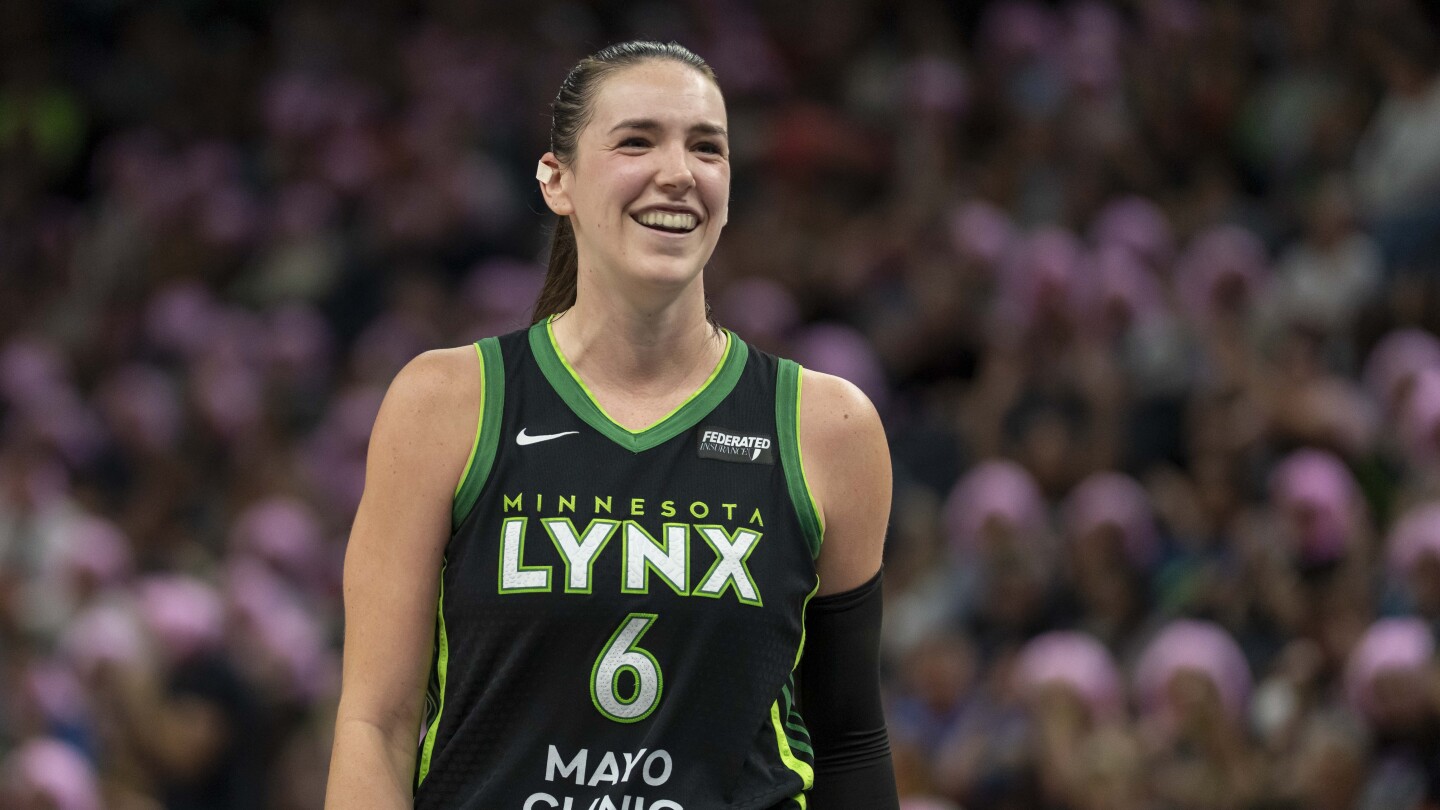
It became clear after the picks were made how much both the Portland Fire and Toronto Tempo respected and wanted to pick Carleton. Known for her proficient three-point shooting—holding a career average of over 39 percent from beyond the arc—as well as her switchability and disciplined defense, Carleton has been a vital role player on recent Minnesota Lynx teams competing for championships.
“Everybody loves to play with Bridget,” Fire GM Vanja Černivec told reporters following the expansion draft. “She did an amazing job in Minnesota. If you take her out of that environment and build around her, we think she can be an All-Star player.”
Černivec, who was previously the vice president of basketball operations for the Golden State Valkyries, believes Carleton can take a path similar to Kayla Thornton after joining the Valkyries via the 2024 expansion draft from the New York Liberty. Like Carleton, Thornton is known for her strong two-way play and excellent interpersonal skills as a teammate. Thornton became a first-time All-Star in 2025 during her first season with Golden State.
Carleton, who is Canadian, would have been an obvious choice for the Tempo. However, since Toronto won the coin toss and opted to choose higher in the WNBA draft, set for April 13, Portland took advantage of earning the expansion draft’s first pick, taking the only Canadian presumably on the board.
Tempo GM Monica Wright Rogers was asked how much of a priority it will be to sign a Canadian player following the expansion draft.
“Unfortunately, that opportunity wasn’t given to us this time around,” Wright Rogers told reporters. “But we are really excited about the Canadian talent pool and the opportunity to land our first Canadian player. It’s absolutely on our radar and we look forward to that.”
International players ruled the expansion draft
Speaking of players not born in the United States, many of them were selected on Friday night. Of the 22 total picks made, 14 were internationals (over 63 percent of the total picks made).
International players selected represented ten different countries outside of the United States, including Australia, Belgium, Germany, Spain, Russia, France, Latvia, Canada, Croatia and Bosnia and Herzegovina. Toronto’s internationals represented over 72 percent of their picks, while Portland’s picks were over 54 percent international. This shouldn’t come as a surprise since both front offices value international talent.
For the Tempo, head coach Sandy Brondello and associate head coach Olaf Lange—who are also married—serve as the head coaches of the Australian and German women’s national teams, respectively. Meanwhile, Černivec is from Slovenia, and her head coach, Alex Sarama, is British. The pair previously worked together for the British basketball club, the London Lions, before reuniting in Portland.
Confusion remains about the Chicago Sky’s strategy
Why were there 11 picks in each round rather than 12? It’s the Chicago Sky who you have to thank for that. On Wednesday night, less than 48 hours before the expansion draft, Chicago announced that it had swapped second-round picks (No. 17 for No. 21) with Portland so that it wouldn’t select any of the Sky’s unprotected players. The Sky also gave Toronto the No. 26 overall pick in the 2026 WNBA Draft to ensure the Tempo did not select a player from the Sky’s unprotected list.
Both of these trades were confusing, as the Sky had some of the easier decisions to make when it came to choosing their five protected players. It would have been prudent for Chicago to protect their young stars Angel Reese and Kamilla Cardoso, in addition to protecting draft and stash Ajša Sivka. The final two spots could have gone to veteran guard Ariel Atkins ahead of her eventual decision in free agency or Haley Van Lith, who is on a cost-controlled rookie contract.
The rest were role players who would not have moved the needle for Chicago. It is likely that one or both of the Tempo and Fire would have passed on players the Sky left available. Chicago effectively surrendered multiple draft assets in exchange for prioritizing players without great market value. Could the Sky hold on to some of their players and package them in a trade during free agency? Time will tell.
Did the Aces forget for a second time how valuable cost-controlled players are?
Speaking of more confusion, did the Aces forget that players on rookie-scale contracts are valuable? While the salary cap is a bit more flexible than it has ever been via the new 2026 CBA, there still is a cap that’s $7 million.
The Aces made the same mistake they made in the 2024 expansion draft, allowing a rising sophomore who played a large role in her rookie season to walk away without getting anything in return. Kate Martin, who proved to be a formidable role player for Las Vegas in 2024, was left unprotected and selected months later by the Valkyries.
The same thing happened to Aliyah Nye, a rookie who averaged over 15 minutes per game for the Aces in 2025. She emerged, like Martin, as a shooting specialist and solid role player. Nye was selected by the Tempo eighth overall in the first round of the expansion draft. History repeated itself.
Toronto values pro experience while Portland goes for less
On paper, the Tempo have a roster full of players with well-documented and more proven success at the pro level, not only in the WNBA, but internationally. Marina Mabrey has been a solid scoring combo-guard for six WNBA seasons. Nyara Sabally helped the Liberty win their 2024 championship with her X-factor performance in Game 5 of the WNBA Finals. Nikolina Milić and Maria Kliundikova both have played formidable roles for Cheryl Reeve’s Lynx in two separate seasons. Julie Allemand and María Conde are Olympians and strong national team contributors.
The Fire, however, drafted WNBA talent that hasn’t completely proven itself yet, besides maybe Carleton, point guard Sug Sutton and former Atlanta Dream backup wing Maya Caldwell. Chloe Bibby, Carla Leite, and Sarah Ashlee Barker each have one year of WNBA experience. Emily Engstler and Haley Jones are WNBA journeywomen who have struggled to find consistent roles. Nika Mühl, a 24-year-old point guard drafted in 2024, missed all of 2025 due to a torn ACL. She won’t be available to play in 2026 due to another torn ACL, her second in two years.
The Tempo’s roster is much more experienced, with an average age of around 27, while the Fire’s new roster averages out at around 24 years old.