
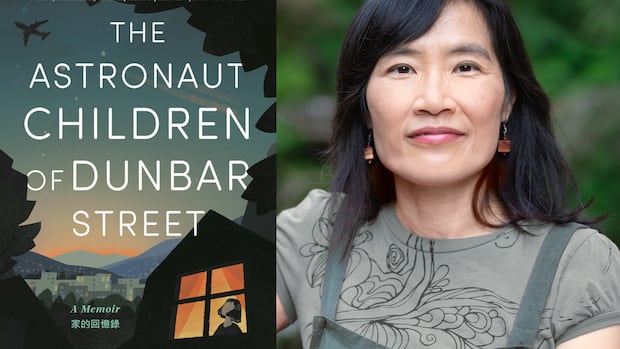
Picture it: you’re 12 years old and your parents decide to work in another country, across the Pacific Ocean, leaving you and your older siblings to fend for yourselves.
On the outside, it sounds like every kid’s dream — no supervision, the freedom to stay up late and eat whatever you want.
But for Wiley Wei-Chiun Ho, that freedom quickly turned into a feeling of longing — longing for her parents and her culture.
She details her experience in her memoir, The Astronaut Children of Dunbar Street, and what that experience meant for her and her siblings through the years.
Ho spoke with CBC’s North by Northwest host Margaret Gallagher.
LISTEN | Wiley Wei-Chiun Ho’s full interview:
North by Northwest16:51Wiley Wei-Chiun Ho on The Astronaut Children of Dunbar Street
Wiley Wei-Chiun Ho shares details about her memoir The Astronaut Children of Dunbar Street, chronicling her experience growing up on Vancouver after her parents returned to work in Taiwan.
This interview has been edited for length and clarity.
What is an astronaut child?
The term was only coined in 1999 by an anthropologist named Aihwa Ong and it describes a family where one or both parents work in Asia while their kids grow up in foreign countries like Canada, the U.S., Australia and New Zealand, primarily.
What brought your family to Canada?
There was this break in diplomatic relations between the U.S. and Taiwan in 1979 that convinced my parents that war was imminent from the mainland. And so my brother, who was just turning 17 at the time, would have been on the front lines. My parents were really, really worried about that, so they came here.
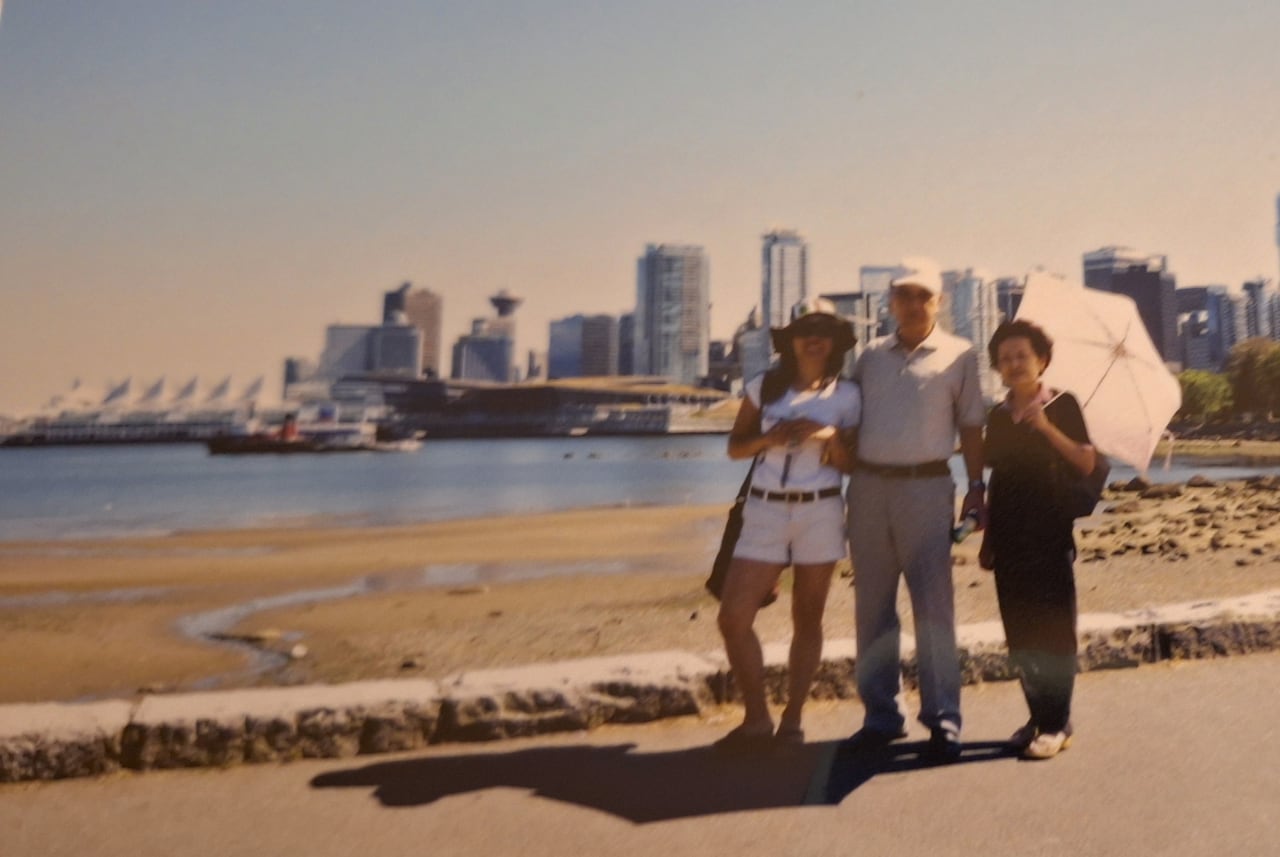 Wiley Wei-Chiun Ho is pictured with her parents in Vancouver, in an undated photo. (Wiley Wei-Chiun Ho)
My parents were both professionals. My father was a surgeon. They had a private practice and I think my dad, by the time we left, he said he’d delivered like 700 babies [or] something. They were deeply embedded in their community.
My father tried to practice in Canada, but his credentials weren’t recognized. And so he was told he could go back to medical school as a third year student, I believe, at the time.
Is that what took them back to Taiwan?
After three years, the money was running out. They had their Canadian citizenship at that point, what they called their “safety papers.” And they thought, well, OK, well we have to make money for five kids. And so they decided to chance it and go back.
You were the youngest of five children and you were left here, living on the west side of Vancouver. What was it like for you when your parents left?
On the outside, I think everything looked quite normal because we had this nice house in this lovely neighbourhood, the Dunbar neighbourhood. It was safe. Everything seemed OK. And we pretended everything was OK. When neighbours would ask how are things going, we would always say everything is great, everything’s fine.
But inside, things were different. Things were definitely chaotic, overly quiet or slamming doors. That’s what I remember. Myself and my siblings were older, but they were teenagers and they were going through their angst and their problems and they were missing our parents and nobody really knew what to do really. We had our own bedrooms, so we just ended up like in our rooms a lot.
My parents told us not to talk to anyone outside the family because they were worried that people would judge us, that they wouldn’t understand and that it might not be safe.
Your siblings basically became your caregivers. How did that impact your relationships with them?
It was only after I became an adult that I could appreciate how hard it must have been for my brother in particular, because he was the eldest looking after four extremely cranky younger sisters who didn’t want to listen to him, didn’t respect him and resented the heck out of him. Depending on birth order, everyone would have a slightly different view of how things were going.
You have travelled back to Taiwan on a couple of occasions. What was it like to be back?
It’s weird to feel like you don’t completely belong to either place. When I go back to Taiwan, the people around me look like me, so there’s like this immediate recognition, comfort, and yet almost always someone will say, oh, you talk differently or you walk differently. When I’m there, I love it and I want to be a part of it, but I always feel like I’m also slightly outside.
This book also takes you into your own experience of becoming a mom. How would you say your own childhood has shaped you as a parent?
I was adamant when I became a mother that I would not repeat the same experiences or the same decisions as my parents made.
Inevitably when you parent a child and they’re not doing the things that you want them to do, you kind of sound like your mom. I remember just cringing when I sounded like my mom admonishing my kid in a voice that I thought I would never use. And there it was. So I do think as much as you might want to distance yourself from your past, you can never fully do that, and nor should you.
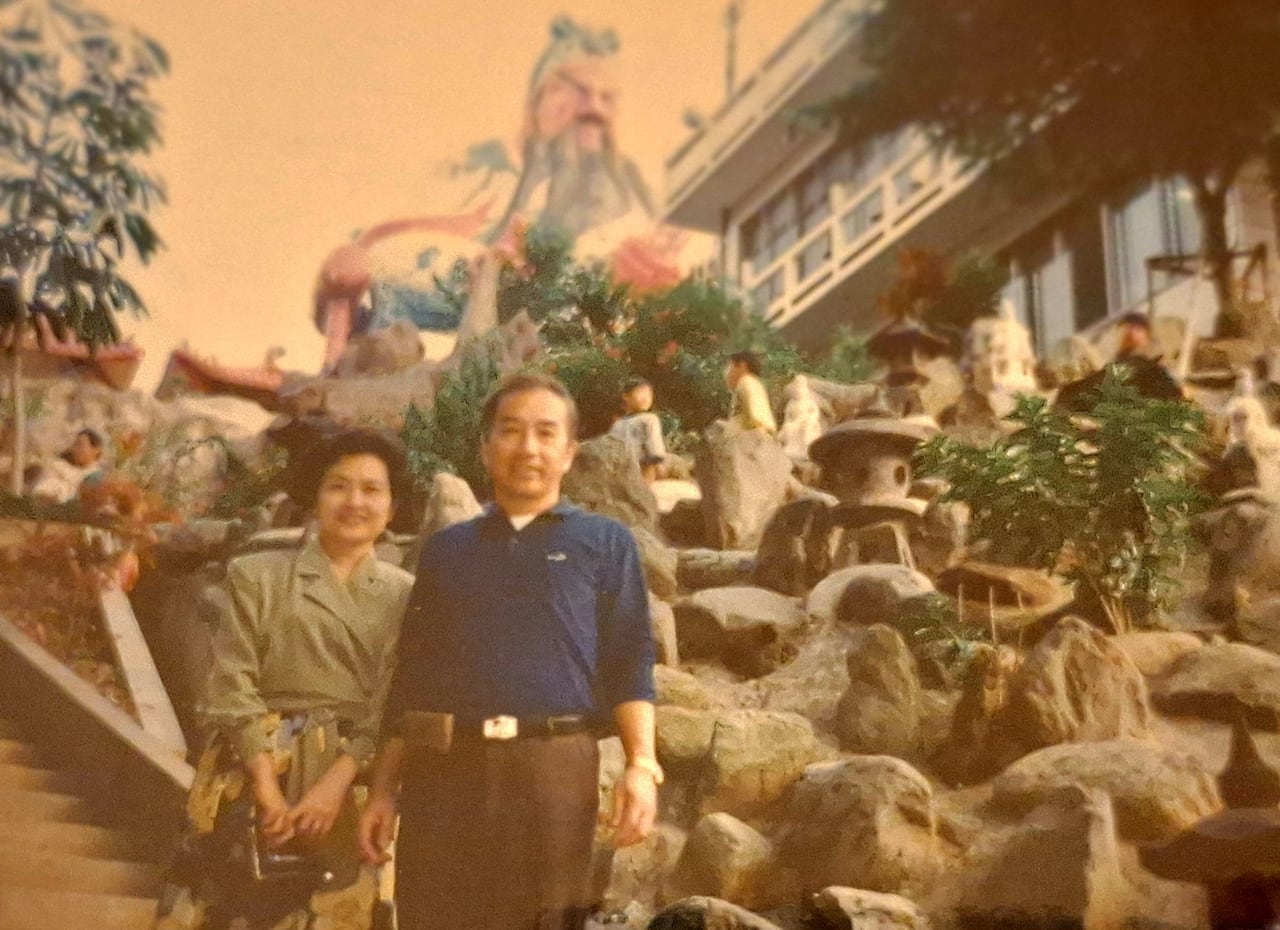 Wiley Wei-Chiun Ho’s parents, in an undated photo. (Wiley Wei-Chiun Ho)
Part of this book is about honouring one’s past. It’s taken me a very, very long time to write this book. I tried it in all sorts of different ways. I tried it as like short story, as fiction, even as a travelogue at one point. But I realized that really what this book is about is being able to reclaim your childhood and to be able to stand by it and say no matter how strange it was or uncomfortable, that it’s part of your life.
I wrote this book for my 12-year-old self. I think I would have felt a lot less confused and lonely if I had had a book like this. And also for all the astronaut kids who are growing up right now, and their parents, because I think their voices are rarely heard. In fact, when I first started this project, I tried to make it a collection of stories about all different astronaut families, but so many, even though they were supportive of my project, pulled out saying that it was too difficult to remember or that they didn’t want to go back there.
So even though there are possibly tens of thousands of us across places like Canada, the U.S. and Australia, our voices are so rarely represented in literature. Even though there are so many of us, we don’t talk about it in public.