
US stocks rose on Monday as oil prices dropped amid cautious hopes for a deescalation in Middle East hostilities, which remained the market’s main catalyst.
The S&P 500 (^GSPC) and the Dow Jones Industrial Average (^DJI) gained roughly 0.2% each, while the tech-heavy Nasdaq Composite (^IXIC) rose by 0.3%.
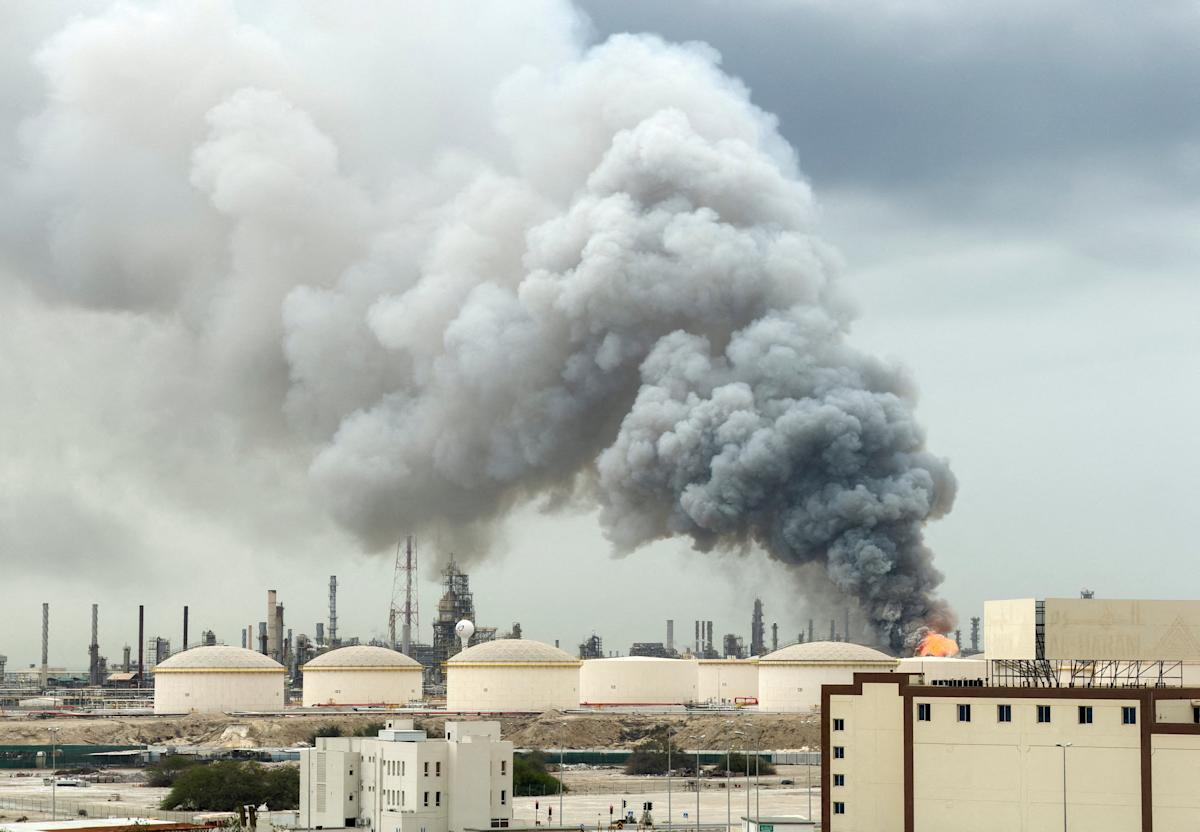
Stocks recouped the overnight losses that followed renewed threats from President Trump on Iran, as he extended the deadline for attacks to Tuesday. Destruction in the Gulf region over the weekend also raised geopolitical tensions.
However, reports of diplomatic moves revived optimism for a ceasefire and an end to the blockade of the Strait of Hormuz, which risks stoking inflation. Iran and the US have received a plan for an end to attacks from Pakistan, Reuters reported. The two sides and international mediators are making a last-ditch push for a 45-day halt, per Axios.
Oil prices ticked down from their Sunday open, having fallen back before the bell as investors weighed the prospects for peace. Brent crude futures (BZ=F) steadied at around $108 per barrel, while West Texas Intermediate (WTI) futures (CL=F) fell by 0.5% to sit at $111.
After the Good Friday stock market holiday, investors got their first real chance to weigh in on the March jobs report on Monday. The reading surprised on Friday as the US economy created 178,000 jobs and the unemployment rate fell to 4.3%.
In the week ahead, investors will also watch for key US inflation data due out Friday and earnings results from Delta, expected on Wednesday.
Markets in many countries worldwide, including the UK, Germany, France, and Australia, will be closed for Easter Monday.
LIVE 13 updates
 BNY, Robinhood shares rise on Trump Accounts program for newborns
Shares of The Bank of New York Mellon (BK) rose on Monday after the Department of the Treasury designated the bank as a financial agent to support the implementation of the new “Trump Accounts” program.
The initiative is a government-backed program that will deposit a $1,000 federal contribution into eligible newborns’ accounts.
BNY will manage the initial Trump Accounts and help develop the new Trump Accounts app, which will enable families to access and manage their accounts, said the Department of Treasury on Monday.
BNY has partnered with Robinhood, which will serve as the brokerage and initial trustee for Trump Accounts.
“Together, these partners will support Treasury’s goal of ensuring every eligible child can access a Trump Account quickly and easily,” said the Department of Treasury.
 Citrini Research sends analyst to Strait of Hormuz – here’s what it found
Satellite data tracking ships crossing the Strait of Hormuz is undercounting the so-called “dark fleet” of vessels operating in the region, missing a large swath of what has become Iranian-directed shipping traffic, according to the financial research publication Citrini Research.
In March, Citrini Research — which garnered significant attention in late February for an essay on the implications of AI for the US economy — reportedly sent an analyst to Oman to reach the Strait of Hormuz and report on-the-ground conditions.
According to a post on the Citrini Research Substack page and videos posted to X, the analyst, dubbed “analyst #3,” reached the strait and found that the satellite and ship-tracking data the market has been relying on for reads on conditions in the strait has been undercounting a layer of “dark” vessels.
The vessels use methods including spoofing their location-tracking data and changing their names and flags to disguise their movements through Iran’s imposed tolling system, the report said.
Citrini Research has not publicly released the findings of its on-the-ground analyst, who is reportedly “now safe and sound back in the free world.”
The latest data from Bloomberg Intelligence shows that over the weekend, 21 ships transited the Strait of Hormuz, marking the highest volume of traffic through the critical waterway since the war began.
While most of those ships remain Iranian, according to Bloomberg oil strategist Julian Lee, vessels from China, Japan, and Iraq, among other countries that have agreed to Iran’s tolling regime, have also passed.
Strategy records $14.5 billion Q1 unrealized loss, spends $330 million on more bitcoin
Michael Saylor’s bitcoin-buying company, Strategy (MSTR), recorded a $14.5 billion unrealized loss in the first quarter, as the decline in bitcoin’s price erased value from the firm’s holdings, the company said in a securities filing on Monday
Shares rose by roughly 4.7% through early trading on Monday, while bitcoin (BTC-USD) gained 3.7% to trade above $69,200 per coin.
In the company’s latest buying spree, also disclosed on Monday, Strategy bought roughly $330 million worth of bitcoin between April 1 and April 5, further cementing its position as the largest corporate holder of the cryptocurrency.
Since the beginning of the year, bitcoin has lost roughly 20% of its value, denting the roughly $58 billion in the coin that Strategy owns.
Stocks mixed at the open
US stocks wavered at the open, with the S&P 500 (^GSPC) rising 0.1%, tech-heavy Nasdaq Composite (^IXIC) gaining 0.4%, and the Dow Jones Industrial Average (^DJI) slipping 0.1%.
Stocks continued to fight for gains amid mixed signals on the war in Iran over the weekend, as President Trump seemed to take an escalate-to-deescalate approach over the Strait of Hormuz in a speech last week.
Gold (GC=F) and bitcoin (BTC-USD) climbed on Monday to start the week, while oil prices ticked lower. US benchmark West Texas Intermediate (CL=F) rose to trade above $112 a barrel, while Brent (BZ=F) jumped above $109.
Treasury yields also rose, with the yield on the 10-year bond (^TNX) edging up to 4.3%.
JPMorgan reiterates bearish call on Tesla, sees 60% downside on stock
Analysts at JPMorgan reiterated their bearish stance on Tesla (TSLA), warning that the stock is overvalued amid delivery misses and a surge in unsold vehicles that threaten to squeeze free cash flow.
“We continue to see large -60% downside to our $145 December 2026 price target and advise investors approach TSLA shares with a high degree of caution,” JPMorgan’s Ryan Brinkman and his team wrote.
On Monday, Tesla shares stabilized after dropping more than 5% on Friday in reaction to the company’s first quarter deliveries.
JPMorgan noted Tesla’s deliveries of 358,023 vehicles globally was 4% lower than Bloomberg consensus estimates. Energy storage installations also fell -15% year-over-year, the first such decline since 2Q22.
“Incredibly, TSLA shares are +50% higher now than when delivery volumes peaked in June 2022 despite Tesla’s 1Q26 deliveries missing analysts’ earlier estimates by more than 1 million vehicles,” wrote Brinkman.
The analyst also noted Tesla produced over 50,000 more vehicles than it delivered in 1Q26, leading to a record surge in unsold vehicles. This inventory build, combined with management’s guidance of over $20 billion in capital expenditures for 2026, is expected to significantly pressure free cash flow.
“The outlook for 2026 free cash flow, meanwhile, has fallen by more than -100%, deteriorating from an expectation for a +$35.7 bn inflow back in June 2022 to the current consensus for a -$4.9 bn outflow,” Brinkman wrote.
Goldman Sachs: AI-driven labor displacement could ‘impose lasting costs on affected workers’
Even as Silicon Valley argues AI will further democratize the workforce and create entirely new industries, displaced workers could face a difficult and uphill battle, Goldman Sachs economists said Monday.
“Similarly to previous waves of technological change, AI-driven displacement could impose lasting costs on affected workers, worsening labor market outcomes for several years,” US economists Pierfrancesco Mei and Jessica Rindels wrote in a client note on Monday.
The economists identified four main effects on workers facing occupational disruption from technology:
These effects ripple out into the broader economy, Mei and Rindels wrote. For workers displaced early in their careers, “technological displacement meaningfully slows wealth accumulation relative to other workers … largely driven by delayed homeownership, as lower earnings and persistent job instability constrain displaced workers’ ability to save and invest.”
On a positive note, the economists said retraining programs could “help to mitigate some of the negative effects of AI-related job displacement, enabling displaced workers to earn modestly higher wages and achieve more stable employment.”
Bitcoin jumps 4% amid growing hopes of war resolution
Bitcoin (BTC-USD) jumped 4% on Monday, rising back near $70,000 as the broader markets signaled a move higher following renewed threats from President Trump regarding Iran and the potential opening of the Strait of Hormuz, a critical oil shipping route.
The world’s largest cryptocurrency also gained after Axios reported that US and Iranian mediators are discussing terms for a potential 45-day ceasefire that could pave the way for a permanent end to the conflict.
Bitcoin has traded in a tight range over the past month, fluctuating between $63,000 and $73,000. In March, the token outperformed stocks and gold as the Iran war raged on.
Dimon warns on Iran war risk of stickier inflation: The ‘skunk at the party’
Jamie Dimon says that while the US economy is holding up right now, a prolonged Iran War threatens shocks that could lead to higher inflation and interest rates.
The veteran JPMorgan CEO also highlights the risks from deeper private-credit losses than foreseen and AI-driven job losses in his latest annual letter to shareholders.
Yahoo Finance’s David Hollerith reports:
 Eyes on the prize — Dan Ives says software sell-off overdone, says AI trade remains top 2026 focus
Noted tech bull Dan Ives is starting off the week once again pounding the table that AI remains the biggest trade of the year and arguing that the software sell-off has gone too far.
From his Sunday night note:
Markets are doing the Fed’s work for it
Investors came into 2026 looking for the Federal Reserve to cut interest rates one or two times.
As the second quarter kicks off, those hopes have been dashed.
As Yahoo Finance’s Jennifer Schonberger reported this weekend:
Read Jennifer’s full story here.
Inflation data, Delta earnings: What to know this week
After a four-day trading week that both capped the end of the first quarter and saw markets lap the volatility from last year’s “Liberation Day” surprise, the week ahead will bring investors a key inflation reading and the start of first quarter earnings season.
The week’s key economic data comes on Friday, with the March CPI report. This report will be the first major piece of economic data to pick up impacts from the US-Iran war, which has sent oil prices surging.
Economists expect headline inflation, which includes the costs of energy, rose 1% last month, up from a 0.3% increase in February.
Delta’s earnings will also offer color from an industry set to face negative impacts from the war on a number of fronts — energy costs, consumer confidence, and a potential downturn in international travel. Those results are expected out on Wednesday morning before the market opens.
Trump threatens Tuesday will be ‘Power Plant Day, and Bridge Day’ in Iran
At roughly 8 a.m. ET on Sunday, President Trump reiterated in an expletive-laden post to Truth Social his threat to begin mass bombardments of Iranian domestic power infrastructure and bridges throughout the country as his 10-day window for Iran to reopen the Strait of Hormuz nears its deadline.
“Tuesday will be Power Plant Day, and Bridge Day, all wrapped up in one, in Iran,” the president wrote. “There will be nothing like it!!! Open the F*****’ Strait, you crazy bastards, or you’ll be living in Hell – JUST WATCH! Praise be to Allah.”
A few hours later, President Trump posted to Truth Social, “Tuesday, 8:00 P.M. Eastern Time!” — seemingly the deadline for Iran to reopen the strait.
Fox News reported shortly after the president’s first Truth Social post that Trump said to correspondent Trey Yingst, “If they don’t make a deal and fast, I’m considering blowing everything up and taking over the oil.”
Last Thursday, the US military severed a major bridge in Iran — one of the country’s flagship infrastructure projects — that connected Tehran to the industrial center of Karaj.
Fox News also reported Sunday that Trump said he believes he will be able to reach a deal with Iran on Monday, before the president’s imposed deadline expires on Tuesday.
Attacks continue in Middle East as Oman, Iran negotiate Hormuz access; OPEC agrees to boost May production
Attacks by Iran against major energy infrastructure continued over the weekend, including strikes against Bahrain’s BAPCO oil refinery and the headquarters of Kuwait’s state-owned Kuwait Petroleum Corporation.
Kuwait also reported attacks on several of the country’s power and desalination plants.
In a post to X on Saturday, an account reportedly close to Iran’s parliamentary speaker Mohammad Bagher Ghalibaf — a former IRGC general who has become a leading voice within the Iranian regime — said that if Iran “does not receive a credible signal by tomorrow of Trump reconsidering an attack on Iran’s infrastructure, it will preemptively, irreversibly, and on a massive scale target the Saudi electricity and oil production infrastructure, as well as that of the Israeli regime.”
“Iran has so far refrained from exercising this option in order to avoid entering an ‘irreversible infrastructure war’ and a ‘Ukrainization of the region,’ but the time for this restraint will end in the next 24 hours,” the account wrote.
At the same time, oil market watchers digested signs of potential partial resumption of oil flows through the Strait of Hormuz, the world’s most critical oil chokepoint.
Early Sunday morning, the foreign ministry of Oman announced that its leaders had met with Iran’s foreign ministry on Saturday and discussed “possible options for ensuring the smooth flow of transit through the Strait of Hormuz amid the circumstances currently prevailing in the region.”
Also on Saturday, Iran’s military leadership said Iraqi ships would be allowed to transit the Strait of Hormuz, potentially bringing roughly 3 million barrels per day of oil back onto the market.
The semi-official state-run Iranian Mehr News Agency quoted the Iranian president’s office saying, “The Strait of Hormuz will open when damages resulting from the war are compensated from transit fee revenues.”
On Sunday, the Organization of Petroleum Exporting Countries (OPEC+) agreed to increase its monthly production quota by 206,000 barrels per day in May, the same increase the cartel’s member countries agreed upon for April.