
Ironically, until the Civil War, most cattle in the US were butchered mostly for dairy, tallow and hides. Nonetheless, the image of cowboys herding cattle across the West became synonymous with American independence and power.
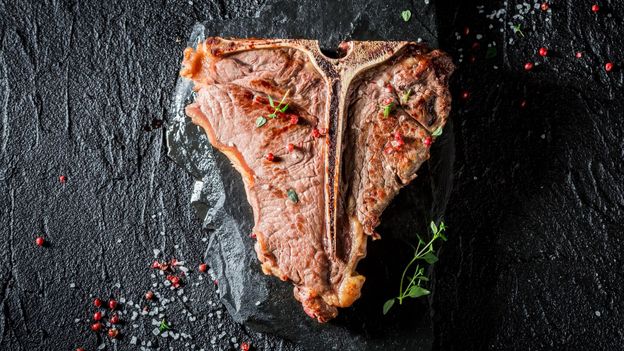
As steakhouses spread across the country in the 1800s, they adopted a format: dark dining rooms; oversized martinis; and decadent sides like creamed spinach, onion rings and mashed potatoes to accompany the boneless ribeyes and porterhouses that became de rigeur. The porterhouse – often called the “king of steaks” in the US – is actually two prized cuts: the filet mignon and New York strip, separated by the T-bone. Over-the-top, costly and luxurious, it epitomises American steak culture.
More like this:
• A journey through the United States of barbecue
• Why every culture has a healing broth
• The eight Asian sauces to keep in your pantry
After WW2, America’s enthusiasm for beef surged, not just in steakhouses but at home. Backyard grilling became a way to gather with family and friends.
Yet, it could be argued that the most American “steak” is the hamburger, according to Chef Angie Mar of New York City’s Le B restaurant. “Our cuisine is built on a beautiful melting pot of so many different cultures who have immigrated to this country,” says Mar, “and the one very authentically American thing that we can say is ours is a burger.”
—
If you liked this story, sign up for The Essential List newsletter – a handpicked selection of features, videos and can’t-miss news, delivered to your inbox twice a week.
For more Travel stories from the BBC, follow us on Facebook and Instagram.