
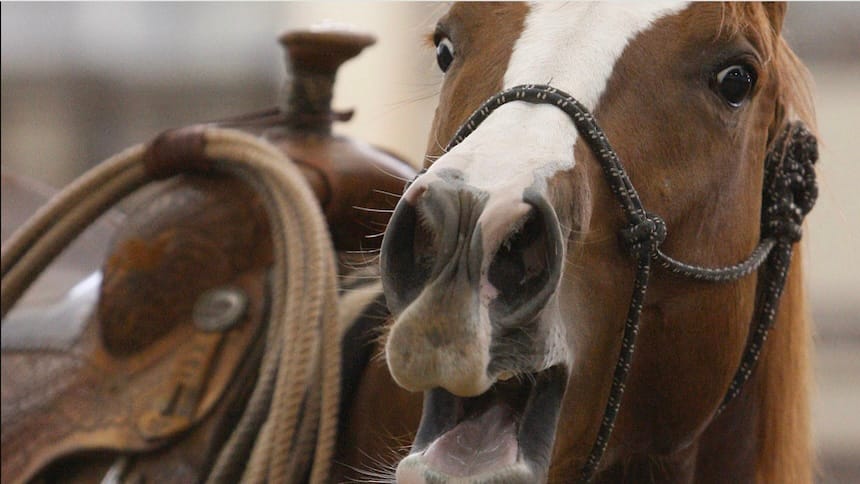
Turns out, horses are whistling
The sounds of farm animals are someone of the first things we learn as kids.
The cow goes “Moo.” The sheep goes “Baa.” The pig goes “Oink.”
And yes — you guessed it — the horse goes “Neighhhh.”
But did you know that within the horse’s iconic sound lies a mystery that has perplexed scientists for years?
Well, now scientists have uncovered the answer, and that answer may mean that horses are unique in the animal kingdom.
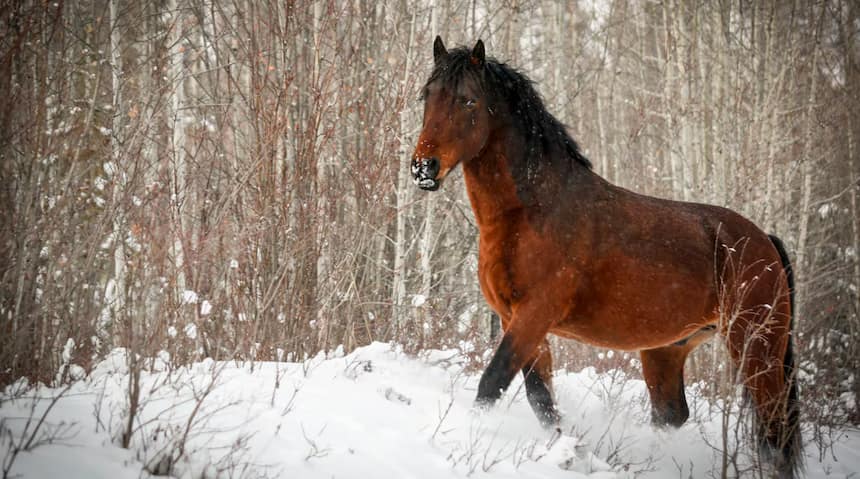
The horse’s neigh includes both high- and low- pitched sounds, a feature that has intrigued scientists who study them. (Image credit: Jeff McIntosh/The Canadian Press)
The mystery of the neigh
The horse neigh — also called a whinny — is a sound they make when they’re meeting a new friend, greeting an old one, or celebrating joyful moments like when it’s time to eat.
But something about it is peculiar.
The sound includes both a low pitch — (a grunt —) and a high pitch — (a squeal —) all at the same time.
The low pitch part makes sense.
For the most part, larger animals have larger voice boxes, meaning they commonly produce lower- pitched sounds.
The low pitch, similar to when humans speak or sing, comes when air passes over bands of tissue in the voice box, causing them to vibrate and make noise.
But how does an animal as big as a horse make a sound with a high pitch? That’s been the mysterious part.
Uncovering the horse’s secrets
In a new study published in the journal Current Biology in February, scientists took a dive into the horse’s voice box to uncover the mystery.
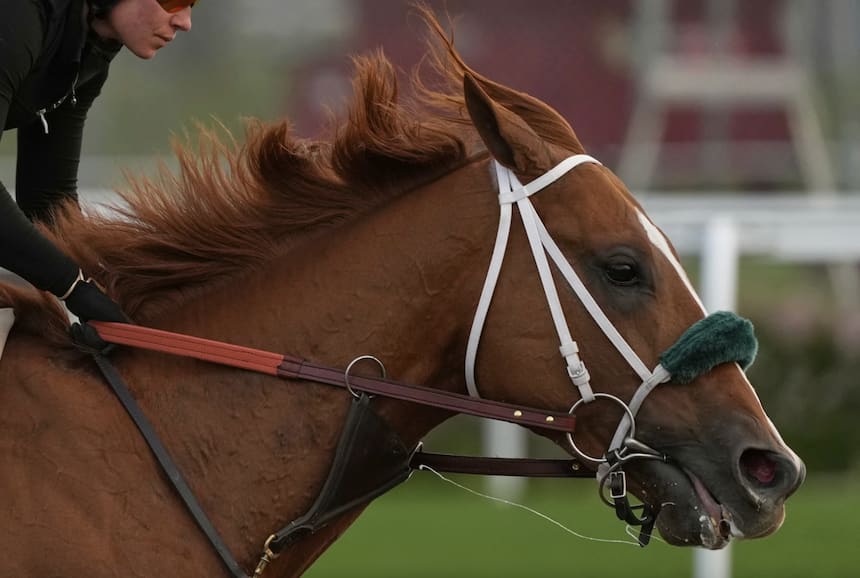
Scientists used cameras to look at the voice boxes of horses to better understand how they make their neigh sound. (Image credit: Charlie Riedel/The Associated Press)
They put small cameras into the nostrils of horses to see what was going on when they produced their sounds.
They also conducted scans and blew air manually over the voice boxes of horse cadaveres.
They found out that the high-pitch part of the neigh comes from a whistle.
They saw that air was vibrating the tissues in the voice box while an area just above contracts, leaving a small area for the whistle to escape.
This whistling, which happens in the voice box, is different from the whistling that we humans produce with our mouths.
And it’s also a first — although small mammals like rats and mice are known to whistle in this way, horses are the first large mammals known to have the ability.
“I’d never imagined that there was a whistling component. It’s really interesting, and I can hear that now,” Jenifer Nadeau, who studies horses at the University of Connecticut, told The Associated Press.
She was not involved in the study.
The why behind the whistle
Like everything observed in biology, we always ask why it came to be through the process of evolution.
According to study author Elodie Mandel-Briefer with the University of Copenhagen, it could be a way of allowing horses to convey two things at once.
She said she thinks using different pitches at once could help horses express a more complex range of feelings when socializing.
“They can express emotions in these two dimensions,” Mandel-Briefer told The Associated Press.
Have more questions? Want to tell us how we’re doing? Use the “send us feedback” link below. ⬇️⬇️⬇️
With files from The Associated Press
TOP IMAGE CREDIT: Sue Ogrocki/The Associated Press