

Listen to this article
Estimated 3 minutes
The audio version of this article is generated by AI-based technology. Mispronunciations can occur. We are working with our partners to continually review and improve the results.
A group of electrical engineers at the University of New Brunswick is actively tracking the Artemis II mission in a “once-in-a-lifetime” experience.
The team of six, including five students, is one of 34 international groups selected by NASA to track the spacecraft named Integrity — making UNB the only Canadian university selected to participate in monitoring the historic lunar loop.
“When I was a child, I saw them land on the moon on a black and white TV and, so, to have the students of this generation be involved in that is just fantastic,” said Brent Petersen, a professor of communications in the department of electrical and computer engineering at UNB.
Petersen and his students began their attempts to track the spacecraft as soon as it launched on Wednesday. But he said just finding the spacecraft is a feat in itself.
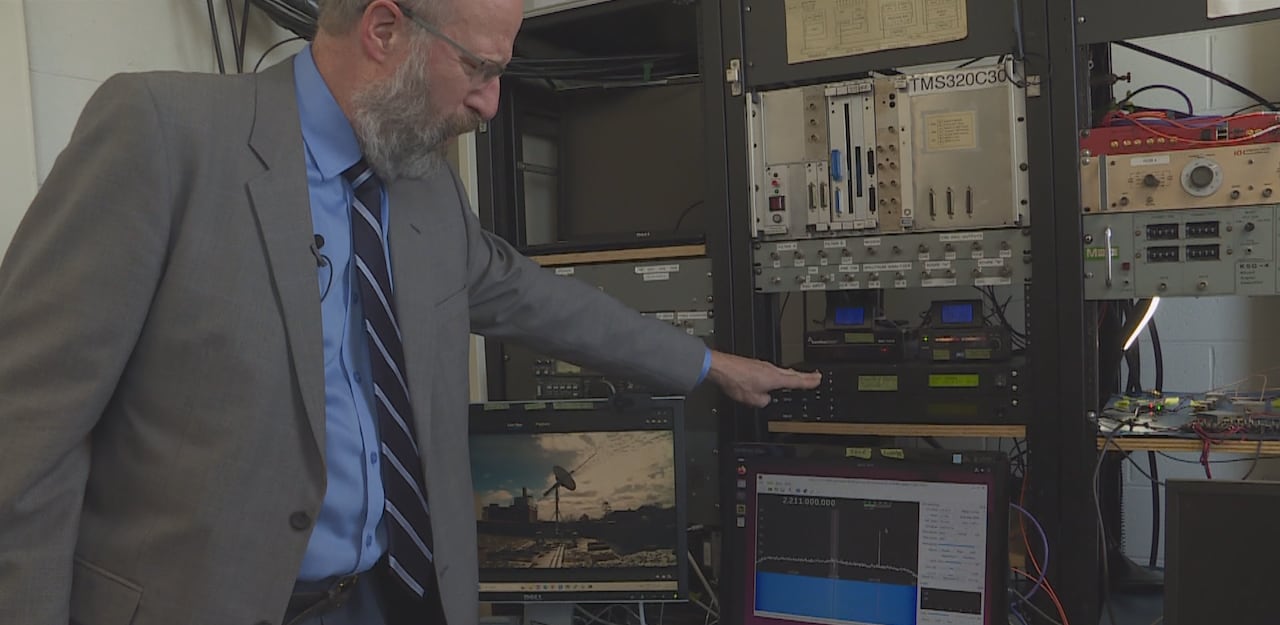 Brent Petersen said the team is working out of the UNB Earth Station, where satellite frequencies are fed into computers and radios from the roof. (Benjamin Ford/CBC)
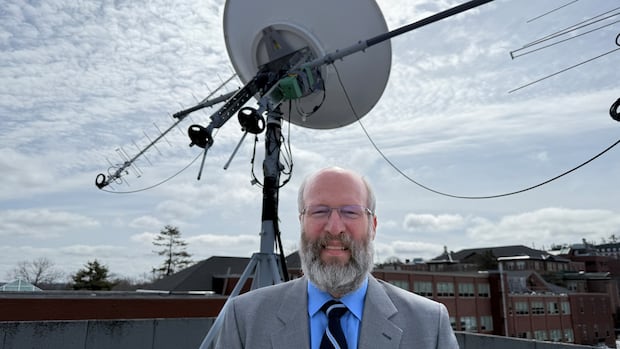
Working out of the UNB Earth Station, the team is using a 6-foot-diameter satellite that sits atop Gillin Hall. Cables feed frequencies from the rooftop satellite to radios and computers in the station.
Megan MacDonald, a graduate student in the department of electrical engineering at UNB, has been busy in the control room, monitoring data and making consistent adjustments to the satellite’s position.
“It’s very difficult … there’s so much interference and it’s so far away and there are so many variables,” she said.
WATCH | Artemis II spacecraft tracked by team from UNB: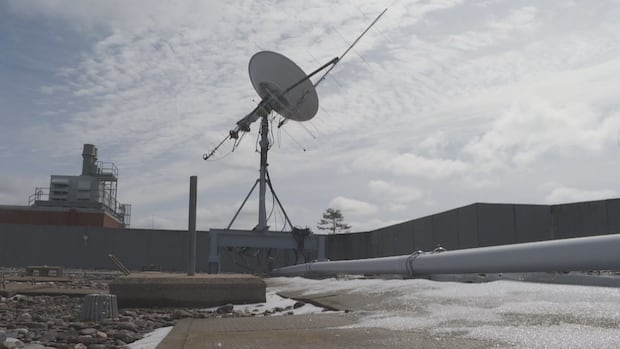
UNB team successfully tracks Artemis II mission
The University of New Brunswick is one of 33 institutions selected by NASA to track the Artemis II mission. A team of students and faculty successfully picked up the signal on Saturday morning.
To make matters more challenging, the satellite at their disposal is not designed to reach deep space. So the team had to make adjustments and use trial and error over the course of several months to ensure they could reach signals beyond the moon.
“In late February, we were able to detect the signals from the James Webb Space Telescope, which is five times farther away than the moon is,” said Petersen.
It still wasn’t a guarantee the team would be able to track Integrity due to its signals being much weaker than those of the James Webb telescope.
But at around 5 a.m. on Saturday morning, Petersen and MacDonald arrived at the station and were in disbelief. They found the spacecraft.
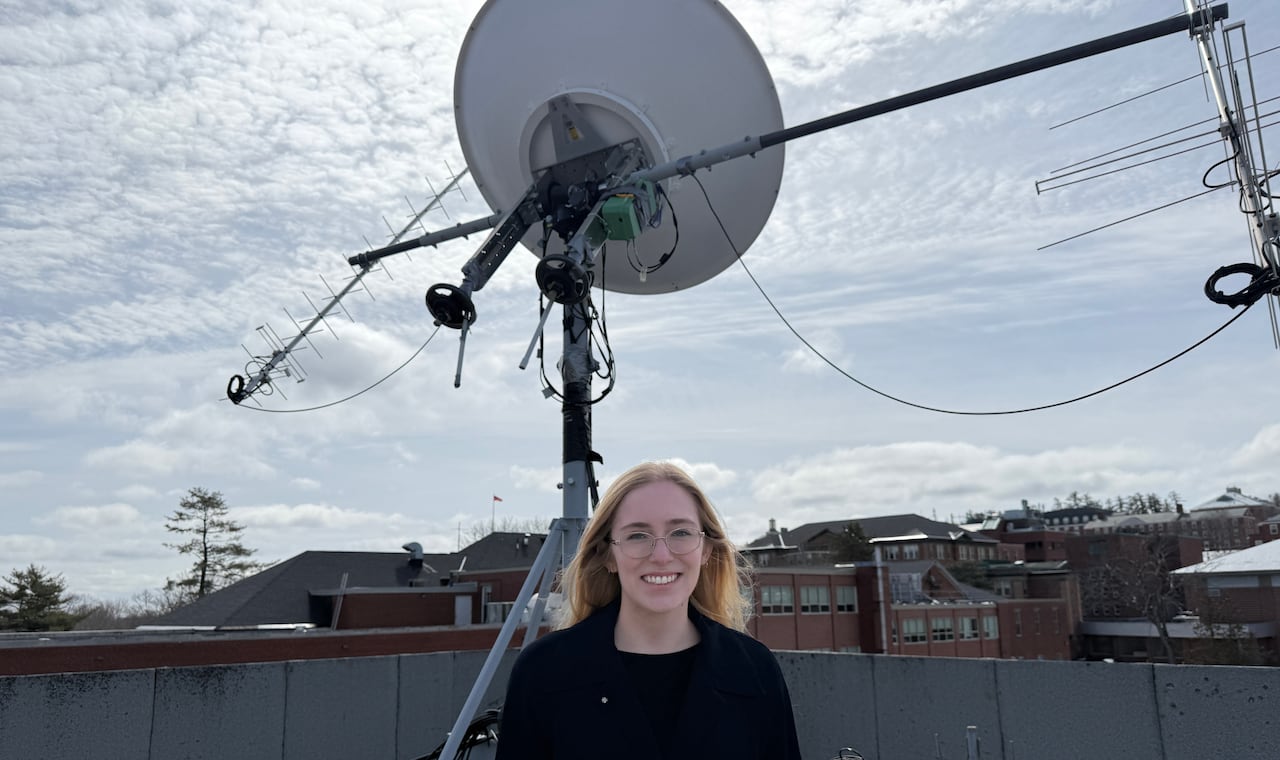 Megan MacDonald, a graduate student in the department of electrical engineering at UNB, said she hopes the experience of tracking Artemis II will lead to further involvement in space missions. (Isabelle Leger/CBC)
Petersen said the team has been able to track Integrity every day since and are confident they’ll be able to watch as the spacecraft approaches earth.
MacDonald said she’s excited to add “the detection of a deep space object” on her resume and hopes it will allow her to further her career.
“This is very important to me … it would be beyond my wildest dreams to have anything to do with any sort of space agency,” she said.
“It’s such a gainful experience to have and I hope I can put it to good use someday.”
Petersen said NASA is asking groups involved to provide date and frequency data as soon as possible. He said while he can only speculate, he believes NASA is using this data to double-check their data to see if it matches.