
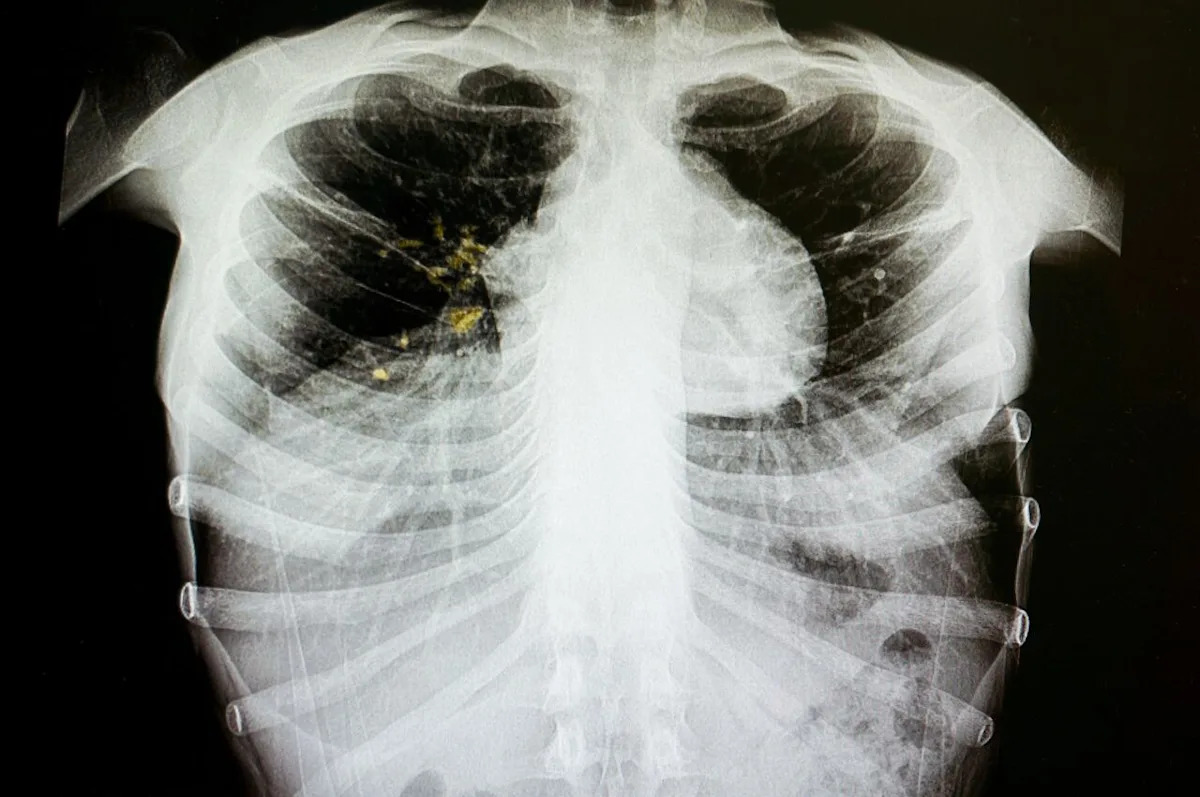
A cluster of tuberculosis cases in Saskatchewan, which has one of the highest rates in Canada, has been traced to a homeless shelter in Prince Albert.
“In a recent shelter investigation, 11 cases were found over a period of 12 months,” Saskatchewan’s chief medical health officer, Dr. Saqib Shahab, said.
Shahab said there is not a high risk to the general public.
Testing and contact tracing with people from the shelter took place over a 12-month period ending in February.
The investigation included contacting people who used the shelter, talking to care providers and ensuring people who were potentially infected received diagnostic tests such as blood tests and X-rays, Shahab said.
“It’s done in a way that’s sensitive to people who are already very vulnerable,” he said.
Tuberculosis primarily affects the lungs. The bacteria that causes it spreads when a person breathes in air infected by a person with active tuberculosis who exhales the bacteria, coughs or sneezes. Shahab said tuberculosis disproportionately affects Indigenous people and newcomers to Canada.
“TB is treatable and curable in everyone,” he said.
“Anyone who has TB does need oral antibiotics for up to six months, but … after two weeks you are no longer infectious to anyone and are completely cured, for the most part, after four to six months.”
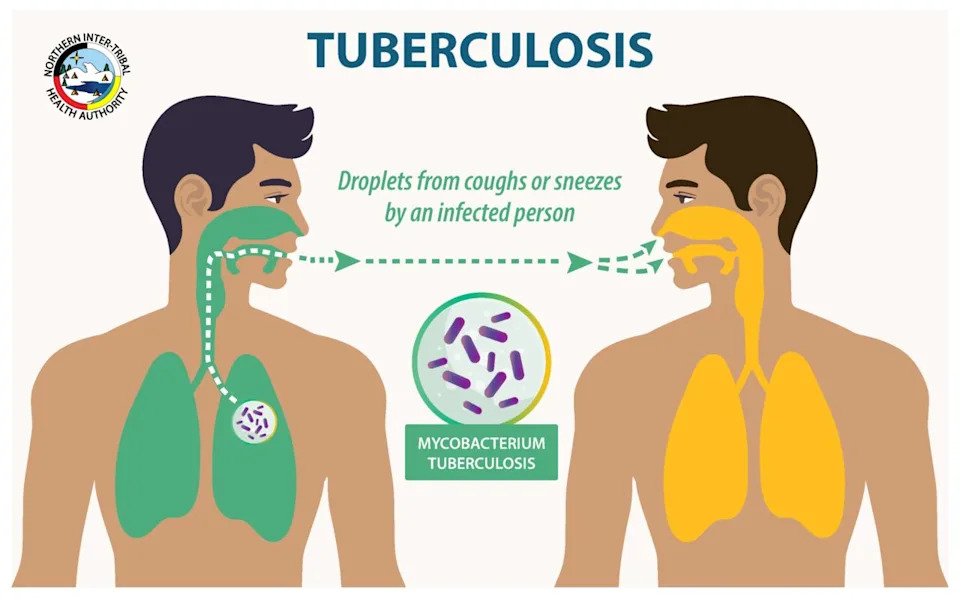
The Northern Inter-Tribal Health Authority provides awareness and education about tuberculosis transmission and treatment. (NITHA)
The Ministry of Health confirmed 22 cases of tuberculosis were diagnosed in Prince Albert and surrounding areas between January 2025 and February 2026.
The Northern Inter-Tribal Health Authority said about 64 people are currently being treated for active tuberculosis and latent tuberculosis infection across 11 communities in the north.
The health authority said it does not identify the communities unless the leadership of those places consent.
People 20 to 39 years old account for 46 per cent of the cases, the authority’s chief medical health officer, Dr. Nnamdi Ndubuka, said.
He said tuberculosis bacteria is spread easily among people in the same household.
“You can easily infect others around that shared air space, and if you have a lot of people in a single room,” Ndubuka said.
He said he doesn’t expect tuberculosis rates in northern Saskatchewan to change until housing conditions are addressed. Identifying the symptoms early, and seeking diagnosis and treatment, are key to preventing transmission, he said.
“No matter how much investment is being made into the program in terms of diagnostics or treatment, [if housing conditions are] not addressed, then we are still going to have issues with higher bodies of disease,” Ndubuka said.
The health authority employs community tuberculosis nurses to ensure people are taking their medications and there are no issues with drug-resistant strains.
The number of tuberculosis cases in the health region is similar to the past three years, Ndubuka said.
The Saskatchewan Health Authority said in 2025 that there were 142 active cases in the province and that the general public’s risk of contracting the disease was “very low.”
Tuberculosis cases were most prevalent in the far north region last year, accounting for about one-third of all cases. Saskatoon and Regina made up approximately one-quarter of the active cases.
Provincial health sector partners are working on the development of a refreshed provincial tuberculosis strategy to further reduce transmission rates, the Saskatchewan Health Authority said.
“In Saskatchewan, compared to Canada, we have slightly higher rates. We have 150 to 200 cases every year,” said Dr. Neeraj Dhar, a research scientist at Saskatoon’s Vaccine and Infectious Disease Organization.
The rate of tuberculosis in Saskatchewan is well above the national level, at 10.9 per 100,000 people compared with 6.1 across Canada in 2024, Health Canada said. Only Nunavut, the Northwest Territories and Manitoba had higher rates.
Dhar said 60 to 70 per cent of tuberculosis cases are among the Indigenous population in northern communities. Overcrowded housing is one reason tuberculosis has been difficult to eradicate.
“Quick access to diagnostics will help us prevent the transmission among the community,” Dhar said.
An early respiratory symptom of tuberculosis is persistent coughing. Other symptoms include phlegm, headaches, fatigue, weakness and fever.
“Often, by the time the patient is aware that the person is infected with tuberculosis, he or she would have passed it on to at least their close contacts because it spreads very easily by aerosols through close contact with an infected person,” Dhar said.
He said more than 90 per cent of people in Saskatchewan complete the six-month antibiotic treatment.
Dhar is researching the bacteria to try to find new molecules to use to treat tuberculosis and reduce the drug treatment regime time.
“We are always on the lookout for new antibiotics because once the existing antibiotics become ineffective, we have to find another one,” he said. “Drug-sensitive tuberculosis takes six months of treatment with multiple antibiotics to cure the patient completely of the disease.”
Dhar says if people do not complete their antibiotics as prescribed, the disease often comes back as a drug-resistant variety that “is much more challenging to treat.”
He says people coming to Canada from countries with high rates of tuberculosis need to undergo screening, including a chest X-ray or ultrasounds tests, to help prevent new infections.
“We have to overcome the stigma and break the cycle because once the disease comes out, it tends to spread amongst the community,” Dhar said.
There is a vaccine to guard against tuberculosis, but Bacille Calmette-Guérin (BCG) is unavailable in Canada.