
When retired colonel Pierre LeBlanc looks at Canada’s state of defence, one emotion erupts: frustration.
LeBlanc says Canada faces an increasing number of risks to its security from Russia, China and even the U.S., but has failed to invest in strategic defence to deter adversaries.
“This is the worst I have seen in terms of the security of Canada given what’s going on worldwide,” LeBlanc, who is also an Arctic security consultant, said.
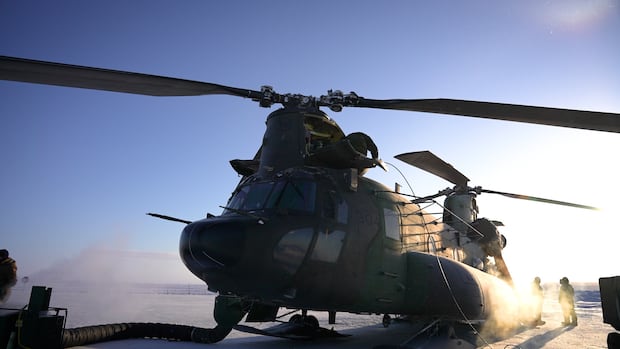
Canadian troops have been carrying out drills in the North as part of Operation Nanook — the military’s annual exercise to enhance its ability to defend Canada’s North and the Arctic.
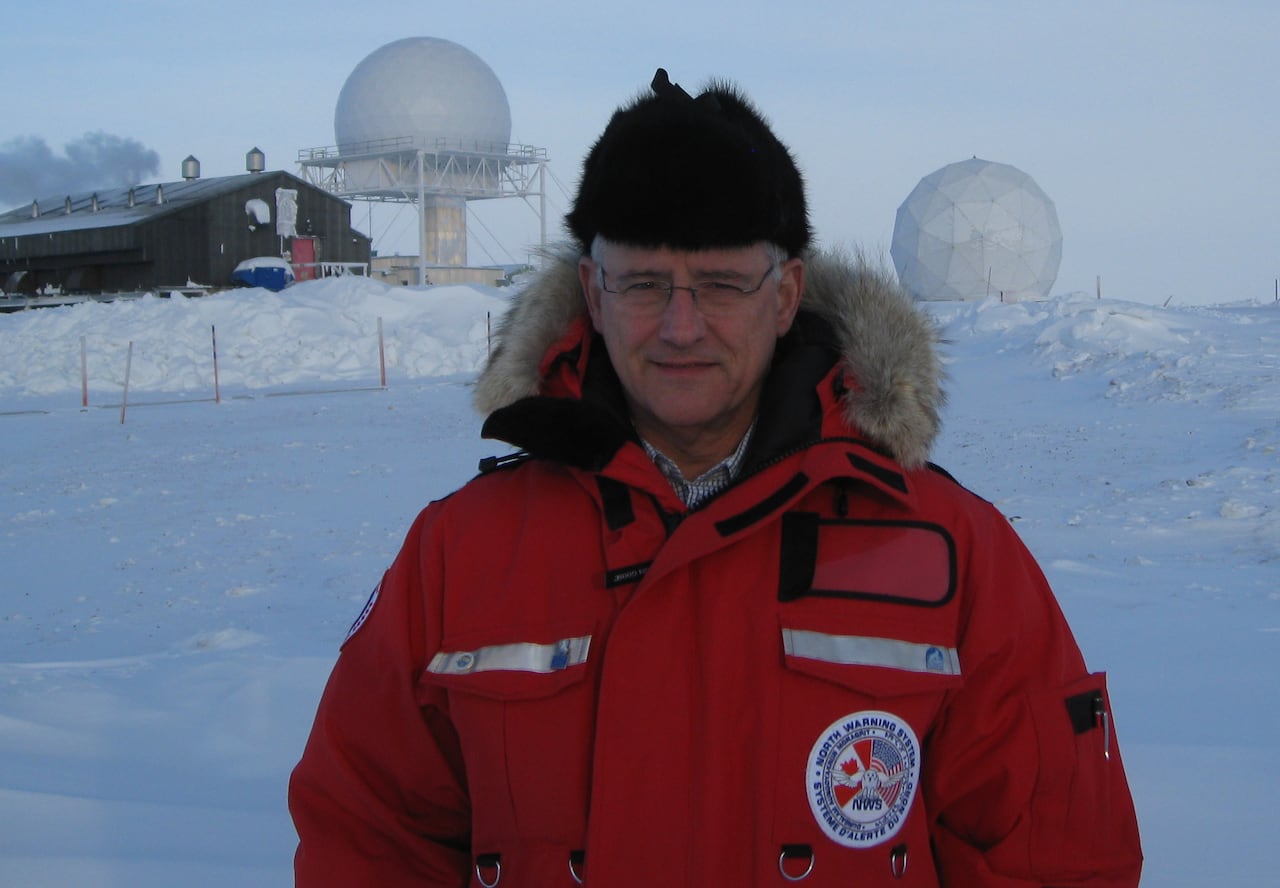 Pierre LeBlanc, an Arctic security consultant and retired colonel in the Canadian Forces, says he’s frustrated and disappointed at Canada’s state of defence given looming threats from adversaries. (Submitted by Pierre Leblanc)
And it comes as Canada is amping up defence investments in the Arctic due to geopolitical changes: Russia’s and China’s growing ambition in the Arctic, Prime Minister Mark Carney’s plans to spend tens of billions on defence infrastructure, the push to develop critical minerals in the North, and U.S. President Donald Trump’s threats to Greenland and Canada.
But LeBlanc and other defence experts say while these exercises and investments are crucial, they aren’t enough to deter adversaries or defend the nation.
In fact, these experts argue Canada is already in a period of conflict.
Ottawa says it’s modernizing defence
Canada recently crossed the politically significant threshold of meeting NATO’s defence spending benchmark of two per cent of gross domestic product.
It is the first time since the late 1980s — toward the end of the Cold War — that the country has met the target.
Rob Huebert, director of the Centre for Military Security and Strategic Studies at the University of Calgary, says Canada started playing catch up too late.
“We’re still flying the same aircraft we got at the end of the 1970s… we’re still arguing about exactly what type of replacement we should have. We do not have any modern submarines that can patrol off of our coast to deal with the incoming seaborne threat.
At the strategic level … our political elites have basically left us very vulnerable,” Huebert said.
Andrée-Anne Poulin, a spokesperson for the Department of National Defence said Ottawa is spending nearly $82 billion on defence over the next five years, including plans to upgrade NORAD capabilities.
“We are also investing in the development of new capabilities that give us a military advantage on our continent, including hypersonic and cruise missile defence, undersea surveillance, artificial intelligence, advanced cyber and space-based capabilities, space domain awareness, quantum technologies, and Arctic operations,” Poulin said in a statement.
The department did not provide details on any deals or work related to missiles and said the procurement of new F35 jets is still under review.
But modernizing infrastructure and defence won’t happen overnight, at least not in the Arctic.
“We’ve been shirking our responsibilities, especially to the North,” said Christian Leuprecht, a professor at the Royal Military College at Queen’s University.
Hypothetically, if an adversary attacks northern Canada, Leuprecht said things would get out of hand quickly.
“On a good day… we have about eight fighter jets, three frigates (warships) and one submarine for an area that is larger than all of continental Europe with the population of over 130,000 people,” he said.
‘We are in a period of conflict’
Leuprecht said the Arctic has become a center of strategic competition because that’s where the U.S. and Russia have the most shoreline and direct capabilities to deploy in a military conflict.
“We don’t want to be investing in capabilities where we ever need to defend the Arctic because that’s going to get really nasty, really expensive and really painful, really fast,” Leuprecht said.
“It is going to be much cheaper and much more effective to invest in very robust deterrent capabilities.”
That’s in part because Russia has hypersonic missiles, nuclear submarines, long range bombers, nuclear powered torpedoes, advanced cyber abilities, and somewhere between 30 to 40 military bases in the Arctic alone, he said.
 Christian Leuprecht, an expert in security and defence who teaches at the Royal Military College of Canada and Queen’s University says Canada has been shirking its responsibilities, ‘especially in the North.’ (Submitted by Christian Leuprecht)
“We are in a period of conflict,” Leuprecht said.
“Russia and China believe themselves to be in conflict and at war with us. They just think about war and conflict very differently than we do. So if we think we are not in a conflict with China and Russia, we need to wake up and we need to think again,” he said.
The gap in capabilities also extends to Canada’s ability to keep watch on the Arctic via satellite.
A 2022 report by the Auditor General of Canada found the federal government did not address long standing issues with Arctic surveillance and the lifespan of the three satellites launched in 2019 under RADARSAT Constellation Mission ends this year.
The Canadian Space Agency says even though the lifespan of these satellites was designed to be seven years, “all three satellites continue to operate nominally.”
“Maintaining continuous Earth observation monitoring and reliable access to data in the Arctic is a priority for the CSA,” spokesperson Sarah Berjaoui said in an emailed statement.
As the agency works on building a fourth satellite to replenish the constellation mission by 2032, Berjaoui said it is relying on Japan and Europe’s aerospace agencies for intelligence.
Last March, the federal government announced a partnership with Australia to deliver the initial Arctic over‑the-horizon radar capability.
But Huebert said Canada is currently in a period of “the winds of war.”
“There are such great forces around us that we are going to be swept up in this maelstrom,” he said. “The Arctic becomes the critical linchpin in this context. And the fact that we have refused to seriously deal with the necessary steps to demonstrate full deterrence capabilities.”