


Listen to this article
Estimated 4 minutes
The audio version of this article is generated by AI-based technology. Mispronunciations can occur. We are working with our partners to continually review and improve the results.
Women in rural and northern Saskatchewan will have more access to breast cancer screenings with the province’s second mobile mammography unit.
Unveiled in Regina Wednesday, it will work alongside the first to reach 42 communities every year.
“Having two units on the road now starting on Monday really means that we can be in communities like Wynyard and Estevan and Carnduff and Buffalo Narrows and Beauval on a yearly basis,” Health Minister Jeremy Cockrill said.
David Tran, director of population health with the Saskatchewan Cancer Agency, said those communities were previously visited once every two years.
“Having another mobile unit, they’ll hit every location every year,” he said.
“It’s just increasing capacity and access, which will translate to more participation in the programs and just better outcomes for women in the province.”
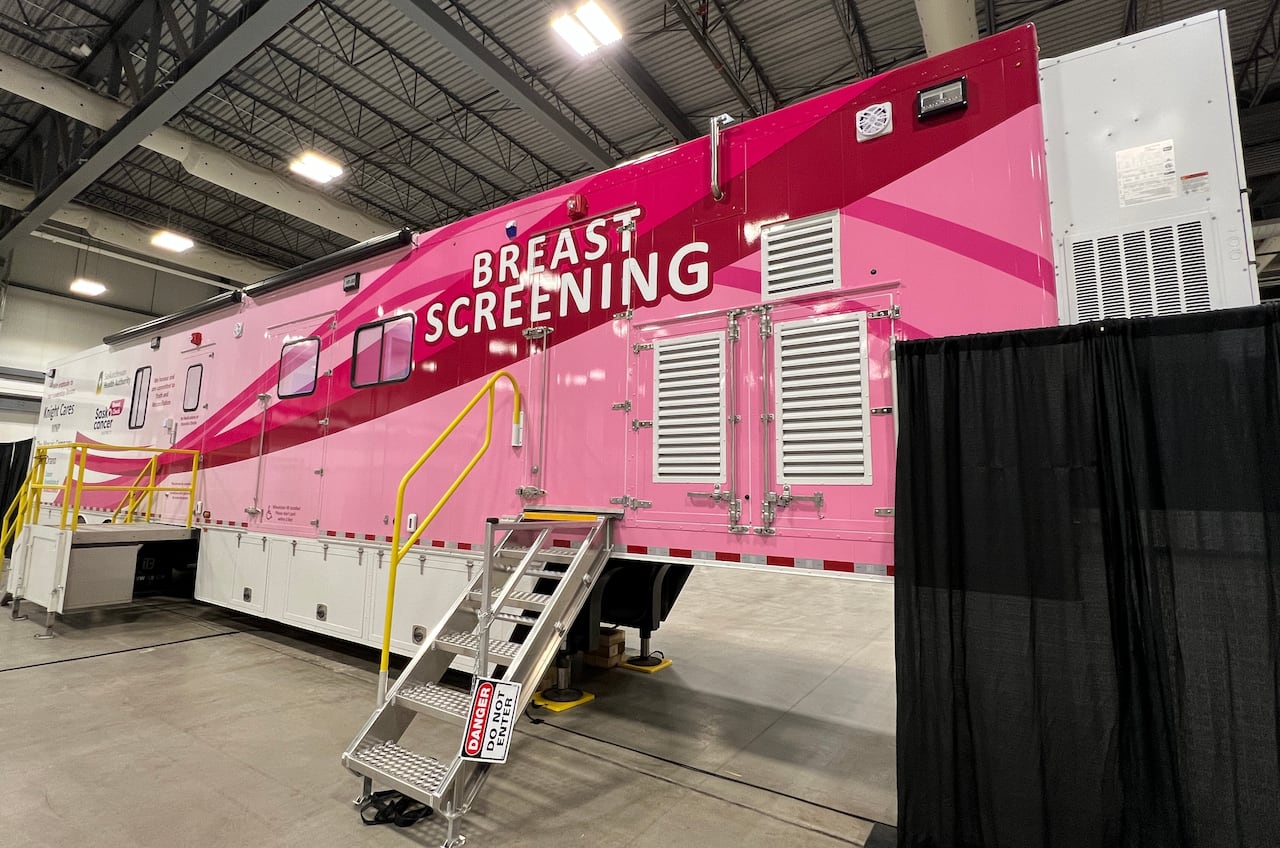 The province says the second custom-designed mobile mammography unit will begin visiting Saskatchewan communities next week. (Will Draper/CBC )
Tran said he hopes the new unit increases the number of routine visits, especially, which the cancer agency tries to encourage through its BreastCheck program.
“So just with another mobile unit … it’s increasing capacity potentially up to 15,000 scans,” he said. “Which would be, you know, probably over a third of scans total in the province.”
Eligibility age lowers at end of June
As of January 2026, Saskatchewan has lowered its screening eligibility age to 43.
Nora Yeates, CEO of the Cancer Foundation of Saskatchewan, said the plan is to lower it to 40 at the end of June.
“As we lower the age to 40 for women to be able to get their breast screening, this is another 76,000 women across this province will be able to access this trailer,” she said.
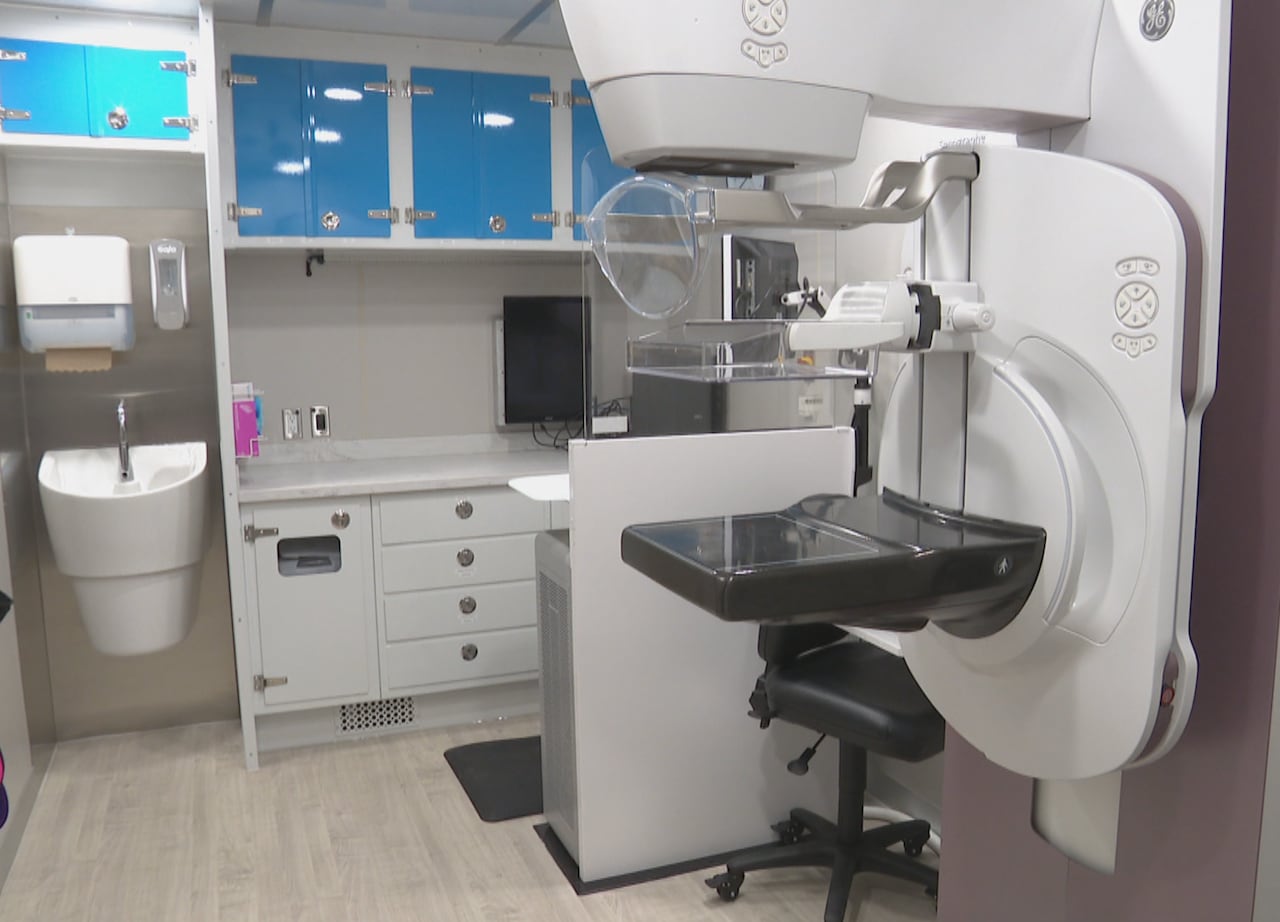 The province’s second mobile mammography unit features a state-of-the-art digital mammography machine and new furnishings. (Will Draper/CBC )
She encourages women be proactive in making an appointment.
“You don’t need a referral from your doctor and in Saskatchewan, especially in rural Saskatchewan and the remote areas, it’s so important that women have access and can take their own health into their own hands and make that decision themselves without having to wait for a referral from a doctor.”
WATCH | Sask. adds 2nd mobile mammogram unit to prepare for screening age of 40: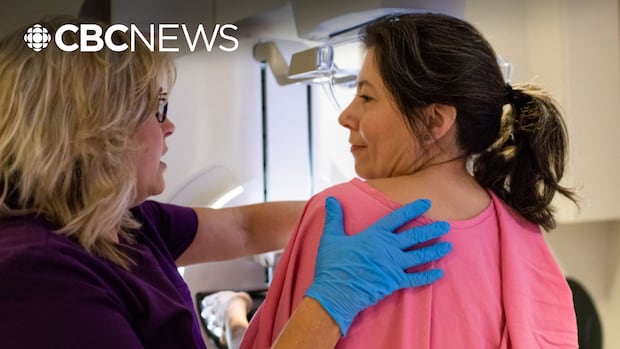
Sask. adds 2nd mobile mammogram unit to prepare for screening age of 40
The province has two mobile mammography units that will visit 42 communities once a year in order to accommodate the growing number of women who are eligible for routine breast cancer screening with a doctor’s referral. The age of eligibility is currently 43 and drops to 40 at the end of June.A more enhanced unit
The province says it will spend more than $475,000 a year to operate both mobile units.
The new one is bigger: a full semi-trailer, the maximum weight and height allowed on Saskatchewan highways, “really creating a more comfortable patient experience for women as they get their screening mammograms,” Cockrill said.
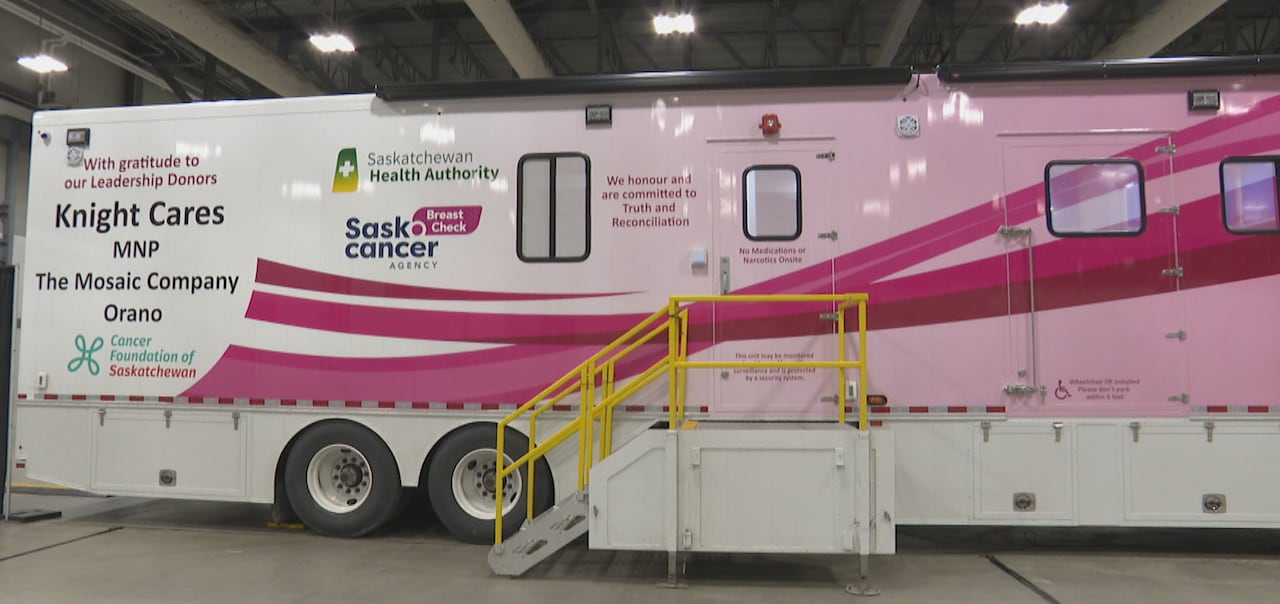 With two units, the province says communities can expect more frequent visits and screening can be offered to more women annually. (Will Draper/CBC)
In an average 12-hour day, 50 to 54 women can be seen, doubling the number of mobile appointments across the province, he said.
“So you think about what that does in terms of improving access for women in rural Saskatchewan: massive impact.”
The NDP Opposition recently criticized the government for extending a contract that has already sent more than 6,000 patients to Alberta for diagnostic services.
Cockrill said the province has done significant work to reduce wait times and open up more inter-provincial access to screenings and care.
“I would say the improvements over the last couple years have been significant,” he said.
“There’s always more work to do, but I’m quite proud of the work that the Saskatchewan Health Authority, the Saskatchewan Cancer Agency, has done over the last year to really bring that wait time down, specifically for women in the southern half of the province.”