
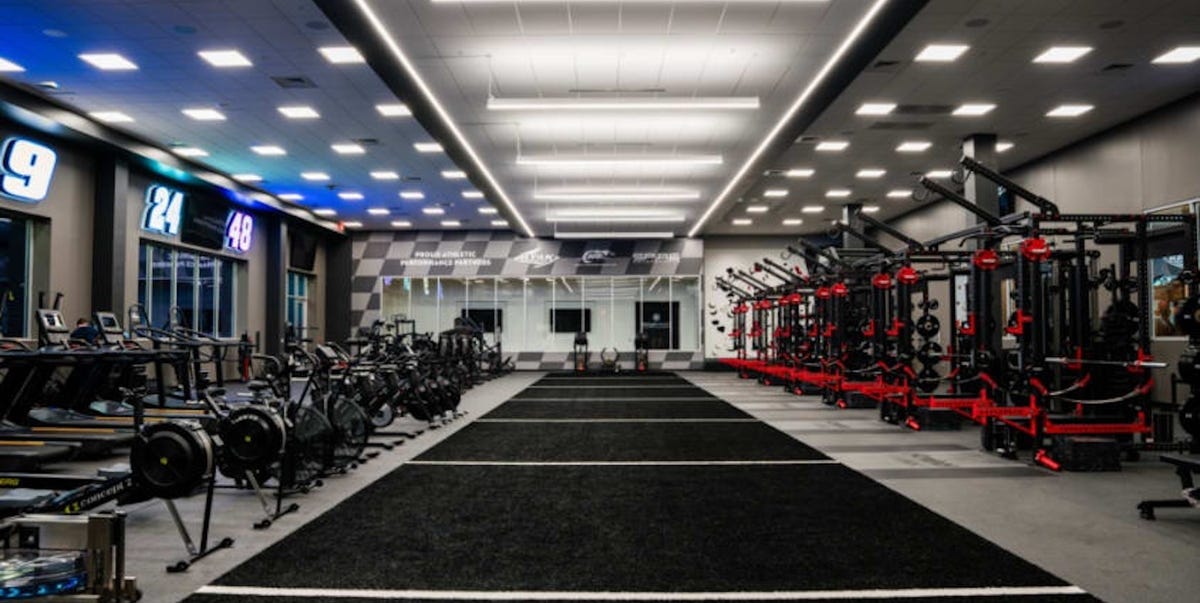
With pit crew recruitment by NASCAR Cup teams now focused on college and professional athletes, Hendrick Motorsports knew it needed to offer the same type of training facilities to which they were accustomed, and it was that realization that led to the Atrium Health Motorsports Athletic Center on the Hendrick Motorsports campus in Concord, North Carolina.
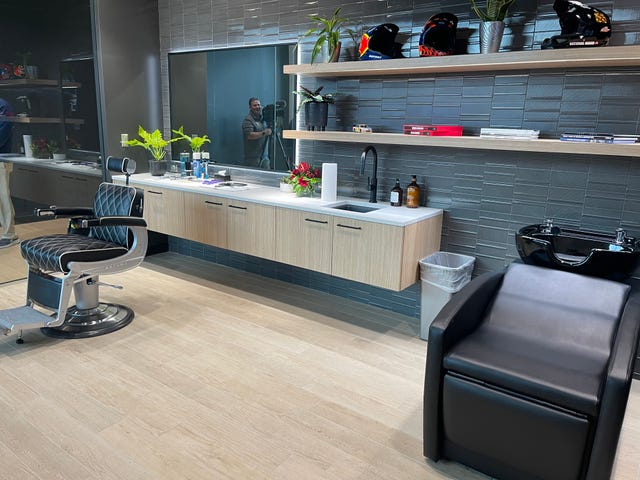
The 35,000-square-foot facility, staffed by Atrium Health clinicians, provides not only training facilities, but a place to get a haircut or be treated for the flu. It means a Hendrick Motorsports employee no longer has to leave the sprawling campus to visit a doctor or receive orthopedic care.
Related Story
“All the different areas of recovery and the things that they have incorporated from red light to oxygenation, it’s going to make a big difference for us,” team owner Rick Hendrick said.
“I think some people think that all you need is a room with a bunch of weights in it, and that’s how you work out. That’s not how you work out.”
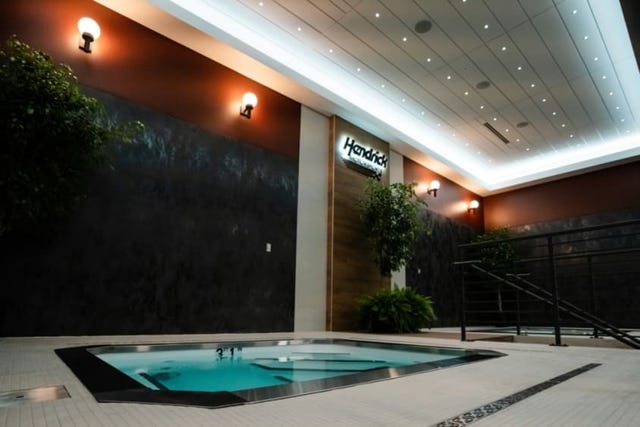 Hendrick Motorsports
Hydrotherapy room.
Housed in the facility is a high-performance gym with the latest training equipment, modern locker rooms for men and women, a team operations center for race-day competition operations, a nutrition area, athletic meeting and film rooms, and dedicated spaces for physical therapy, hydrotherapy, and recovery. The facility also has a dedicated space for sports science research, and a closed-loop pit stop practice circuit that can accommodate two teams concurrently.
Cliff Daniels, crew chief for two-time NASCAR Cup champion Kyle Larson, said that when the facility was first revealed to Hendrick’s drivers and crew chiefs, “we were absolutely blown away.”
“I think it’s going to generate not only better overall health, wellness, and culture, but it’s also going to generate performance and sustain performance with longevity for a lot of our athletes of being able to have the health care, plus the recovery care as well,” Daniels said.
“Not only is it beneficial for the health care side of things, but, also, again the culture of giving people a hub and a place that they can come to and share in their wellness journey together.”
“I think it’s going to generate not only better overall health, wellness, and culture, but it’s also going to generate performance.”
Planning for the facility began about three years ago. That included visits by Hendrick Motorsports executives to training facilities at Clemson University, the University of Georgia, Alabama, and Auburn University as well as Fort Bragg since Hendrick has another business that builds the infantry squad vehicle. Hendrick started that business when the current Cup car was introduced so he didn’t have to lay off 100 people in the Hendrick Motorsports chassis shop.
“We’ve never done as much research as we’ve done to get this,” Hendrick said. “We had a team of people, and then they would come back and tell us what they saw and what was important. The people with the military and all of the leading ways to get people back on their feet and diagnose things in the field. It’s amazing. It was amazing how many people really wanted to help us.”
Related Story
When the facility was in its planning stages, Hendrick was adamant that he didn’t want it to “smell like a high school locker room” when he walked into it.
“So, when you go into their locker rooms, every single locker is ventilated,” Hendrick said. “It takes all the odors out.”
Each person has his or her name or their locker. Hendrick said it was the little things that made the facility special. Things they wouldn’t have known about if they hadn’t visited the other facilities and “pulled back the curtain.”
Hendrick cited Jeff Andrews, the organization’s president and general manager, as the facility’s strongest advocate. He said Andrews told him if they were going to compete with the other teams then they needed “world class facilities.”
Hendrick noted that long before the facility was constructed the team had the services of former New York Yankees head athletic trainer Gene Monahan. After retiring from the Yankees, Monahan moved to Mooresville, North Carolina, and became a consultant for Hendrick Motorsports.
Related Story
“Not everybody’s got doctors on staff like the (Carolina) Panthers or the (Buffalo) Bills … but I think what we’ve got now in partnership with these people (Atrium) means we’ve got as good as any professional sports team, NFL,” Hendrick said. “I foresee one day maybe having CTs and all that stuff on campus.”
Hendrick admitted the facility was much nicer than he expected.
“To be honest, I was thinking about a big area with a gym and a PT area, but now when I walk through it and I see all the ideas that are put into it, plus we have a fan viewing area that comes out of the museum and walks down and they can look over and watch the guys who are working out, it’s fan friendly, too,” Hendrick said.

A North Carolina native, Deb Williams is an award-winning motorsports journalist who is in her fourth decade covering auto racing. In addition to covering the sport for United Press International, she has written motorsports articles for several newspapers, magazines and websites including espnW.com, USA Today, and The Charlotte Observer. Her awards include the American Motorsports Media Award of Excellence, two-time National Motorsports Press Association writer of the year, and two-time recipient of the Russ Catlin award. She also has won an award in the North Carolina Press Association’s sports feature category. During her career, Deb has been managing editor of GT Motorsports magazine and was with Winston Cup Scene and NASCAR Winston Cup Scene for 18 years, serving as the publication’s editor for 10 years. In 2024 she was inducted into the NMPA Hall of Fame.